Clipston Trail Half Marathon

“How’s your training going?” A coach asked me in the gym. I was confused – what training? Am I supposed to be training for something? Because… I haven’t been. My running is the same every week: two or three short runs and one long run. Sometimes I run up some hills, occasionally (very occasionally) I run a bit faster.

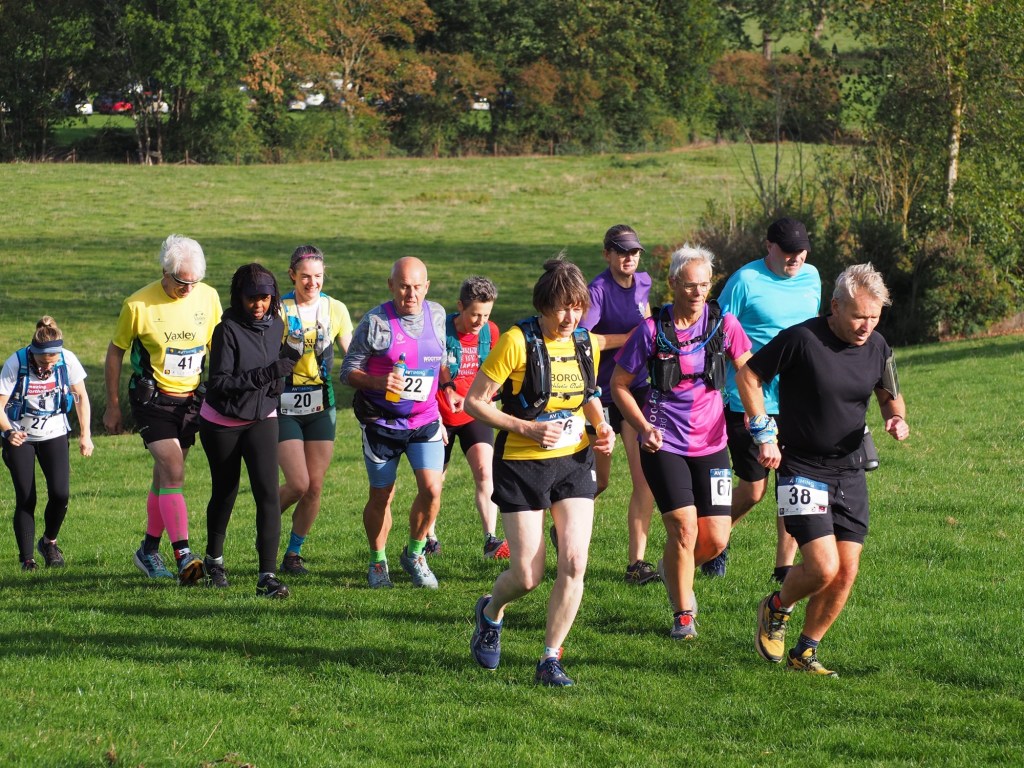
I haven’t been training because I haven’t been racing. I ran the St Neots half marathon in November 2024 and haven’t put on a club vest since. I really don’t miss it but I don’t want to feel like I’ve given up for ever, so I signed up for my annual race. The Clipston Trail Half’s description was perfect: ”run on trails across beautiful countryside”. Stiles, fields, views, hills, fewer than 100 entrants, no plastic waste, no time cut-off. My kind of race.

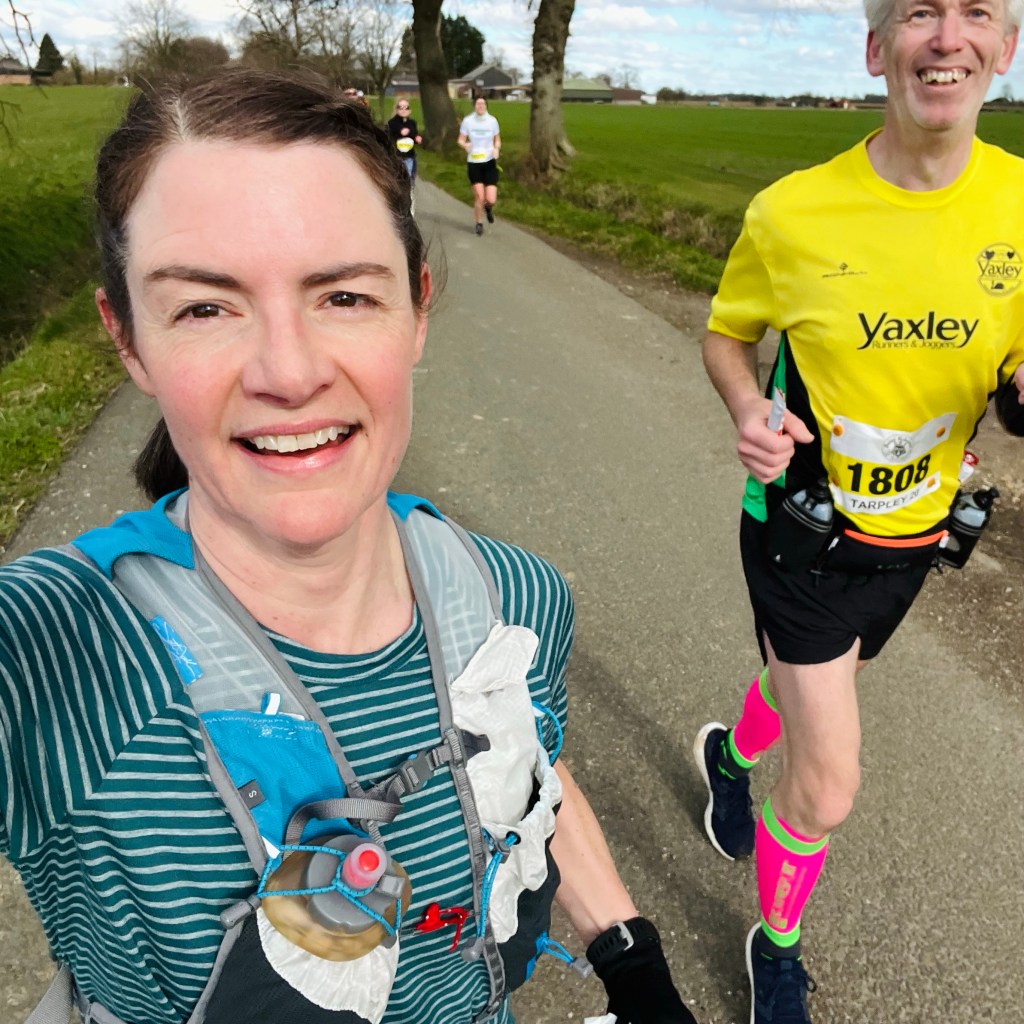
I ran with my brother-in-law, Lee, while my sister Liz did the five mile race. Half way through the run I was stood waiting for Lee to reappear after a trailside wee and a passing runner kindly asked if I was ok. Yes, I said, I’m just waiting for my… friend. I never thought about how weird it is to say “brother-in-law” to a total stranger. Especially when the brother-in-law isn’t present.

These are the kind of thoughts that have time to pass through a person’s head when they’re not worrying about how fast they are running. The week before the race, my friend Lee got injured, and I caught a cold. We should really have dropped out, but we agreed to “take it easy” instead. In my head this would be 9 minute miles, but the hills and my heart rate called for much slower, so we finished in 2 hour 20. The remarkable thing about this is not that it’s my slowest half, but that I didn’t even look at my watch until we were a mile away from the finish.

Running a race for the experience, rather than the time, is not something I have done often. Even if I’ve said I “just want to enjoy it” I’ve always had a secret goal. Not having one turns the race back into a run. It’s even allowed to be fun. We chatted. We walked. When a marshal said “don’t miss the view”, we really looked at it. I took pictures. I spotted birds. I ate two flapjacks and two gels and emptied my water bottle.

After the first hill there is a narrow footpath section where runners are forced to run in single file for half a mile. In any other race I would be frustrated to be stuck in a queue early on, so it felt good to remember all the times I’ve felt like that before and realise that this time I didn’t care. At mile four we settled in behind a trio of runners and, instead of wondering whether we could overtake them, I wondered whether we could keep them in front of us for the rest of the race.  

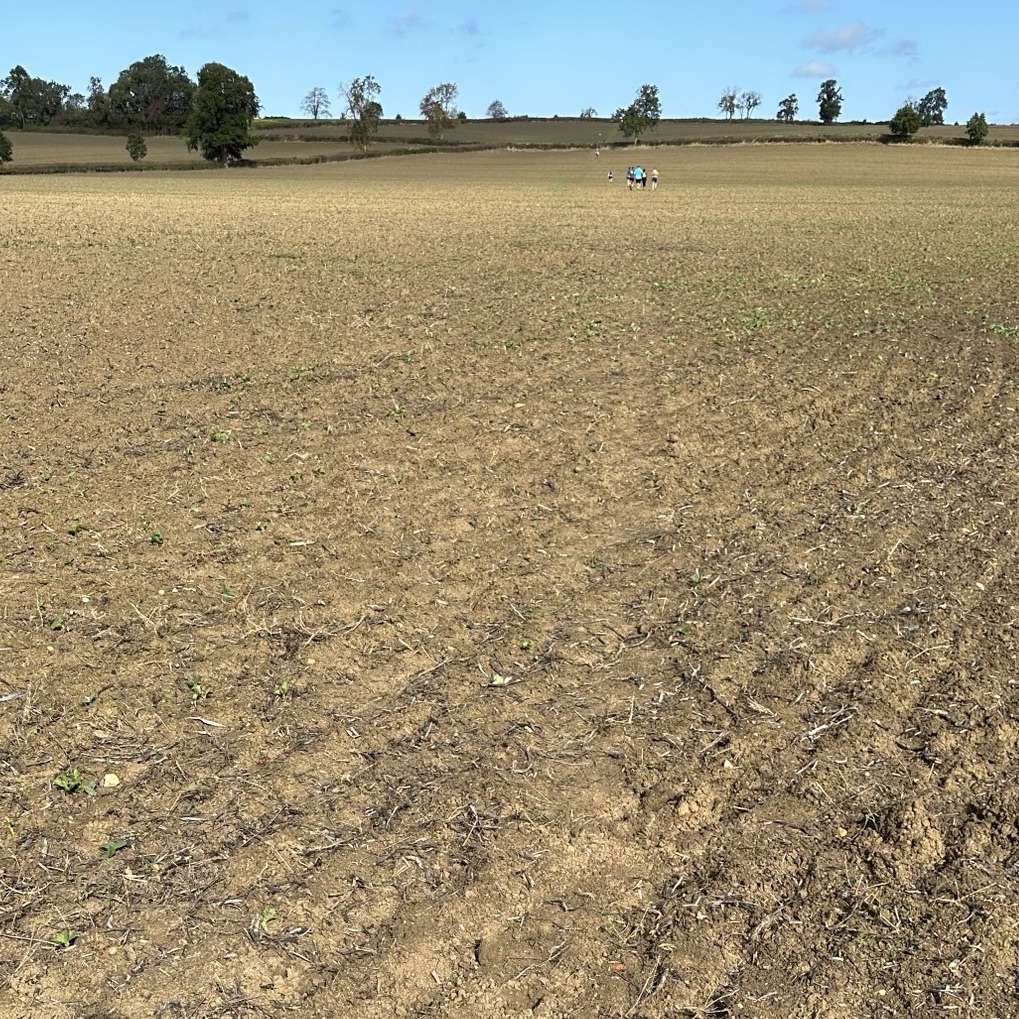
It was a gorgeous race. The course is out and back with a couple of different loops and constant rolling hills (1,000 ft over the 13.1 miles) to keep it varied. The footpaths were dry and mostly gravel, firm grass or well worn single tracks, with only two ankle-breaking sections. The first was a deceptively beautiful wide path curving steeply down a hill which had been secretly churned up by horses and baked solid beneath a sward of grass. The second one we were warned about in the pre-race briefing: two ploughed fields in the final mile.

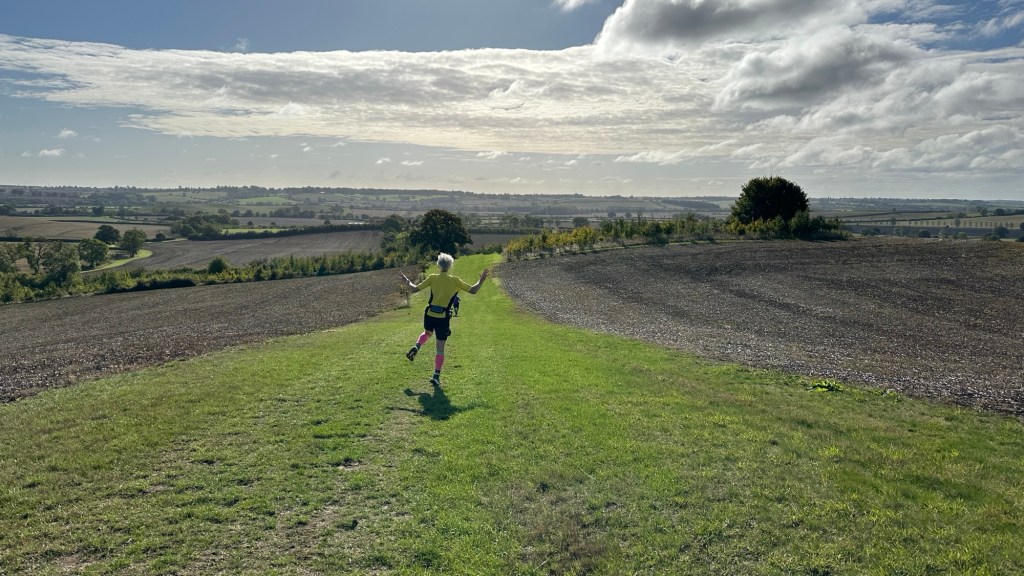
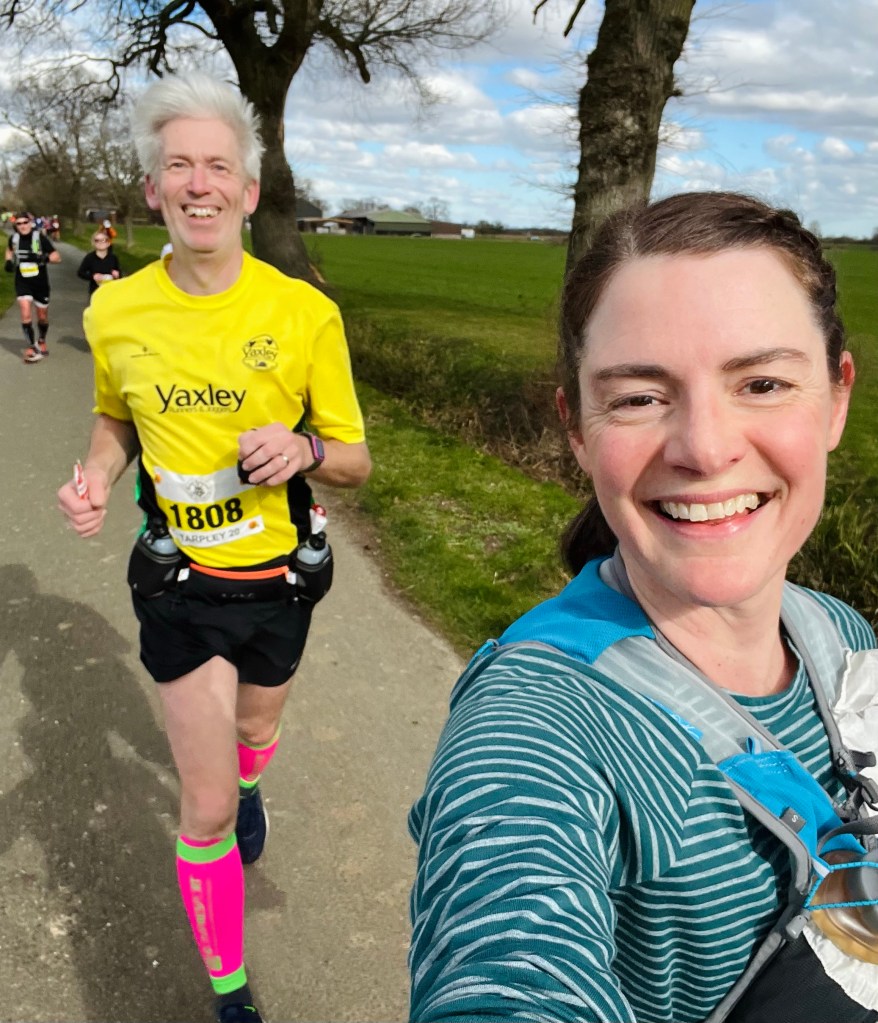
Knowing that you will have to walk in the final mile is enough to put anyone off aiming for a “good” time in a race. Even I would hesitate to call trudging up a hill of loose soil my idea of a “good time”. But after the furrows of doom there was a downhill of joy, and Lee leapt like a salmon for the photographer while I beamed in genuine delight. At the finish, people clapped like they knew us, and the Race Director greeted every finisher with a medal and a personal congratulations.

Walking back to the car with a flushed face and a paper plate of cakes I realised: this is the race I have been training for.

Marking the equinox

Last Sunday was the autumnal equinox. A moment of uneasy equilibrium, when day and night briefly share 12 hours before daylight tumbles towards the winter solstice. I meant to go for a run, and pay special attention to the sunrise or sunset. To mark the moment with pictures, maybe write about it. I didn’t remember. I did run but it was raining and, behind the clouds, the sun was just an assumption.

This morning while I drank my pre-run coffee I read about the equinox. I learned about the “solar terminator” – the edge between night and day – that separates the part of the earth experiencing darkness from that experiencing daylight. A circle constantly rotating around the earth’s surface, twice a day, moving at 463 metres per second. At the equinox, it moves around the globe like a spinning line of longitude – bringing darkness on one side, and light on the other.

In spring and autumn, at the vernal and autumnal equinoxes, both poles see the sun, and both northern and southern hemispheres share the light equally. Afterwards, one’s loss is the other’s gain.

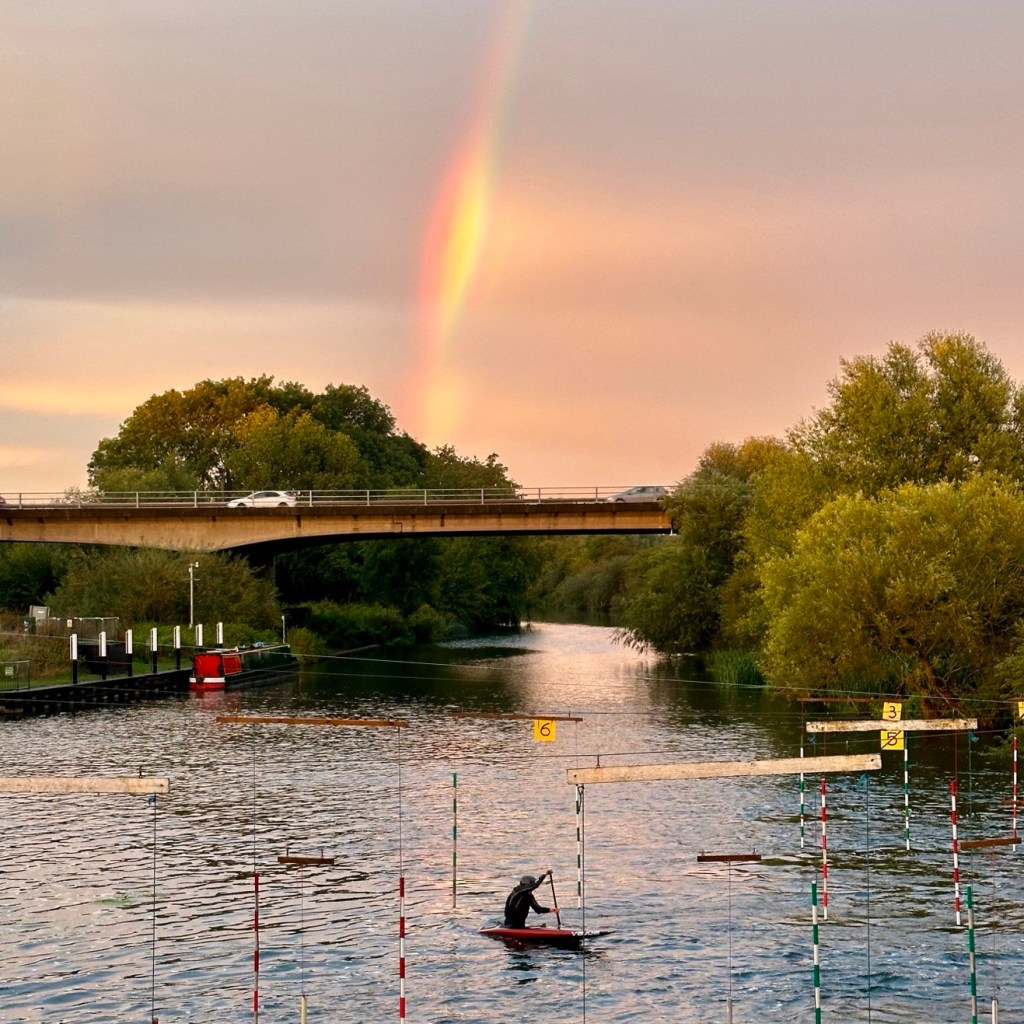
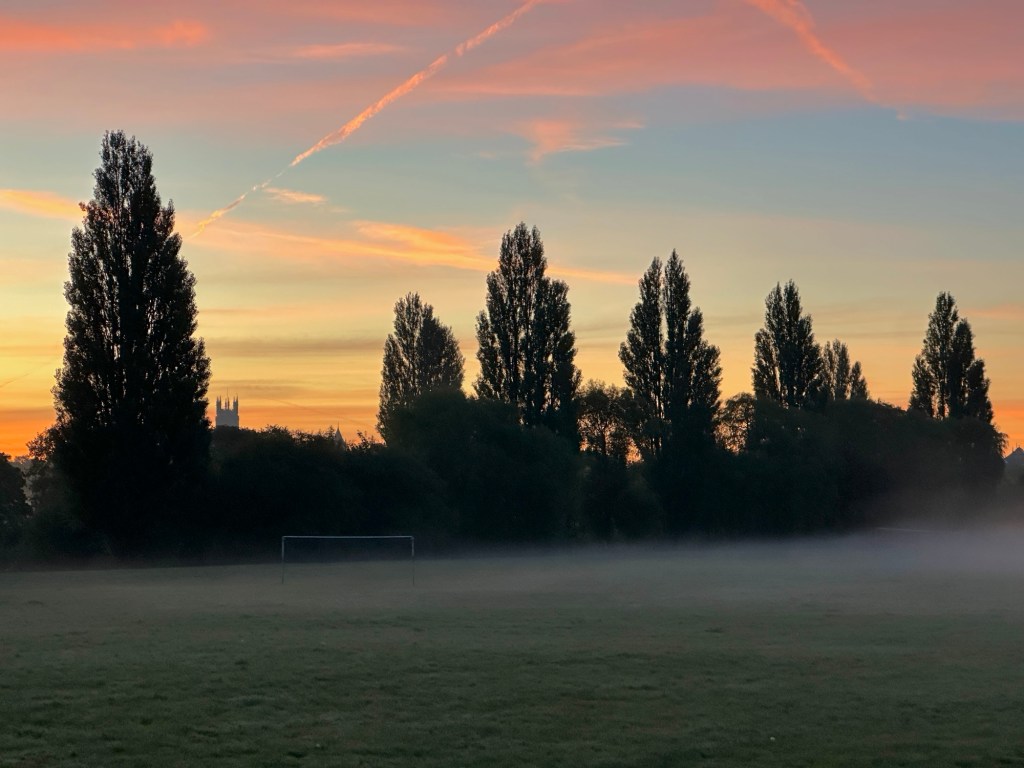
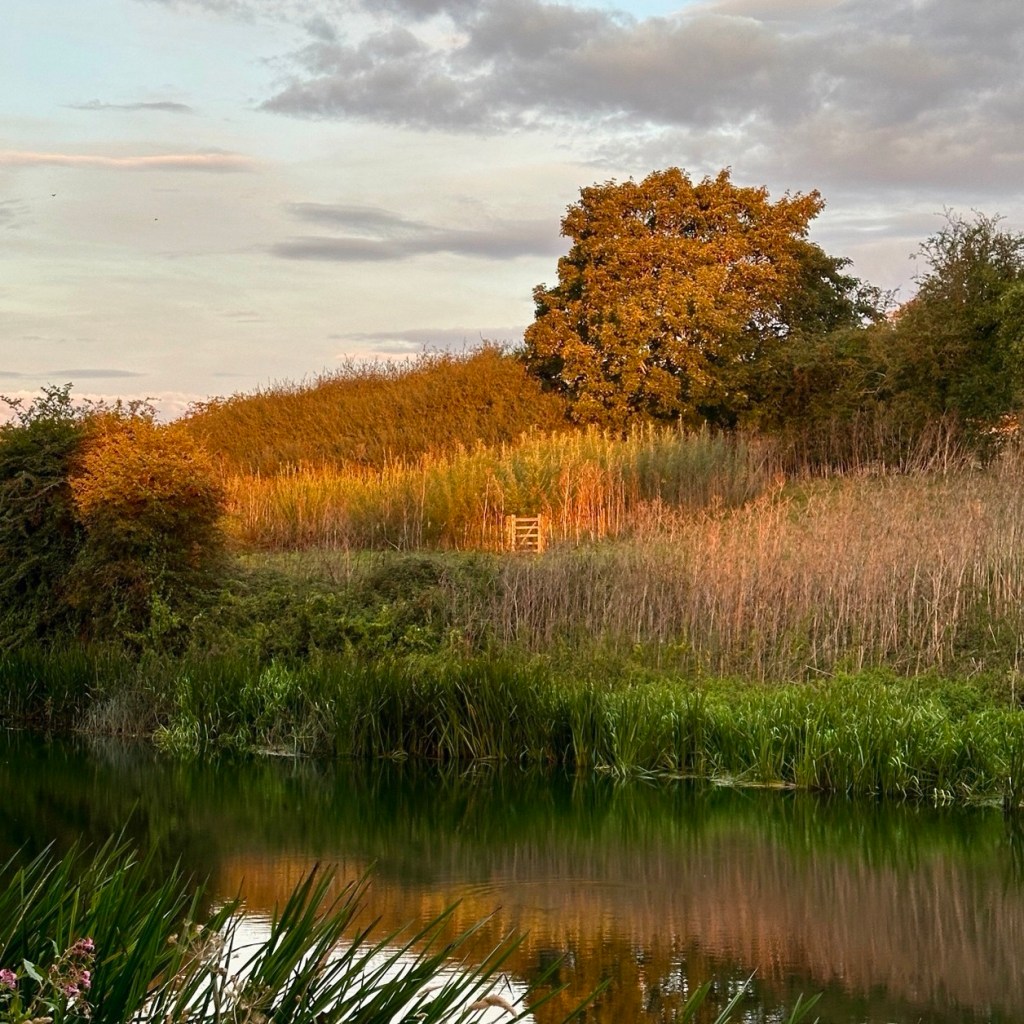
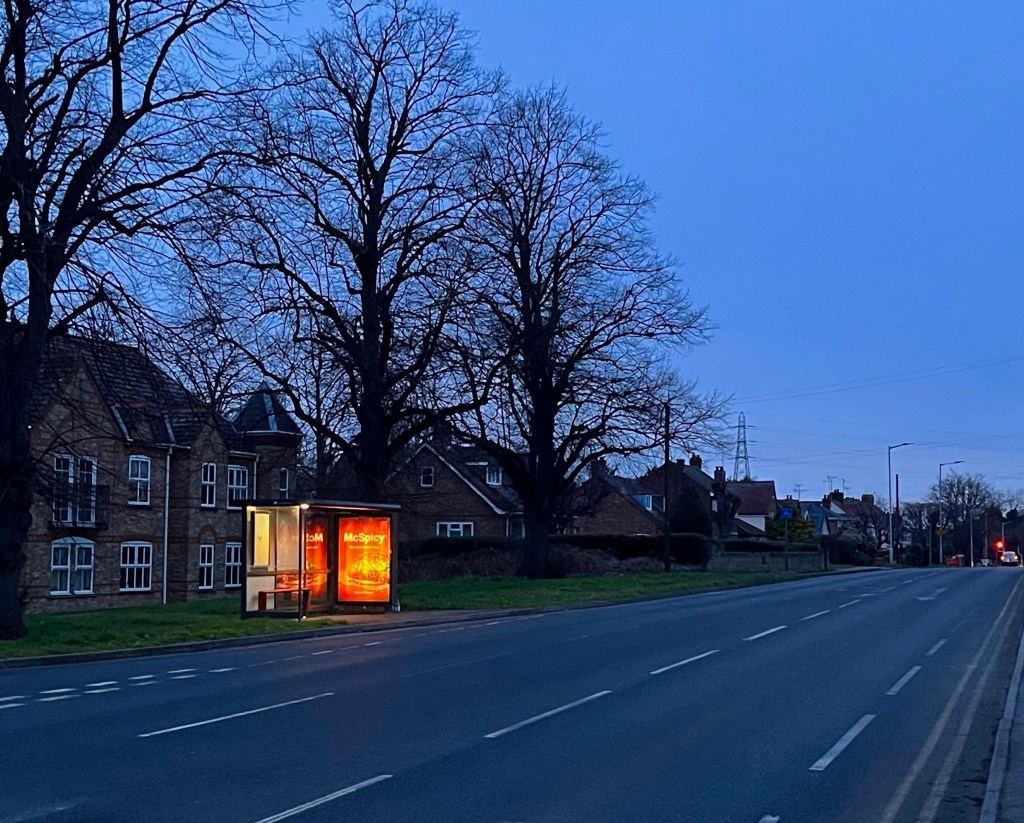
The weeks around the equinox are a dream time for running. Every pre- or post-work run catches a sunrise or sunset. One wet evening I chanced on a rainbow in the eastern sky, the nearby clouds lit purple. But really I’m a sunrise person. In between some biblical rain, this month I’ve seen the mist rise from the River Ouse over York Minster, caught the first light of the sun turning a gate into a magic portal, and gazed on ghost trees in the fog over flooded fields.

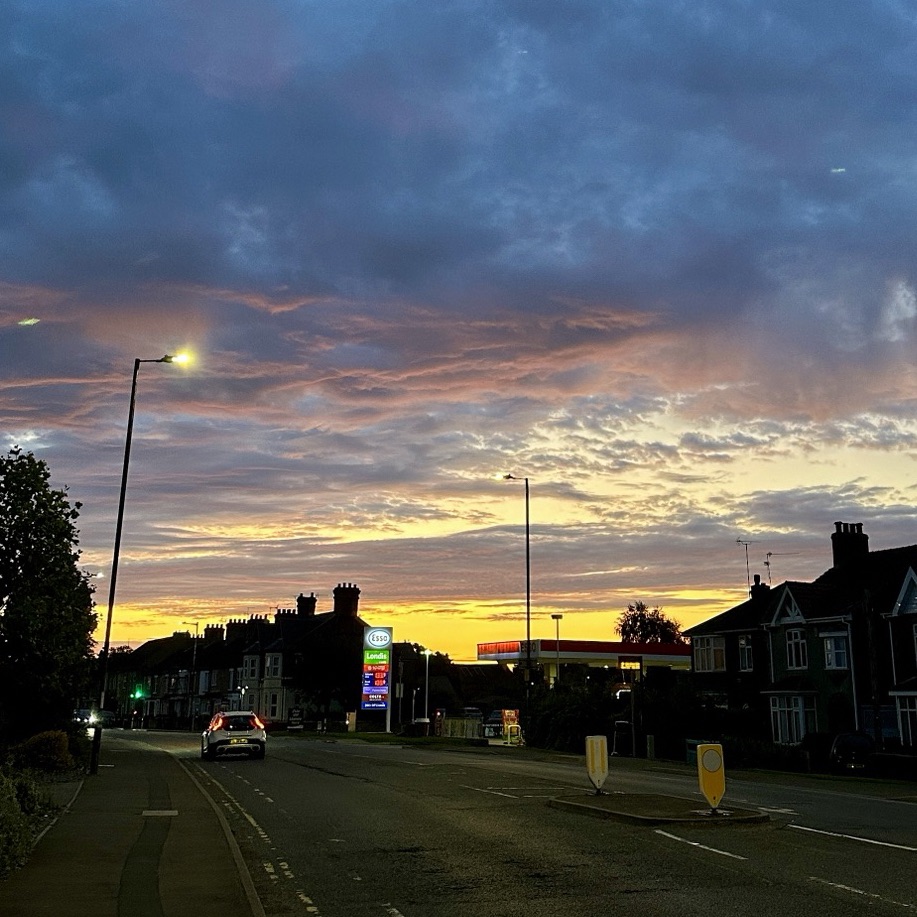
At sunrise, I have the paths to myself. I like to run along the river, or in the woods. The colder nights and still warm days mean that vapour rises from the water and floats among the trees. The grass is soaking, and fences drip with tiny golden orbs of dew. In the city, the neon lights of the Esso garage are briefly a fairground ride against the technicolour sky.

This morning I remembered the Equinox – a week late, but does it matter? The sun rose today at 7am, and will set at 6:41pm. The nights are being drawn in for us in the northern hemisphere, whilst the days loosen their grip, extending their warm grasp southwards.

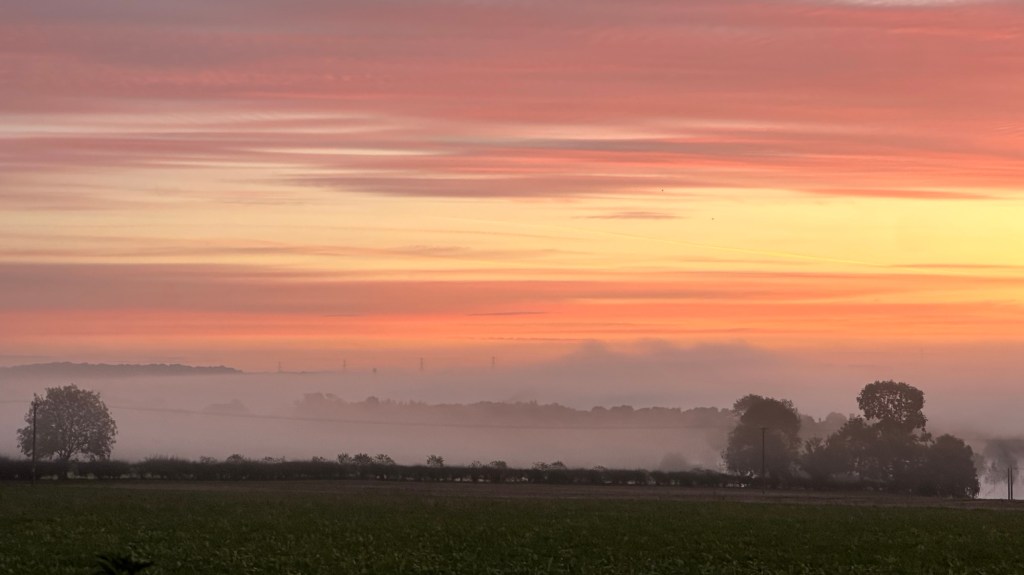
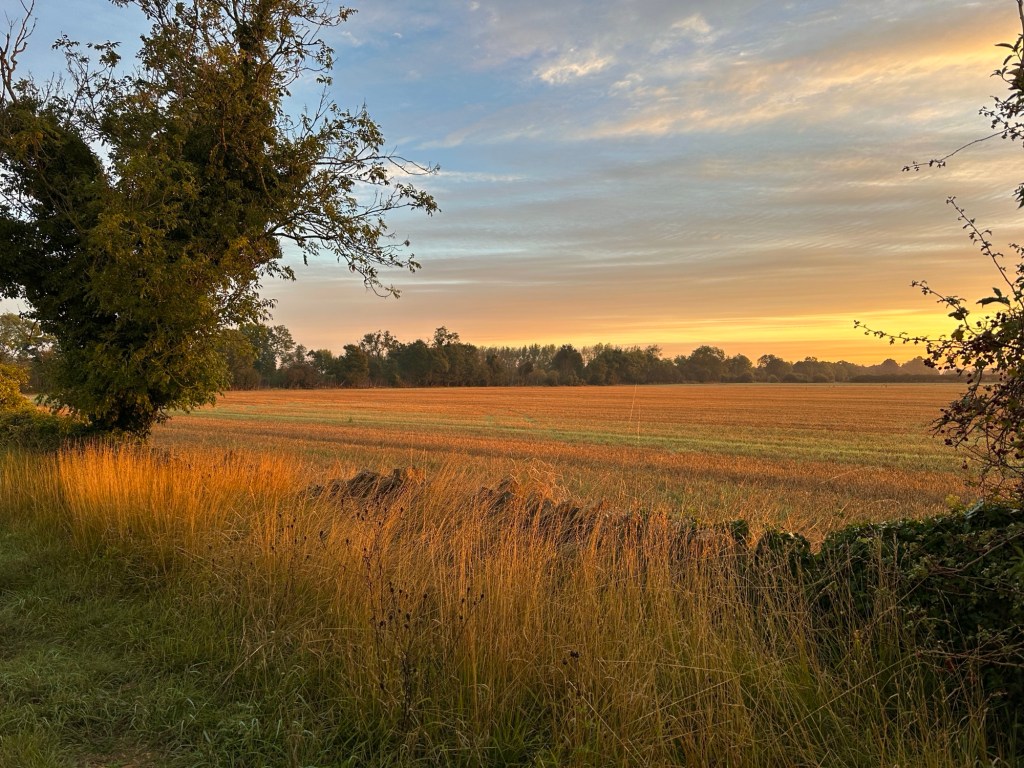
At the gate to Old Sulehay woods, the fog was lying over flooded fields, with a sunrise lightshow peaking high above. To the south of the path, the meadow was waist high with grasses lit ochre, mist blurring the trees and bringing everything closer, nearer. I took some pictures and they are spectacular but they don’t contain it. The sounds of birds rustling and settling and jostling the leaves. The distant cars that never appear. The tiny lights of a farmhouse on the horizon.

In the woods, the lightshow is reduced to a strip of gold and blue overhead, with clouds looming pink in the west over the horse chestnut trees. A carpet of curling leaves and conkers litter the top of the hill. It is darker here, and a tiny bit creepy. I take my earbuds out so that I can hear the birds, but also the sound of anyone approaching. Back on the road, the sun has risen and drifts of roadside weeds burn orange against the fields. No interesting birds today, just pigeons and magpies, starlings. A few pheasants.

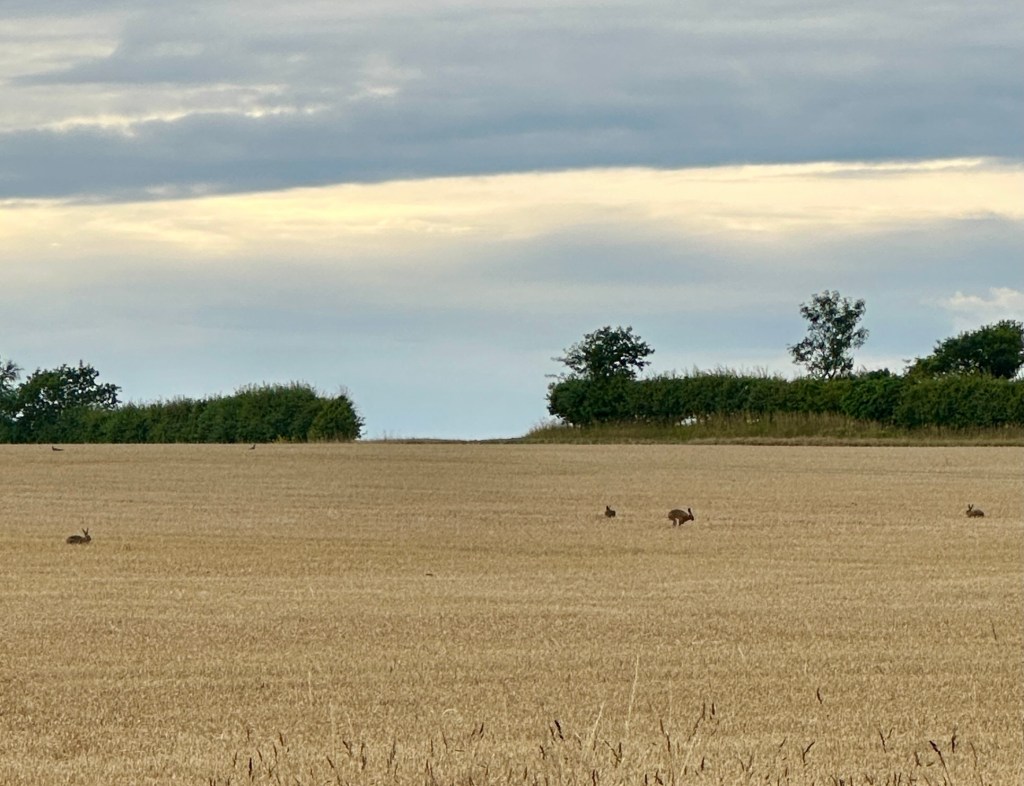
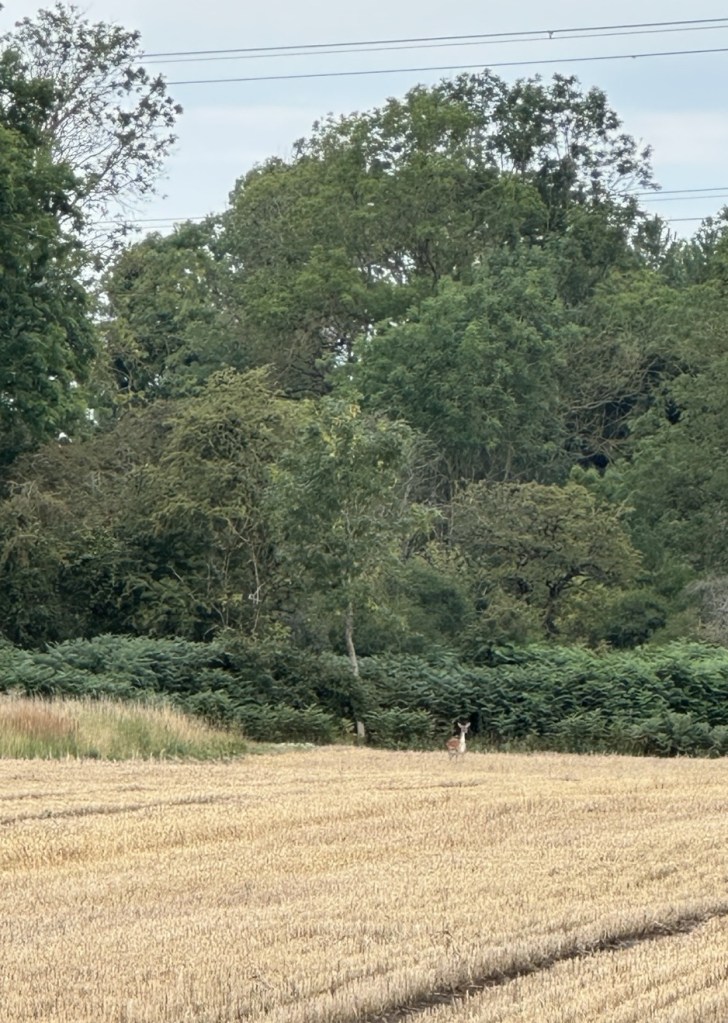
No hares in the fields, but plenty of deer. I run a couple of miles along the road to Kings Cliffe, stopping for a wee behind a gate. Over 11 miles, I don’t see any people. A few cars, but no cyclists, runners or dog walkers. Everyone is at home, in bed or inside, enjoying the warmth. Maybe putting the heating on for the first time. Maybe preparing to go out later, when I will be at home warming up and hiding inside.

This summer, on holiday in Sardinia, I took a video of a sunrise over the sea as it lapped against a ruined tower. When I uploaded it, instagram asked me if I wanted to flag it as AI. At dawn, the world looks so perfect that it doesn’t seem possible, or real. Mid-way through the clip, a tiny mosquito buzzes across the screen on its way to biting my arm in three places.

Walk ‘til you feel like running

Places I have cried lately: in the car (many times), on the train, on a run, in the office, at parkrun, at Lidl.

I’m 48 and sandwiched between my 11 year old’s dreams and the reality of coming to terms with my mum’s dementia. I have a full time job that is rewarding, but stressful and serious, and on my mind, always. I used to have hobbies. Now my hobby is seeing my husband and daughter in the two hours between finishing dinner and going to bed each day.

What has this got to do with running? Everything and nothing. I wish I had more time to run, but I don’t. Making time for running means going out with the dawn at 5am, or the bats at 9pm. But it also means cutting back on sleep and I can’t do that now. So running has had to become less important for me, and I’ve become really envious of people taking on new challenges or gym work or big sessions or long runs. But when I look harder at the envy, I can see that it’s really about me, not them, that it’s just guilt – guilt that *I* am not doing more, that *I* am not fit or fast.

Running is my solace in stressful times, my escape. I can’t let running become another stick to beat myself with, another item on a to do list I can never finish.

This Sunday morning I wanted to run 10 miles. The forecast was fine and I planned to get up and out at 5:30am. Instead, at midnight on Saturday I was wrenched out of the first blissful hour of sleep by my daughter plaintively saying she felt sick. I spent the night on the floor in her room while she dozed with all the lights on clutching a bowl. In the morning she was fine, but I was a wreck.

At 7am I made a coffee and had a little cry in the kitchen, as I blearily crushed and squirted 3 different medicines into our ancient cat’s food. It’s just too much first thing in the morning, to be making coffee and toasting bread and drinking water and microwaving milk and wiping surfaces and checking for cat sick. I was grumpy as I stomped up the stairs, and mean to humans and felines alike.

I sat waiting for the coffee to do its work and searching for a reason to go for this run. I wanted to do it, I wanted it to make me feel better, but I was tired in the brain and in the stomach and in the legs. I wasn’t ready to go out until 8:15, too late for early birds and peak walking hour for dogs – my least favourite time to run.

I left the house and started walking, taking my own advice from yesterday’s parkrun with Martha: “just walk until you feel like running, and don’t worry if you don’t”. I walked a mile before I felt like running at all, and then jogged slowly on and off to Ferry Meadows. While I was jogging I listened to part 2 of the Bandsplain podcast about Pearl Jam. Then I listened to Corduroy three times in a row. I love that song. I love how we can get pleasure from other people’s pain, even from our own if there’s beauty in it.

At 5km I stopped my watch. I didn’t want to go home, I didn’t want to sit on a bench and cry, and I didn’t want to run. I decided to walk to the cafe, buy a coffee and walk home. It felt good to decide this. Sometimes you can’t escape your feelings. Can’t outrun them. When I run I can usually get out of my own head but I knew that wasn’t going to happen today. 5km is a good run. 5km was enough.

It’s ok to be a gym lightweight

Queen of the empty bar

Social media is sometimes like an aunty who once heard you say that you liked frogs and then buys you frog-shaped content – slippers and soap and ornaments and birthday cards – for the rest of your life. The minute you get curious about something, let’s say… how to do a deadlift… social media will give you so much content about deadlifts you will feel like you never want to do a deadlift again.

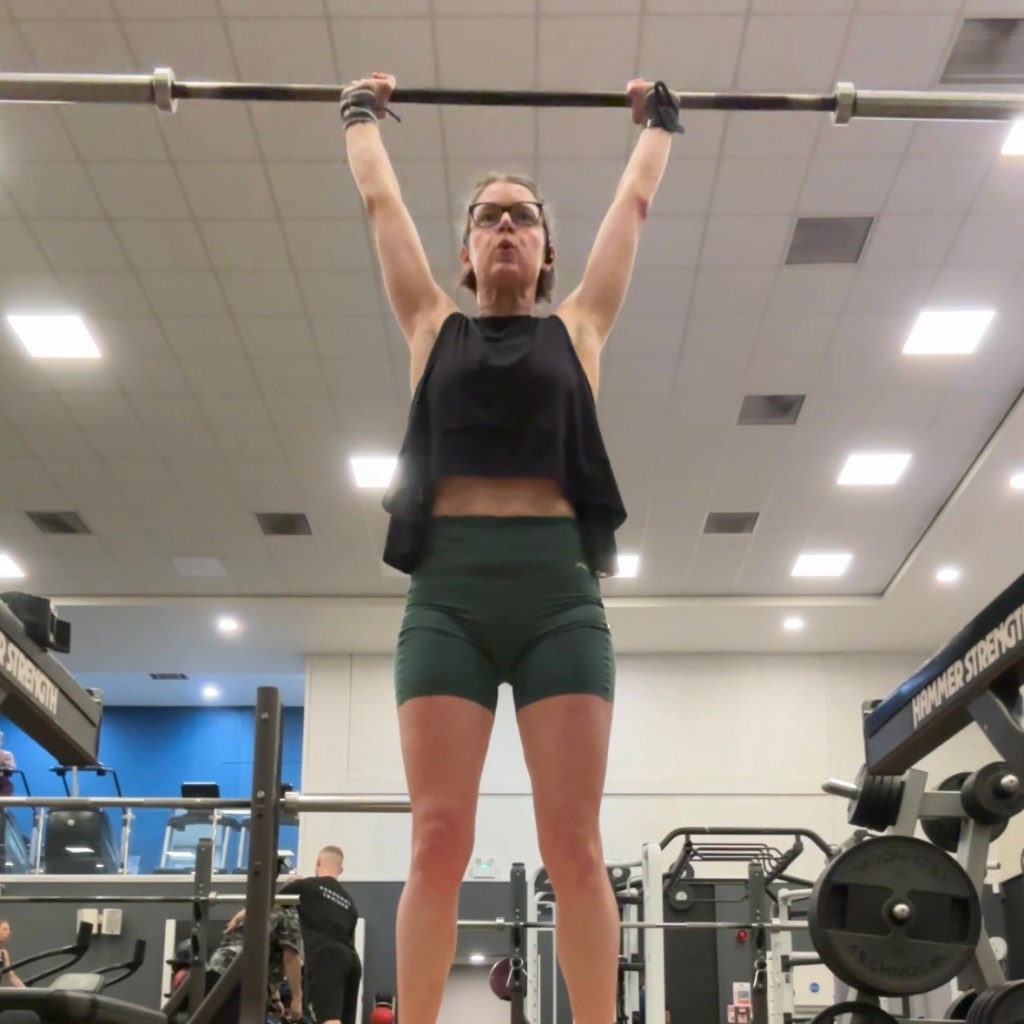
When we hold all potential human knowledge in our pockets, it’s so hard to hold on to curiosity and learn something new. But I have been trying. Once a week, since January, I’ve been to the gym to lift heavy weights. I’m 48 and menopausal, with creaky knees. After battling injury for a year, I now fully believe that lifting heavy weights is going to keep me running.

Heavy weights? I thought this was about being a lightweight. It is, I promise. The weights I lift are puny compared to what I see the awesome women in the gym lifting. But they are heavy for me. I can feel them engaging my core, challenging my stability, and building new muscles. I’m going once a week, and my legs feel stronger and more stable when I’m running. When I did crossfit a few times a week, I was strong but I had so much DOMS (delayed onset muscle soreness) I could barely run.

If you don’t lift weights, going to the gym can be intimidating. Everyone looks like an expert. It’s hard to pick what to do, even harder to know if you’re doing it right. It’s scary to join a class, and expensive to get a 1:1 personal trainer. So social media is doing a lot of heavy lifting (sorry) when it comes to training advice. Over the past few months I’ve had instagram accounts telling me that I won’t make progress unless I lift 3 times a week, that I shouldn’t do deadlifts, I should do romanian deadlifts, I should only squat, I should never squat.

I’m not going to give out training advice, but I will share that I:

  • Only lift once a week – once a week, every week, is my commitment;
  • Prioritise strength, not fitness – I get my cardio from running;
  • Take my time – yeah I look at my phone between sets;
  • Pick things I like – slam balls are fun;
  • Do the same workout every week – then I don’t have to make decisions;
  • Embrace being a lightweight – form is more important than numbers;
  • Increase weight s l o o o o w l y – in four months I’ve only upped my squat and deadlift weights once;
  • Regularly put my wedding ring in the washing machine (in my shorts pocket).

This is working for me. I can now squat down to sit on the floor and stand up again without using my hands! This is my olympics. Find what works for you, and don’t let people on the internet tell you what that is. Including me.

Three minutes of nirvana in a business park

It’s midsummer and I’m jogging eastwards on the cycle path that runs between Lynch Wood business park and the Oundle Road. I’m sweating and tired from five miles of running. 22 degrees at 7am, the sun is high above the treetops already, and there’s only a hint of freshness in the air to remind me it’s early morning.

I turn the corner onto the shaded path. On the left, office buildings are hidden behind trees planted 35 summers ago. To the right an occasional car can be heard, but not seen, passing on the A605. The hawthorn hedge is bursting with umbellifers after a rainy spring. Even the tarmac is a pattern of leaves: the penumbra of plane, hazel and ash. The leaf shadows shift and move in the light, blue and gold against the grey. I slow down, and move to the right, as a man passes with a loping dog.

Alone now, my jog drops into a walk. The shadows deepen into forest on either side of the path, and I shade my eyes with my hand against the sun. I drink it in. Pollen and insects loop around in the breeze, backlit gold on dark green. A bee hangs in the air, a still point as I move past, wings beating furiously to hold it in place.

Ten metres ahead, a muntjac pushes through a gap in the hedge on my right, turning its head to look back at me. It hesitates, deciding whether to push back through. Instead it trots ahead, keeping to the path. I try to keep pace, to keep it in sight between patches of sunlight. After a few seconds it shimmies through a different gap in the hawthorn and off towards the road.

Uplifted, I start to run again. Slow. Aware of the sound of my breath and the brush of air on my arms as they move. I turn back to check for movement: humans, dogs, deer. Looking west, the light shifts into the harsh glare of summer. Leaves lie flat against the sky, and I’m aware of how weary I am. How much I don’t want to get home, to the heat, and all the work I haven’t done.

The end of the path approaches. The avenue of trees opens into a concrete junction. A roundabout, bollards, road signs, kerbs. A mock-tudor office block. For a few minutes, nature took over the suburbs, and joy pushed up through cracks in the concrete.

I swam one length

I’m not badly injured. Just the kind of injured where I can run, but I’m not sure I should. The kind of injured caused by “overuse” rather than anything specific.

A running injury caused by running: a classic of the genre.

(I did not swim in here)

The physio said my knees are “irritated”. The right one is particularly pissed off, making weird clicks when I bend it, and both knees feel a bit swollen the day after a run. Clicks are normal, apparently, but mine don’t feel normal.

I tried running less, stretching more. Leaving it a day between runs stopped the swelling, but I felt too nervous to run fast in case the knees got worse. I don’t want to put up with it, I want it to go away. So I’ve been resting for a week to see if that helps.

I am not good at resting.

After days of doing nothing, on Friday I cracked and cycled to the gym for some sweet sweet sweat. I rowed 2km, did 30 minutes on the elliptical, swam 20 lengths, and cycled home. Swam 20 lengths? So why does the title say one?

When the London marathon was beginning without me in it, last Sunday, I was walking in the rain listening to Lauren Fleshman’s excellent book, GOOD FOR A GIRL. Everyone who cares about women or girls, or running, should read this book. It’s so insightful about what it means to push our bodies and minds to the edge, and how risky that can be for women in a system built for men. Anyway, a throwaway line from the book stayed with me – when injured, Lauren just decided to teach herself front crawl.

I never had swimming lessons. One day my dad took my armbands off, held my belly up for a bit and then let go. It was like riding a bike, if riding a bike involves your parent constantly asking why you still swim like a banana. As a consequence, I can swim one stroke: breaststroke. Badly.

At the pool on Friday, I thought about Lauren Fleshman *deciding* to swim, and I thought about my daughter worrying every week about swimming lessons but going anyway, and I thought about the few times I’d tried to do front crawl and couldn’t get the breathing right, and I just decided to do it anyway. I kept swimming, I kept trying to breathe in every third stroke, I kept trying to breathe out less forcefully in between so that I wasn’t desperate for the breaths every third stroke. It didn’t work, I did run out of breath. But I did keep going.

I swam one length of front crawl and hated every second. Yesterday, I went for a run and loved every second. And my knees are still irritated.

I know the feeling.

Maybe don’t show me the strava stats

I’ve always been a late adopter when it comes to tech. The last person in my friendship group to get a mobile phone, I held out until the day I had to spend an hour and twenty minutes waiting in the car park of Balham Sainsburys because everyone was running late, but had no way of telling me.

When I started running in 1993 I wore a casio stopwatch that went up to one hour, before starting again at 00:00:00. I still have it, it still works, and I’ve never changed the battery. I just looked up when GPS watches were invented, and the first garmin went on sale 20 years ago. I bought one in 2014.

Why did I need a watch to tell me how fast I was running? I worried it would stop me from “running on feel” and listening to my body. Now I can’t imagine running without it. If I want to test whether I’m still running on feel, I just don’t look at my watch during the run, and check the data later. That way I can still run on feel, but also find out if my feelings are accurate.

I’m on my third garmin now, but still a fairly basic version (Forerunner 55) with all the alerts and suggestions switched off. I don’t want my watch to tell me what to do, or nag me to do more. The best thing about using a GPS watch is not having to do sums. Racing used to be a maths test: dividing your goal time by 26.2, writing down key splits on your hand, and re-calculating your pace at every mile marker.

Uploading my runs to strava, I love seeing my routes, and other people’s, to get ideas of where to run. Back in the pre map-my-run days, when I wanted to plan out a long run I genuinely had to get a piece of string and measure out a run on the A-Z or an ordnance survey map. Now I do an online version of this with the amazing OS app. But instead of writing the directions on my hand (hands were very important in the past), I can just look at the route on my phone in the middle of the run, and it tells me where I am.

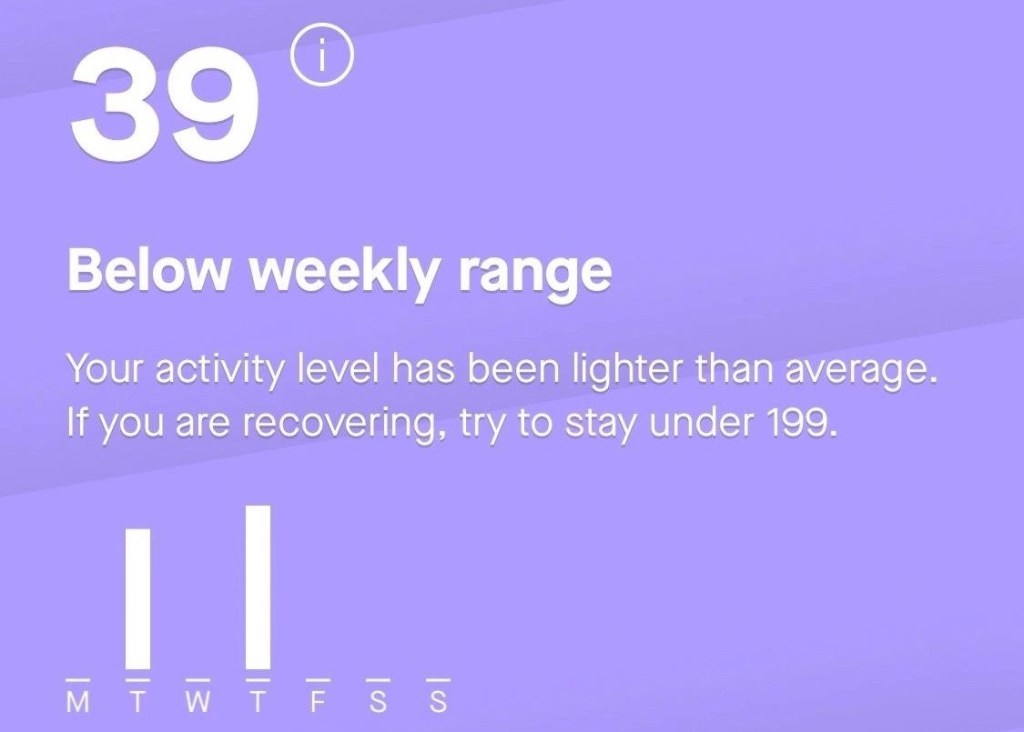
Technology really is magic, and we’re lucky to have it. It has changed so much about running, it’s hard to remember what it used to be like. But last month, my free strava account was automatically upgraded to a subscription for a month, and I remembered that tech isn’t always good for you. At first, I was excited. What’s not to love about viewing our fitness trends over time, and training progress week by week?

What’s not to love? For me, this kind of analysis was de-motivating, and anxiety-inducing. When all my numbers are going up, I feel pressure to keep them there. When they’re going down, I feel depressed and frustrated I’m not making them go up again. This is what losing “running on feel” looks like to me. An overload of analysis which controls my feelings about running. I didn’t feel bad about my training before, but now that I can see the stats, I do.

Strava has tried not to make its language all about monster weeks, and to frame rest weeks as positive. But the colours, the numbers, the charts, they paint more of a picture than the words. If you’re a runner like me who is self-critical, and over-competitive, this is risky.

The month’s subscription just came to an end, and my account is back to normal, just in time for me to pick up a knee injury. So whatever happens now, at least not having to look at my declining fitness trend is a light in the darkness.

Is it a training race, or a race race?

It’s that time of year. You’ve just finished a long marathon training run. Your face is salty, your thighs are throbbing, but you’re buzzing. You did it! It’s in the bank. You upload your run to strava, and while you’re waiting, you scroll through other people’s runs. You look at the distances, the times, the comments. You tap “view analysis” and look at your elapsed time. It doesn’t look as good. The buzz starts wearing off.

“I could have gone faster”, you think.

Yes. You could have gone faster. But *should* you have? The answer is no, and you know it. Long slow runs are called LSRs for a reason. They’re not long tempo runs, or long steady runs, or long fast runs. Being slow is the point.

While we’re out running further, our bodies are getting stronger. The stress of the increased mileage is overloading our muscles, and triggering adaptation. By running slowly, we’re reducing the impact of this overload on our bodies, recovering more quickly, and protecting ourselves from injury. There are no strava crowns for being slow and sensible, so we just have to remember that the benefits are invisible, but real.

This is easy to say, but harder to stick to. Last weekend I ran a 20 mile race- the Tarpley 20 – as part of my marathon training. Before I joined a running club, I had never heard of anyone doing a race as a training run. Don’t these people realise that running is free? I would have said. But long races make for brilliant marathon training. They are locally run, reasonably priced and well supported. If you’re struggling to motivate yourself to cover 30k or 20 miles by yourself, pinning on a race number alongside 300 people who probably feel the same really helps.

The challenge with a training race, though, for anyone with a shred of competitiveness in their veins, is that it’s still a race. It’s really hard not to race a race. I should know, I’ve done it. At the Stamford 30k in 2022 I went too hard in driving rain and picked up a calf strain that ended my chances of running Brighton marathon. At the Oundle 20 in 2019, I got carried away with it being a club championship race and, looking back, put in a much better performance than I managed at Boston marathon four weeks later.

At the start line last Sunday, I could still feel the temptation. Before the race, to guard against this, I had told anyone who’d listen that I was going to take it slow. Even so, I found myself finishing my first mile in 8 minutes 17 seconds (AKA, this year’s goal marathon pace). Luckily, my brother in law caught up with me in mile two and asked me (in the nicest way) what the hell I was doing. Slowing down, I replied.

I did, and as a result, I really enjoyed the run, especially the last few miles. When I got to the finish, I not only felt I could run another 6.2 miles, I actually wanted to. I can honestly say I have never felt like that at the end of any race, ever.

I am not a coach, and I can only talk from my own experience, but I wouldn’t race – as in, properly race – anything longer than 10km in the run up to a marathon. If we’re tempted to push it harder for longer, we need to ask ourselves: what is the main goal? Is it to perform really well in the marathon, and get to it on top form and uninjured? Is it to perform really well in the club champs? Is it to boss the cross country season? Because we cannot do them all.

When it comes to your marathon, so many things about race day are uncertain. Focus on what you can control. Focus on the goal.

Don’t risk leaving your best race in training.

Whisper it… I might be getting my fitness back

After three months of covid and a post-covid cold from hell, I’m finally getting back to my pre-covid fitness. It makes me nervous to write this, in case I chase it away, but I also want to record it. If I say it out loud, I can start to believe it.

Early morning intervals are back

Three months sounds like nothing, but feels like forever. At first I was just happy to be able to get outside. But when my garmin beeped a “your stress levels are unusually high” warning at the start of a run, and then repeatedly told me my easy jogs were done at a “threshold” level heart rate, I was worried. How could I listen to my body, when I felt fine but so obviously wasn’t?

Mine was a mild Covid case, with most of the OG symptoms but no cough. I only took one day off work and, after two weeks of no running, I was keen to start again. People who’d had covid (which at this point was pretty much everyone) kept warning me to “take it easy”, and “don’t rush back to exercise”. It sounded like they wanted to add “… or you’ll get long covid”. I tried to find some proper medical advice for post-covid running, but failed. Is there any?

This Runner’s World article is the best summary I could find of what information there is for us to go on. It shares data on elite athletes, which I did not find helpful, but also looks at a big study of fitbit data which finds that the average covid sufferer doesn’t return to regular resting heartrate for 79 days following infection. 79 days is… three months.

Three months after Covid infection, my heart rate is now connected to the effort I’m putting in. I can stay in the “easy” heart rate zone without stopping to walk, and in the past two weeks I’ve run:

  • my first interval session since October 2022;
  • a 5 mile cross-country race, within 15 seconds a mile of my old pace; and
  • an 18 mile long run.

My heartrate looked normal during each of these, and they were all a massive effort and a hideous struggle. I loved them!

It’ s official. I’m back. (fingers crossed)

January: the month for taking motivation wherever we can find it

Speculoos & cream cheese: motivation in a biscuit

It’s getting near the end of January (hurrah!), and resolutions are fraying along with tempers. We are all hanging out for payday, for lighter days, and warmer weather. But running can’t wait, at least not for me. If I am going to run London marathon this year – and I think I am – I need to get out there now.

Usually I have a training plan, and use that to hold myself to account. But not this year. At least, not yet. I had so much time off running in late 2022 that I never got to build a good marathon running base. My past three months’ running still look like a rollercoaster with big dips for Covid and The Cold, and I haven’t strung together three weeks’ good mileage yet. Once I can do that, I will call it marathon training.

Running without a plan is tempting in the spring or summer, when just being outside is a delight. Right now, ploughing through the mud in -4, not having a plan is a big risk. With energy bills so high, my house is cold, and just getting changed into my running kit is the hardest part of going for a run.

January is the toughest month for running. It’s mad that this is time most people start training for their first marathon. And honestly, if nearly thirty years of running has taught me anything it’s this: find motivation wherever you can. Looking forward to a bath when you get home? Want to wear that new headband? Have to go to the post office? Want to see the seals in the River Nene? All reasons I have used to go for a run in the past two weeks.

The king of motivators – always – is the one I use least: running with other people. I run alone because it’s convenient, but also because there’s nobody else to worry about. Even when I’m running with friends and family I get anxious: am I talking too much? Too little? Am being boring? Am I going too fast? Too slow? I wish I could turn off these fears, because running with other people is brilliant. Time goes more quickly, I get to hear all the gossip, and – most importantly – I always turn up.

(p.s. I did not see the seals)