Life lessons from the injury rollercoaster

Dear Reader, you can see patterns in anything if you look for long enough. My soon to be year of running injured looks like the rolling hills of an inevitable eliptical workout. But am I on a downslope or an upslope? It looks like I should be at my lowest, but I feel hopeful. A disclaimer: here be lessons, but… never take advice from someone who’s falling apart.
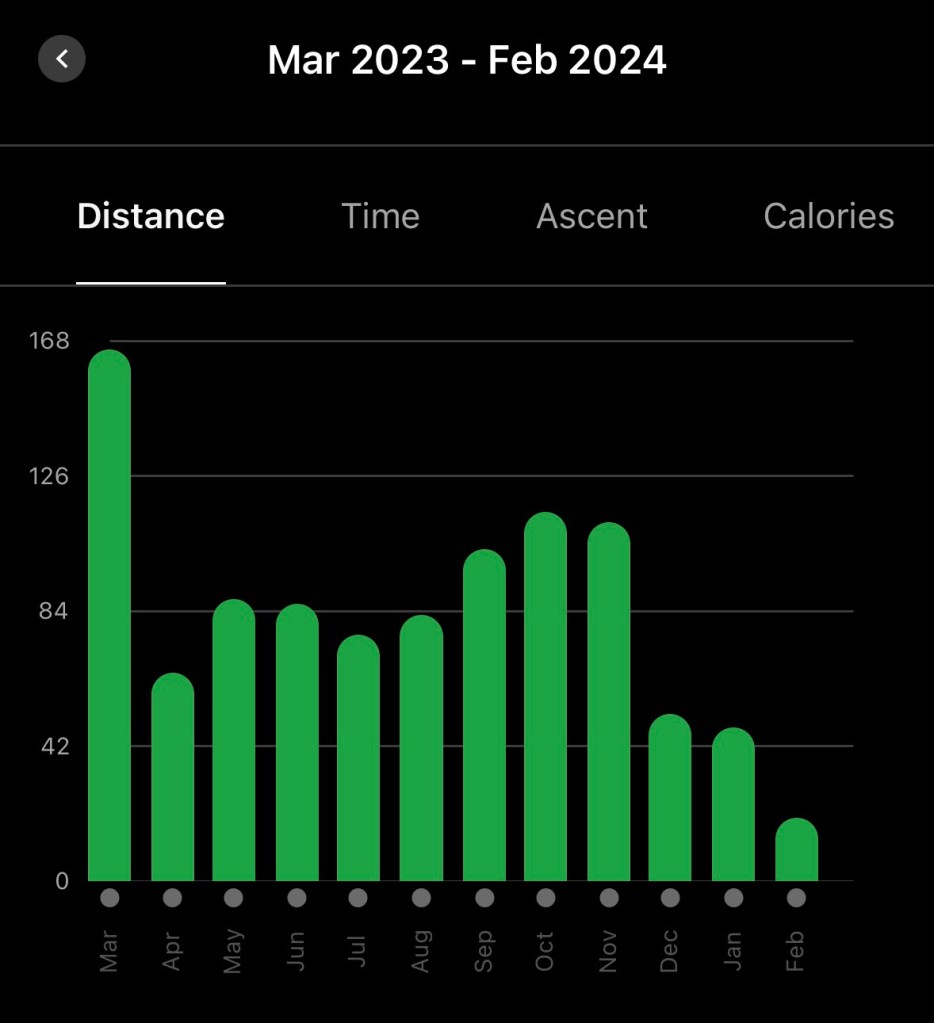
This chart is from my garmin account. I deleted strava before christmas when the tops of my feet starting hurting as well as my knees, and jealousy turned into loathing for everyone out there running ten miles like it was nothing special. No more sharing of photos and wildlife spotting for me. Just an obsessive list of private, unfiltered thoughts on how each run went and why.

My garmin notes run in cycles: celebration! commiseration! mystification! A good run might be because I did my strength exercises the day before. A bad run might be because I was tired from my strength exercises. Or because I didn’t do them. I warmed up. I did too much warm up. It was early. It was late. I was desperately searching for clues as to why my feet and knees were hurting.
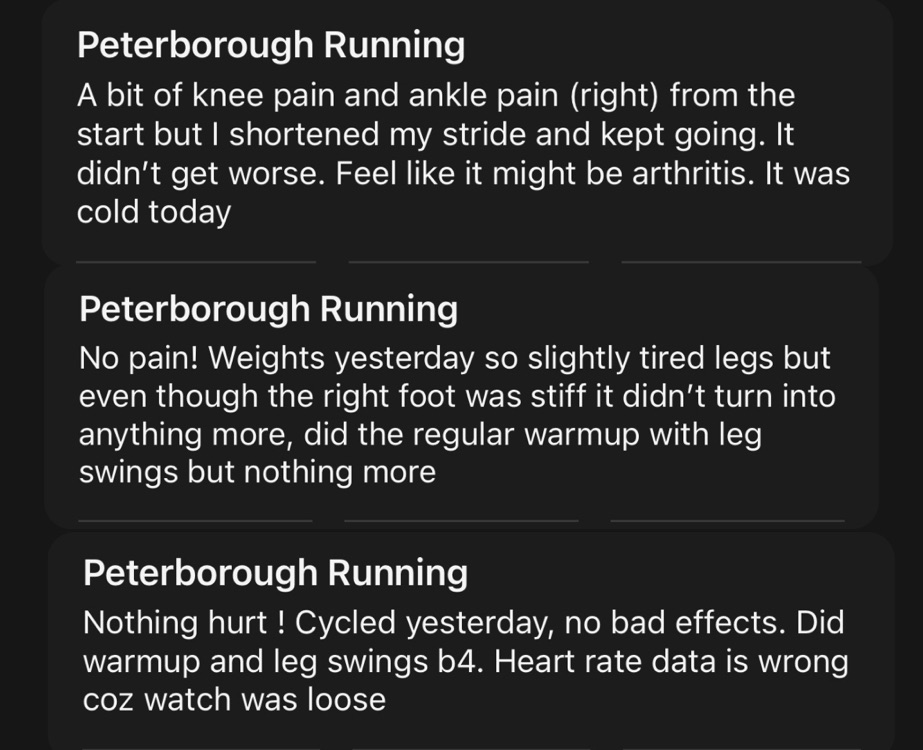
At christmas, I pushed running to the back of my mind like crusty trainers in the shoe cupboard. I dug them out and saw the physio (again) in January. Her opinion was a surprise: I was doing better. My glutes and hamstrings were stronger, nothing seemed seriously wrong. She asked if I’d been doing anything different, and I said I’d been going to group cycling (spin) classes. Actually I had wondered if that’s why the tops of my feet hurt. Her advice: stop the cycling and see if that helped.

It did.

I had been making a pattern where there wasn’t one. Assuming that my ankles were sore because of my knee pain. But maybe… they weren’t connected. This week I ran my first 10k without pain in two months. I started the week planted to the sofa by a cold. Ran 4 miles on Thursday, also without pain, then on Friday I went to the gym for a couple of hours. I mixed cardio with strength, and finished with *proper weights*: deadlifts and back squats on the lifting platform. Swam 40 lengths with Martha on Saturday, ran 6.2 miles on Sunday. Is this the beginning of a good pattern?
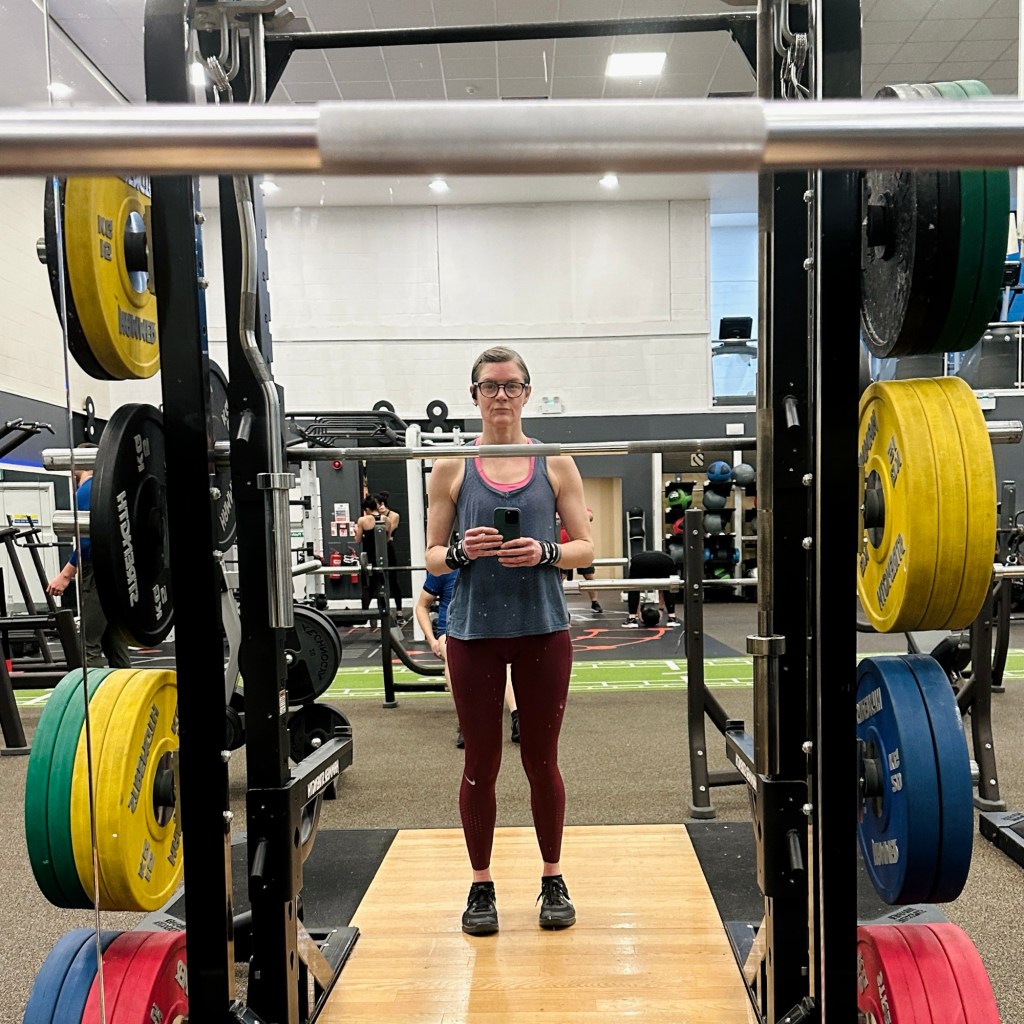
It feels too early to say, but it’s not too soon to share one thing: building strength is the cure. I’ve done a few months of regular homework: split squats with a 5kg weight in each hand; hamstring curls on a swiss ball. The other day I realised that I can almost do a single-leg squat now – something that would have been unthinkable for my shaky ankles and creaky knees a year ago. Building strength for the functional movements of life can only help. This week’s gym session was my third *proper* session and the first where I felt really good. Strong. Like I belonged.

Being sensible / that injured feeling (FGSJ!)

“You’re so sensible! I need to be more like you”, a friend said, about my approach to being injured. I felt good for a few seconds, imagining all the miles I hadn’t run, the risks I hadn’t taken.

A brave face

Then it was back to that injured feeling again: frustrated, guilty, scared, jealous (FGSJ!). Opening strava without thinking, and immediately closing it, but not before I’ve scrolled through enough friends’ runs for pure rage to well up in my throat. In the office, I hear someone standing in the kitchen complaining about their track session last night, and am rooted to my desk by cold twisting vines of envy.

The worst thing is, I don’t know whether I *am* being sensible. Yes, I acted on the first signs of injury, I went to see a physio, I pulled out of my marathon, I stopped training. But I didn’t stop running completely. 12 weeks on, I can manage 20 miles a week, but my knees aren’t cured. They don’t hurt, but the backs still swell up after a run, and I can’t run two days in a row.

At the back of my mind is the fear; what if this is for ever? And what if I just have to accept it? My first running injury (a cracked metatarsal) sent me to the GP, who was mystified as to why I was bothering the NHS with this minor issue. We are not elite athletes. No-one is going to greet us with concern at a packed walk-in clinic, and say “You need an x-ray and a CT scan, stat”. Doctors, like non-runners, think that if your knees hurt when you run, you should stop running. Just do something else instead!

I have been doing other things. Pilates, hiit workouts, deadlifts and squats, swimming. But cycling is too painful on the crotch (how do women do it??!), swimming breaststroke makes my knees click, and the gym plays terrible loud music.

I want to be outside. I want to be running. I don’t want to be sensible.

FGSJ!

I ran in May

Walking through Castor Hanglands a few weeks ago, my mum looked at the trees finally coming into leaf and said, sagely:

“Oak before ash – we’re in for a splash, ash before oak – we’re in for a soak

I’d never heard this before in my life. Which came first this year then, mum? I asked. No idea! she laughed. Either way, we got the soaking in early May. Rain fell continuously for weeks, every single day. The meadows of the Hanglands (the name ‘hangra’ is Old English for a wood on a hill) were boggy, clear water standing on the surface, reflecting the looming clouds. May skies rolled in, full of thunder, hiding an invisible sun.

Running slowly through Thorpe Wood in early May, dying bluebells were replaced by rampant clouds of wild garlic. Jogging home, I swear I could hear the grass growing on either side of the path – shooting up like drinking straws to catch the constant rain.

Everywhere there were puddles and piles of blossom, petals bruised by careless feet. For days, I couldn’t catch the sun on my skin – it would only come out when I was stuck in meetings, or on the train. I wasn’t running much, only two or three times a week to help my knees recover. Every time I planned to run, it poured.

The timetable of spring was jolted out of order by the downpour. Tulips refused to open. Dandelions clocks were weighed down by water, unable to share their seeds. Cowslips fared better, sprouting in fields and roadsides untouched by mowers. It’s nearly June and I haven’t seen a single orchid – it’s usually peak season by now.

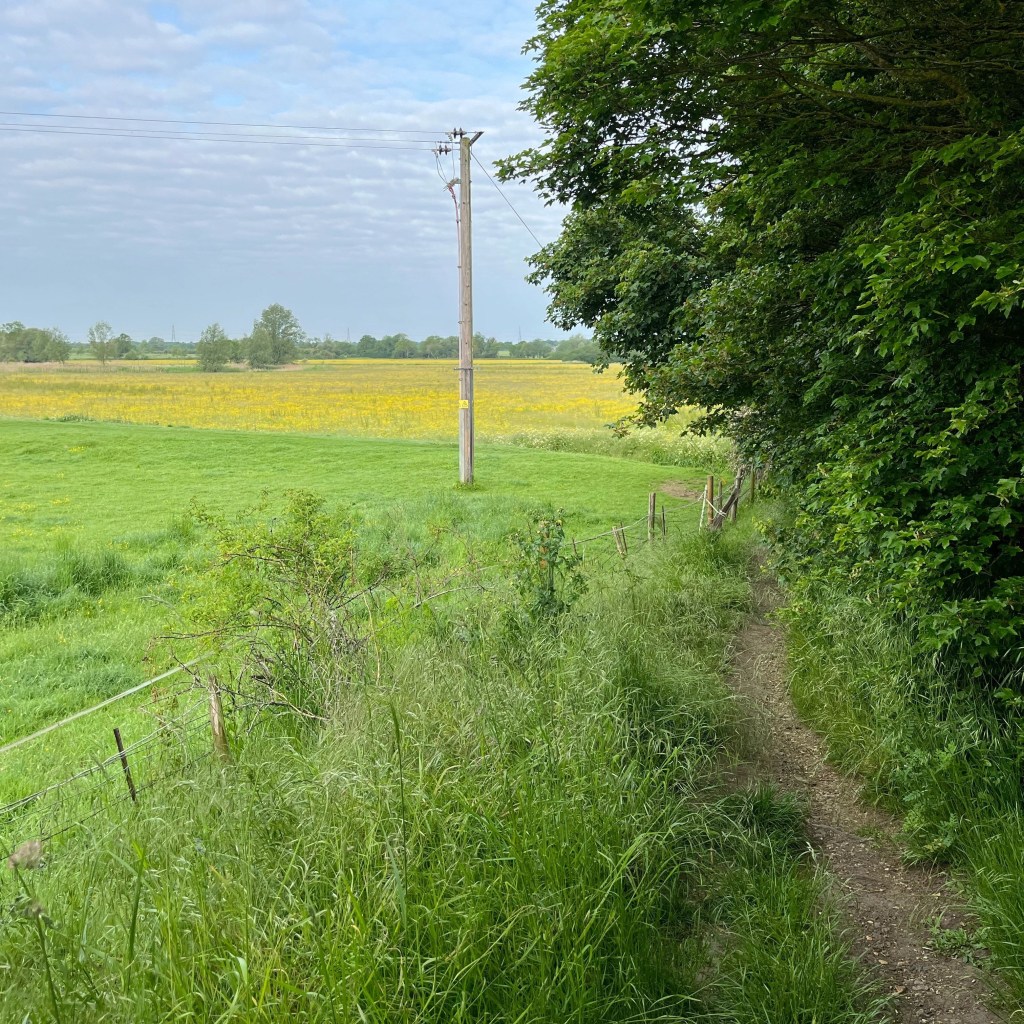
One Sunday in the middle of May, I ran along the footpath to Short Wood and Glapthorn Cow Pasture. It’s a favourite route, and by parking at the top of Southwick hill I could cut the run short to 5 miles, just manageable on my creaking knees. At first I was disappointed. A fine mist rose up from the fields and stayed there, the sun never quite breaking through. But the birds called through the fog, a hare hopped away as I approached, and cow parsley crowded in from every roadside and hedgerow, jewelled with drops of water. In Glapthorn Cow Pasture, I walked slowly along the path, catching my breath and holding it as a trio of nightingales sang to each other.

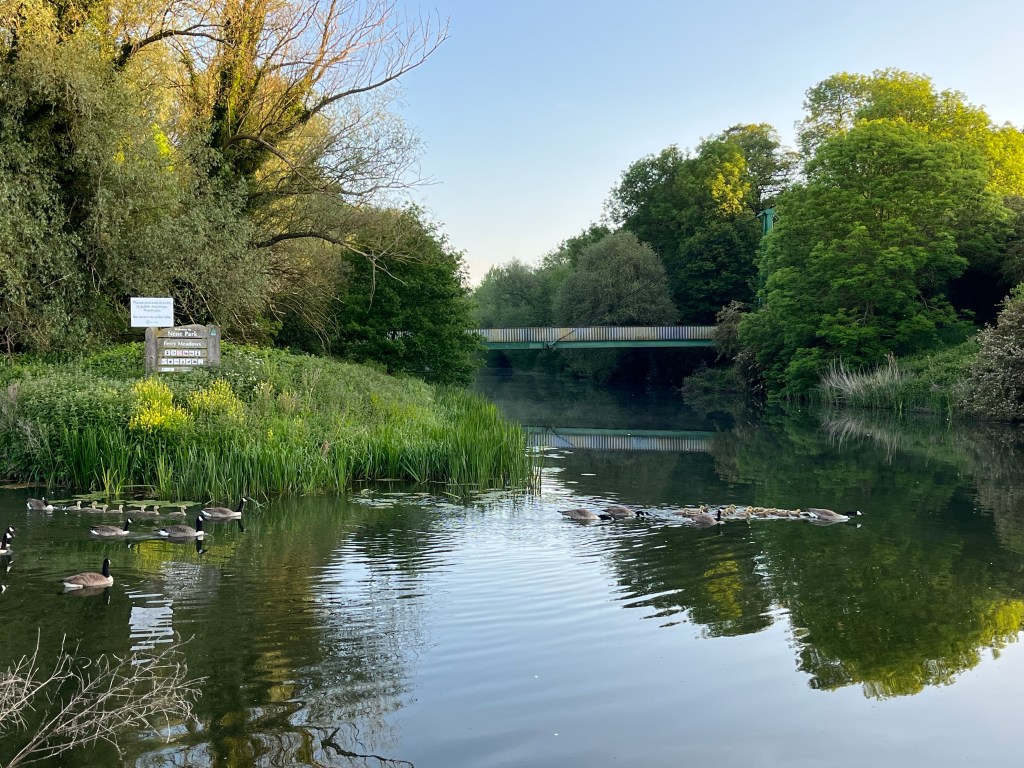
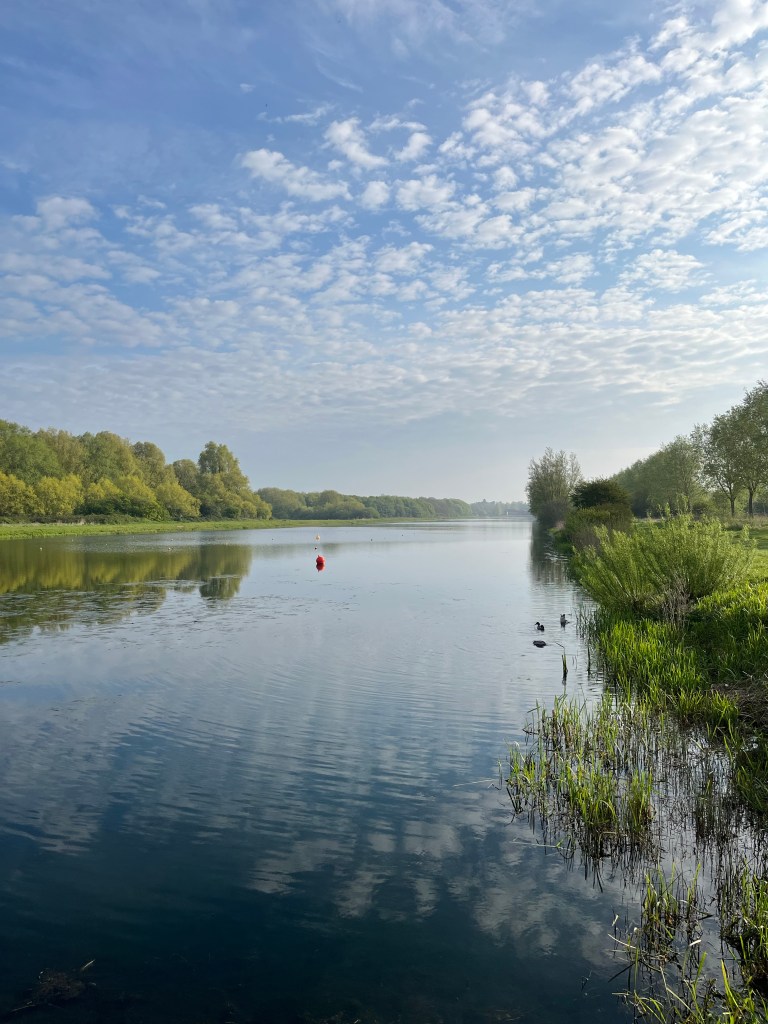
After the fog lifted, a sudden shift. The sun peeped out and the rain stayed away. My two-to-three runs a week became three-to-four. I made it to Ferry Meadows in the early morning and saw goslings, ducklings, baby moorhens, swallows, swifts, sand martins. I heard the cuckoo. I “cast a clout”, and took my gloves off.

Now we’re nearly at the end of the month. The hawthorn blossom is finally out and my gloves are staying in the drawer. I’m not running far, but I made it over to see the buttercups on the Nene Park rural estate, and out on a run with my friend Laura. Two months on from knee injury, regular gym sessions are helping my mobility. I can’t run fast or contemplate a training plan, but I’ve achieved my goal. I ran in May. I’m training to keep running.

I swam one length

I’m not badly injured. Just the kind of injured where I can run, but I’m not sure I should. The kind of injured caused by “overuse” rather than anything specific.

A running injury caused by running: a classic of the genre.

(I did not swim in here)

The physio said my knees are “irritated”. The right one is particularly pissed off, making weird clicks when I bend it, and both knees feel a bit swollen the day after a run. Clicks are normal, apparently, but mine don’t feel normal.

I tried running less, stretching more. Leaving it a day between runs stopped the swelling, but I felt too nervous to run fast in case the knees got worse. I don’t want to put up with it, I want it to go away. So I’ve been resting for a week to see if that helps.

I am not good at resting.

After days of doing nothing, on Friday I cracked and cycled to the gym for some sweet sweet sweat. I rowed 2km, did 30 minutes on the elliptical, swam 20 lengths, and cycled home. Swam 20 lengths? So why does the title say one?

When the London marathon was beginning without me in it, last Sunday, I was walking in the rain listening to Lauren Fleshman’s excellent book, GOOD FOR A GIRL. Everyone who cares about women or girls, or running, should read this book. It’s so insightful about what it means to push our bodies and minds to the edge, and how risky that can be for women in a system built for men. Anyway, a throwaway line from the book stayed with me – when injured, Lauren just decided to teach herself front crawl.

I never had swimming lessons. One day my dad took my armbands off, held my belly up for a bit and then let go. It was like riding a bike, if riding a bike involves your parent constantly asking why you still swim like a banana. As a consequence, I can swim one stroke: breaststroke. Badly.

At the pool on Friday, I thought about Lauren Fleshman *deciding* to swim, and I thought about my daughter worrying every week about swimming lessons but going anyway, and I thought about the few times I’d tried to do front crawl and couldn’t get the breathing right, and I just decided to do it anyway. I kept swimming, I kept trying to breathe in every third stroke, I kept trying to breathe out less forcefully in between so that I wasn’t desperate for the breaths every third stroke. It didn’t work, I did run out of breath. But I did keep going.

I swam one length of front crawl and hated every second. Yesterday, I went for a run and loved every second. And my knees are still irritated.

I know the feeling.

Is it a training race, or a race race?

It’s that time of year. You’ve just finished a long marathon training run. Your face is salty, your thighs are throbbing, but you’re buzzing. You did it! It’s in the bank. You upload your run to strava, and while you’re waiting, you scroll through other people’s runs. You look at the distances, the times, the comments. You tap “view analysis” and look at your elapsed time. It doesn’t look as good. The buzz starts wearing off.

“I could have gone faster”, you think.

Yes. You could have gone faster. But *should* you have? The answer is no, and you know it. Long slow runs are called LSRs for a reason. They’re not long tempo runs, or long steady runs, or long fast runs. Being slow is the point.

While we’re out running further, our bodies are getting stronger. The stress of the increased mileage is overloading our muscles, and triggering adaptation. By running slowly, we’re reducing the impact of this overload on our bodies, recovering more quickly, and protecting ourselves from injury. There are no strava crowns for being slow and sensible, so we just have to remember that the benefits are invisible, but real.

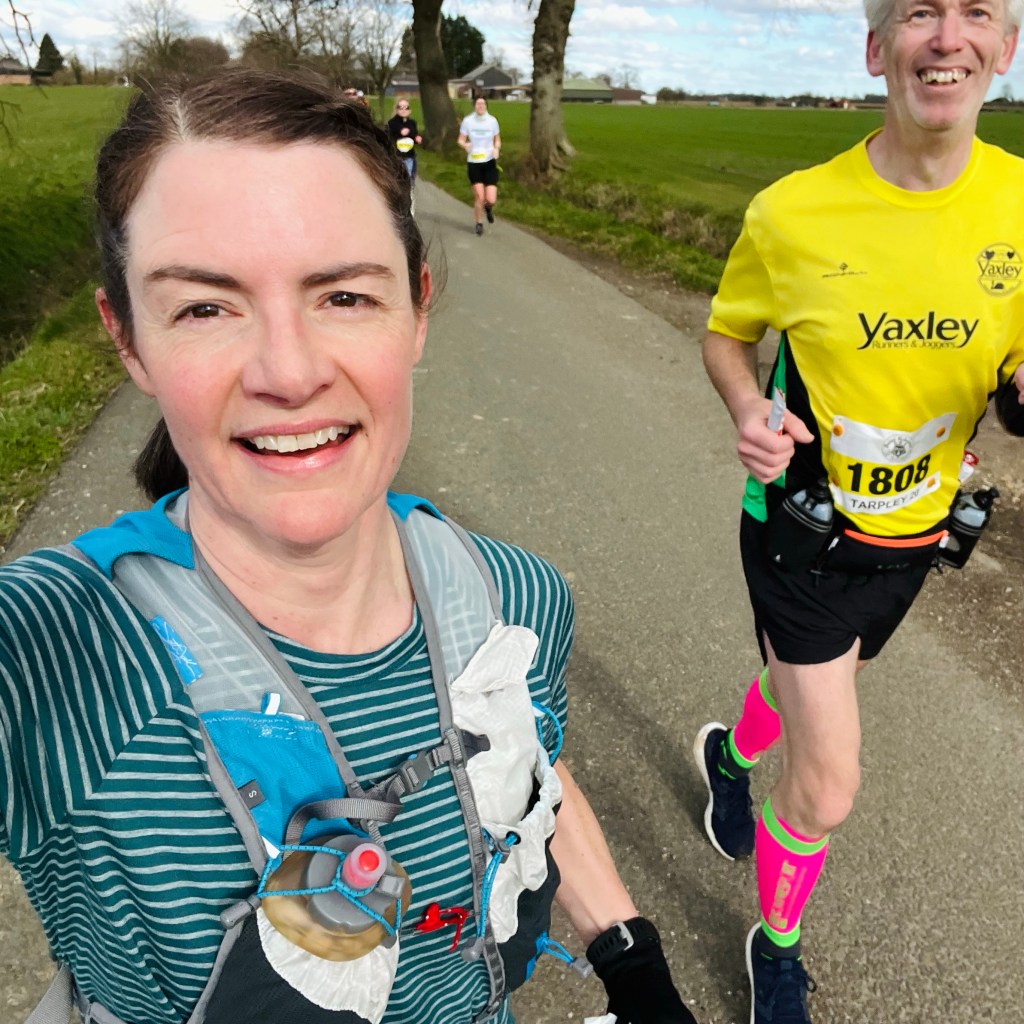
This is easy to say, but harder to stick to. Last weekend I ran a 20 mile race- the Tarpley 20 – as part of my marathon training. Before I joined a running club, I had never heard of anyone doing a race as a training run. Don’t these people realise that running is free? I would have said. But long races make for brilliant marathon training. They are locally run, reasonably priced and well supported. If you’re struggling to motivate yourself to cover 30k or 20 miles by yourself, pinning on a race number alongside 300 people who probably feel the same really helps.

The challenge with a training race, though, for anyone with a shred of competitiveness in their veins, is that it’s still a race. It’s really hard not to race a race. I should know, I’ve done it. At the Stamford 30k in 2022 I went too hard in driving rain and picked up a calf strain that ended my chances of running Brighton marathon. At the Oundle 20 in 2019, I got carried away with it being a club championship race and, looking back, put in a much better performance than I managed at Boston marathon four weeks later.

At the start line last Sunday, I could still feel the temptation. Before the race, to guard against this, I had told anyone who’d listen that I was going to take it slow. Even so, I found myself finishing my first mile in 8 minutes 17 seconds (AKA, this year’s goal marathon pace). Luckily, my brother in law caught up with me in mile two and asked me (in the nicest way) what the hell I was doing. Slowing down, I replied.

I did, and as a result, I really enjoyed the run, especially the last few miles. When I got to the finish, I not only felt I could run another 6.2 miles, I actually wanted to. I can honestly say I have never felt like that at the end of any race, ever.

I am not a coach, and I can only talk from my own experience, but I wouldn’t race – as in, properly race – anything longer than 10km in the run up to a marathon. If we’re tempted to push it harder for longer, we need to ask ourselves: what is the main goal? Is it to perform really well in the marathon, and get to it on top form and uninjured? Is it to perform really well in the club champs? Is it to boss the cross country season? Because we cannot do them all.

When it comes to your marathon, so many things about race day are uncertain. Focus on what you can control. Focus on the goal.

Don’t risk leaving your best race in training.

The Running Blues

Spring is here in London, but my spirits have not lifted with the weather. My heart did not skip a beat with the clocks this weekend. Despite running along paths lined with daffodils, I’ve been feeling blue.

20120326-083620.jpg

I’ve still got 6 weeks of training left before the North Dorset Village Marathon, and have been running hard for the last 8 weeks, so decided in advance to have an ‘easy week’ last week.  Sadly it turned out to be a necessity rather than a luxury.

My creaky knees have been creaking a more than usual, and they’re making me worried. I dropped the mileage from 40 to 28, cut out all sessions and took 3 rest days. They’re still creaking. I know what it is (runner’s knee), and that if I rested for a few weeks and built up my glutes and inner thigh muscles (which I’m sure have a name) then I could sort it out. But that’s not really an option for this race.

Hopefully the quieter week will make its presence felt next week and Sunday’s uncomfortable 10 miles will be a low point. Hopefully…

Weekly summary:

Monday: rest
Tuesday: 5 miles easy
Wednesday: 8 miles at marathon pace
Thursday: rest
Friday: 5 miles easy
Saturday: rest
Sunday: 10 miles easy

Total: 28 miles

My Left Foot

A week ago I went for a reflexology foot massage in a room down a backstreet in Chinatown, where they wash your feet in blue detergent and make you drink water as warm as blood. I was initiated into this experience by a very good friend, who promptly fell asleep as soon as fingers hit foot. My eyes were wide open throughout. No amount of Heart FM, soft cantonese chat or cracked leather seating was going to distract me from the matter in hand. My feet were being attacked.

I am not a fan of physical contact from strangers. My parents are from Yorkshire, where a nod is an intimate indication of love. Over the years, however, running has necessitated several back massages and some painful physiotherapy, during which I have been known to yelp like a frightened puppy.

The foot massage was better. I didn’t scream and managed to stay seated for the whole 45 minutes. My feet felt pleasant afterwards. During, however, my primary concern was that the masseuse’s fingers would snap something important. I suspect that this probably can’t actually happen, but I don’t know that it can’t. It must be at least a possibility. It certainly felt like one, particularly when the tendons on my left foot were being plucked like strings on a double bass.

Yesterday night I ran 7 miles home from work and afterwards, lying on the sofa stuffing my face with pancakes, I realised that the outside sole of my left foot was hurting. Was it stiff? Was it pulled? Was something about to snap? It was painful when I walked, but also when I didn’t.

It hurts less this morning, but I can still feel it. I have put off this morning’s run until the evening. I will wear my old trainers in case new ones are the issue. I will take care. I will not panic.

I might have to go back to Chinatown.

Bank Holiday Catch-up

… or, With Great Miles comes Greater Risk of Injury.

We’ve been away for another weekend, so this is another 3 run post. Oops. A run on Friday night, Saturday morning and Sunday morning  contributed to four days of consecutive running, the most in a while, and by Sunday night my knees were complaining.

Staying over with our energetic nephews, I had to lever myself to a standing position every time I took my shoes off and put them on again to play in the garden. Something was up, I realised, and that something was not me, stuck in an arthritic crouch on the stair carpet.

I’m not injured, I wouldn’t say, but there’s a definite niggle in the left knee. A Niggle is a runner’s term for ‘something that isn’t going to stop me from running even though it probably should’. Niggles are like badges of honour, war wounds, proof of effort. I took a day off on Monday but I could have run on the knee. “It feels better when I’m running”, I would have said (the familiar justification of the Runner’s Niggle).

As I write I am currently weighing up the sense of running tonight or saving it until the morning. The knee is fine. No, really, it is fine. If I don’t bend down it is fine. I don’t need to bend down, really, if I take my shoes off from a standing position I can stretch my hamstrings at the same time. Much better.