Physio killed the cardio star

Physio exercises: I am doing them; I hate them; they’re working. It’s been ten weeks since my second trip to the physio (this injury cycle) and I’m finally ready to jinx it by writing this. My knees are not fixed, my rage is getting a regular workout, but… I’m running.

Nothing is more revealing of how pathetic it is to be human than a page of simple physio exercises, sitting unopened in your inbox, silently shaming you. Why is it so hard to take a few minutes for tiny stretches or little calf raises we can do while watching tv?

I wouldn’t know, because my physio exercises are not those kind of exercises. They’re the kind of exercises that take me as long as a five mile run, and make me nearly as sweaty. Four times four sets of twelve (split squats, hamstring walk outs, squat jumps, hamstring curls on a swiss ball). With weights. With rest between. With plyometrics now added. Plus skipping. And pilates.

If this sounds like strength training to you, that’s because it is, and I resent every single minute that it takes out of my life. To begin with, I did the whole routine every other day. I started to have have anxiety dreams about hamstring walk outs, and put it off until bedtime, then spent 45 minutes in my pyjamas swearing on a yoga mat.

I’m down to three times a week (ok I’ve done it twice this week, plus skipping and pilates), which has helped. Other things that have made it less horrific:

  • wearing trainers rather than wobbling around in bare feet;
  • building up to using weights for all sets by starting with one, then two, etc;
  • doing at least one set in the gym – no idea why it’s easier there, but it is!

Another thing that might have helped is starting HRT. When I mentioned to the physio that I was menopausal now (last period, October 2022), and currently having a hot flush once every 15 minutes, she said this might mean an increased risk of injury as I enter menopause, with slower rates of healing. When I thought HRT might get me running again, I made the appointment.

“Is it menopause?”, is very much like a less fun version of “Is it Cake?”, with none of the satisfying feeling when you get it right. I don’t know if the HRT is working, or the strength training is. But I ran 27 miles last week and every run felt ok. Please don’t let this jinx it.

Three minutes of nirvana in a business park

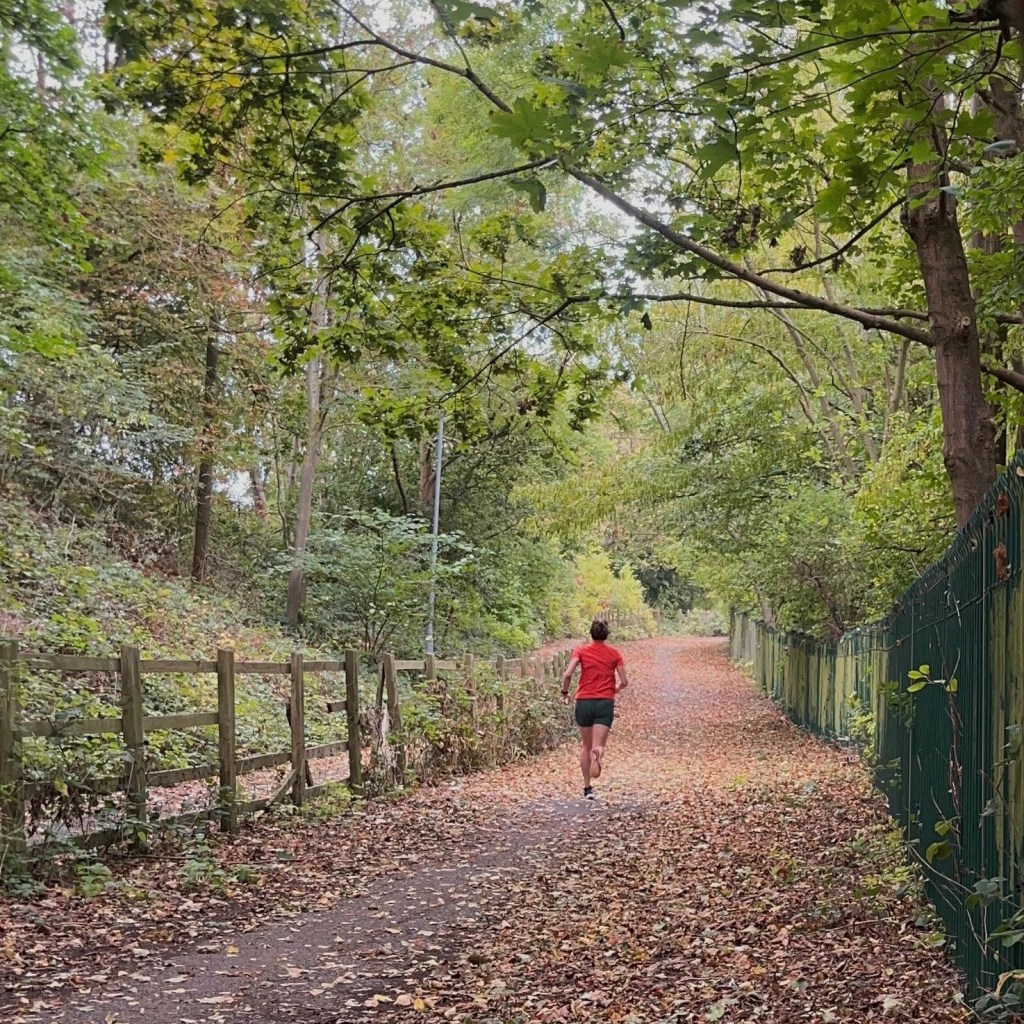
It’s midsummer and I’m jogging eastwards on the cycle path that runs between Lynch Wood business park and the Oundle Road. I’m sweating and tired from five miles of running. 22 degrees at 7am, the sun is high above the treetops already, and there’s only a hint of freshness in the air to remind me it’s early morning.

I turn the corner onto the shaded path. On the left, office buildings are hidden behind trees planted 35 summers ago. To the right an occasional car can be heard, but not seen, passing on the A605. The hawthorn hedge is bursting with umbellifers after a rainy spring. Even the tarmac is a pattern of leaves: the penumbra of plane, hazel and ash. The leaf shadows shift and move in the light, blue and gold against the grey. I slow down, and move to the right, as a man passes with a loping dog.

Alone now, my jog drops into a walk. The shadows deepen into forest on either side of the path, and I shade my eyes with my hand against the sun. I drink it in. Pollen and insects loop around in the breeze, backlit gold on dark green. A bee hangs in the air, a still point as I move past, wings beating furiously to hold it in place.

Ten metres ahead, a muntjac pushes through a gap in the hedge on my right, turning its head to look back at me. It hesitates, deciding whether to push back through. Instead it trots ahead, keeping to the path. I try to keep pace, to keep it in sight between patches of sunlight. After a few seconds it shimmies through a different gap in the hawthorn and off towards the road.

Uplifted, I start to run again. Slow. Aware of the sound of my breath and the brush of air on my arms as they move. I turn back to check for movement: humans, dogs, deer. Looking west, the light shifts into the harsh glare of summer. Leaves lie flat against the sky, and I’m aware of how weary I am. How much I don’t want to get home, to the heat, and all the work I haven’t done.

The end of the path approaches. The avenue of trees opens into a concrete junction. A roundabout, bollards, road signs, kerbs. A mock-tudor office block. For a few minutes, nature took over the suburbs, and joy pushed up through cracks in the concrete.

Being sensible / that injured feeling (FGSJ!)

“You’re so sensible! I need to be more like you”, a friend said, about my approach to being injured. I felt good for a few seconds, imagining all the miles I hadn’t run, the risks I hadn’t taken.

A brave face

Then it was back to that injured feeling again: frustrated, guilty, scared, jealous (FGSJ!). Opening strava without thinking, and immediately closing it, but not before I’ve scrolled through enough friends’ runs for pure rage to well up in my throat. In the office, I hear someone standing in the kitchen complaining about their track session last night, and am rooted to my desk by cold twisting vines of envy.

The worst thing is, I don’t know whether I *am* being sensible. Yes, I acted on the first signs of injury, I went to see a physio, I pulled out of my marathon, I stopped training. But I didn’t stop running completely. 12 weeks on, I can manage 20 miles a week, but my knees aren’t cured. They don’t hurt, but the backs still swell up after a run, and I can’t run two days in a row.

At the back of my mind is the fear; what if this is for ever? And what if I just have to accept it? My first running injury (a cracked metatarsal) sent me to the GP, who was mystified as to why I was bothering the NHS with this minor issue. We are not elite athletes. No-one is going to greet us with concern at a packed walk-in clinic, and say “You need an x-ray and a CT scan, stat”. Doctors, like non-runners, think that if your knees hurt when you run, you should stop running. Just do something else instead!

I have been doing other things. Pilates, hiit workouts, deadlifts and squats, swimming. But cycling is too painful on the crotch (how do women do it??!), swimming breaststroke makes my knees click, and the gym plays terrible loud music.

I want to be outside. I want to be running. I don’t want to be sensible.

FGSJ!

I ran in May

Walking through Castor Hanglands a few weeks ago, my mum looked at the trees finally coming into leaf and said, sagely:

“Oak before ash – we’re in for a splash, ash before oak – we’re in for a soak

I’d never heard this before in my life. Which came first this year then, mum? I asked. No idea! she laughed. Either way, we got the soaking in early May. Rain fell continuously for weeks, every single day. The meadows of the Hanglands (the name ‘hangra’ is Old English for a wood on a hill) were boggy, clear water standing on the surface, reflecting the looming clouds. May skies rolled in, full of thunder, hiding an invisible sun.

Running slowly through Thorpe Wood in early May, dying bluebells were replaced by rampant clouds of wild garlic. Jogging home, I swear I could hear the grass growing on either side of the path – shooting up like drinking straws to catch the constant rain.

Everywhere there were puddles and piles of blossom, petals bruised by careless feet. For days, I couldn’t catch the sun on my skin – it would only come out when I was stuck in meetings, or on the train. I wasn’t running much, only two or three times a week to help my knees recover. Every time I planned to run, it poured.

The timetable of spring was jolted out of order by the downpour. Tulips refused to open. Dandelions clocks were weighed down by water, unable to share their seeds. Cowslips fared better, sprouting in fields and roadsides untouched by mowers. It’s nearly June and I haven’t seen a single orchid – it’s usually peak season by now.

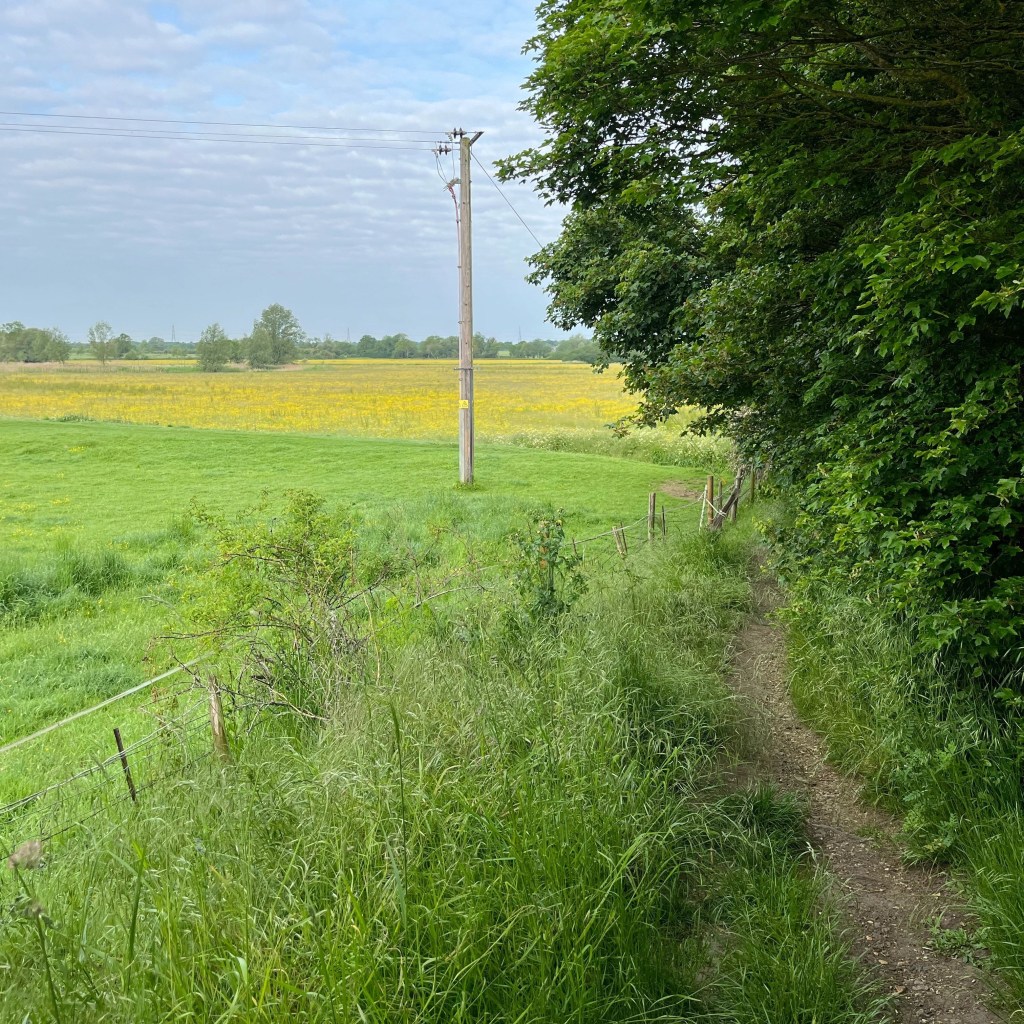
One Sunday in the middle of May, I ran along the footpath to Short Wood and Glapthorn Cow Pasture. It’s a favourite route, and by parking at the top of Southwick hill I could cut the run short to 5 miles, just manageable on my creaking knees. At first I was disappointed. A fine mist rose up from the fields and stayed there, the sun never quite breaking through. But the birds called through the fog, a hare hopped away as I approached, and cow parsley crowded in from every roadside and hedgerow, jewelled with drops of water. In Glapthorn Cow Pasture, I walked slowly along the path, catching my breath and holding it as a trio of nightingales sang to each other.

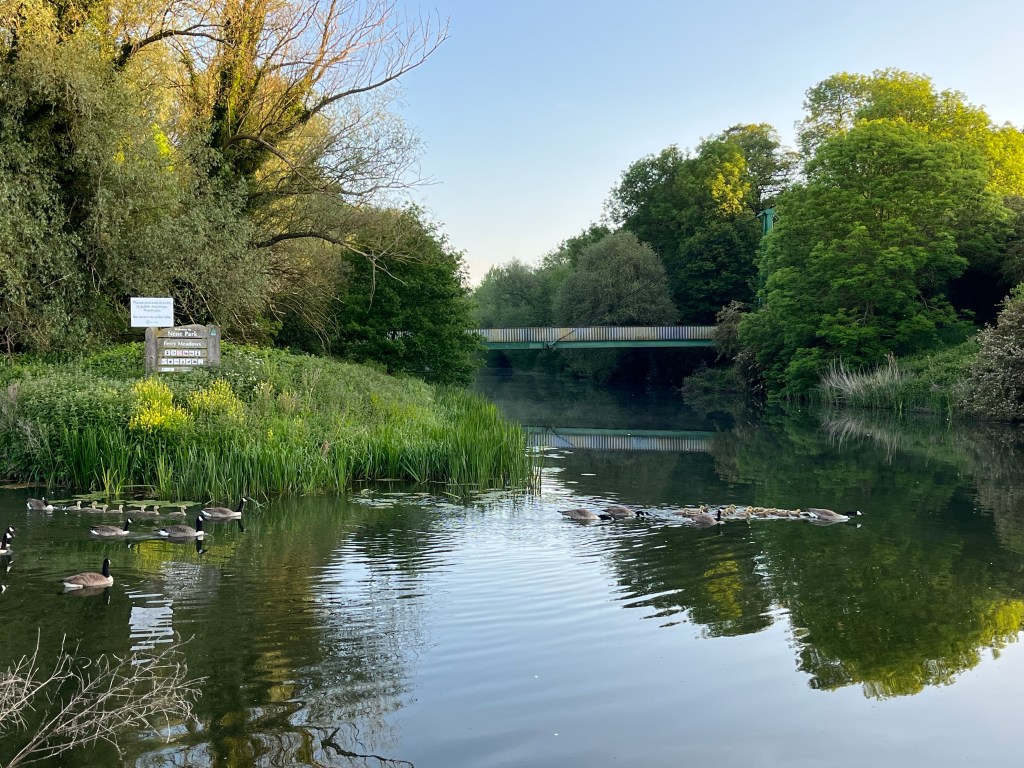
After the fog lifted, a sudden shift. The sun peeped out and the rain stayed away. My two-to-three runs a week became three-to-four. I made it to Ferry Meadows in the early morning and saw goslings, ducklings, baby moorhens, swallows, swifts, sand martins. I heard the cuckoo. I “cast a clout”, and took my gloves off.

Now we’re nearly at the end of the month. The hawthorn blossom is finally out and my gloves are staying in the drawer. I’m not running far, but I made it over to see the buttercups on the Nene Park rural estate, and out on a run with my friend Laura. Two months on from knee injury, regular gym sessions are helping my mobility. I can’t run fast or contemplate a training plan, but I’ve achieved my goal. I ran in May. I’m training to keep running.

I swam one length

I’m not badly injured. Just the kind of injured where I can run, but I’m not sure I should. The kind of injured caused by “overuse” rather than anything specific.

A running injury caused by running: a classic of the genre.

(I did not swim in here)

The physio said my knees are “irritated”. The right one is particularly pissed off, making weird clicks when I bend it, and both knees feel a bit swollen the day after a run. Clicks are normal, apparently, but mine don’t feel normal.

I tried running less, stretching more. Leaving it a day between runs stopped the swelling, but I felt too nervous to run fast in case the knees got worse. I don’t want to put up with it, I want it to go away. So I’ve been resting for a week to see if that helps.

I am not good at resting.

After days of doing nothing, on Friday I cracked and cycled to the gym for some sweet sweet sweat. I rowed 2km, did 30 minutes on the elliptical, swam 20 lengths, and cycled home. Swam 20 lengths? So why does the title say one?

When the London marathon was beginning without me in it, last Sunday, I was walking in the rain listening to Lauren Fleshman’s excellent book, GOOD FOR A GIRL. Everyone who cares about women or girls, or running, should read this book. It’s so insightful about what it means to push our bodies and minds to the edge, and how risky that can be for women in a system built for men. Anyway, a throwaway line from the book stayed with me – when injured, Lauren just decided to teach herself front crawl.

I never had swimming lessons. One day my dad took my armbands off, held my belly up for a bit and then let go. It was like riding a bike, if riding a bike involves your parent constantly asking why you still swim like a banana. As a consequence, I can swim one stroke: breaststroke. Badly.

At the pool on Friday, I thought about Lauren Fleshman *deciding* to swim, and I thought about my daughter worrying every week about swimming lessons but going anyway, and I thought about the few times I’d tried to do front crawl and couldn’t get the breathing right, and I just decided to do it anyway. I kept swimming, I kept trying to breathe in every third stroke, I kept trying to breathe out less forcefully in between so that I wasn’t desperate for the breaths every third stroke. It didn’t work, I did run out of breath. But I did keep going.

I swam one length of front crawl and hated every second. Yesterday, I went for a run and loved every second. And my knees are still irritated.

I know the feeling.

Maybe don’t show me the strava stats

I’ve always been a late adopter when it comes to tech. The last person in my friendship group to get a mobile phone, I held out until the day I had to spend an hour and twenty minutes waiting in the car park of Balham Sainsburys because everyone was running late, but had no way of telling me.

When I started running in 1993 I wore a casio stopwatch that went up to one hour, before starting again at 00:00:00. I still have it, it still works, and I’ve never changed the battery. I just looked up when GPS watches were invented, and the first garmin went on sale 20 years ago. I bought one in 2014.

Why did I need a watch to tell me how fast I was running? I worried it would stop me from “running on feel” and listening to my body. Now I can’t imagine running without it. If I want to test whether I’m still running on feel, I just don’t look at my watch during the run, and check the data later. That way I can still run on feel, but also find out if my feelings are accurate.

I’m on my third garmin now, but still a fairly basic version (Forerunner 55) with all the alerts and suggestions switched off. I don’t want my watch to tell me what to do, or nag me to do more. The best thing about using a GPS watch is not having to do sums. Racing used to be a maths test: dividing your goal time by 26.2, writing down key splits on your hand, and re-calculating your pace at every mile marker.

Uploading my runs to strava, I love seeing my routes, and other people’s, to get ideas of where to run. Back in the pre map-my-run days, when I wanted to plan out a long run I genuinely had to get a piece of string and measure out a run on the A-Z or an ordnance survey map. Now I do an online version of this with the amazing OS app. But instead of writing the directions on my hand (hands were very important in the past), I can just look at the route on my phone in the middle of the run, and it tells me where I am.

Technology really is magic, and we’re lucky to have it. It has changed so much about running, it’s hard to remember what it used to be like. But last month, my free strava account was automatically upgraded to a subscription for a month, and I remembered that tech isn’t always good for you. At first, I was excited. What’s not to love about viewing our fitness trends over time, and training progress week by week?

What’s not to love? For me, this kind of analysis was de-motivating, and anxiety-inducing. When all my numbers are going up, I feel pressure to keep them there. When they’re going down, I feel depressed and frustrated I’m not making them go up again. This is what losing “running on feel” looks like to me. An overload of analysis which controls my feelings about running. I didn’t feel bad about my training before, but now that I can see the stats, I do.

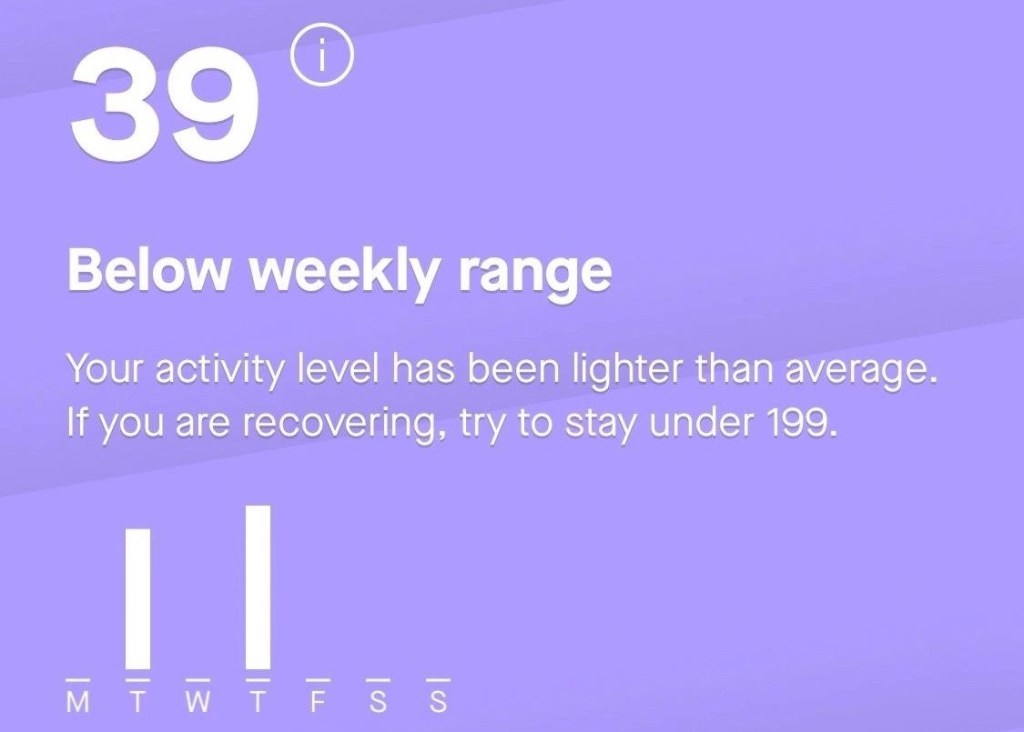
Strava has tried not to make its language all about monster weeks, and to frame rest weeks as positive. But the colours, the numbers, the charts, they paint more of a picture than the words. If you’re a runner like me who is self-critical, and over-competitive, this is risky.

The month’s subscription just came to an end, and my account is back to normal, just in time for me to pick up a knee injury. So whatever happens now, at least not having to look at my declining fitness trend is a light in the darkness.

Is it a cross-country race, or is it a near-death experience?

I’m not just here for the good days, the training revelations and pictures of dreamy footpaths. I’m here for the worst days too. The races that are so bad you don’t want to run another step, and even though you don’t give up, you can’t feel good about it afterwards because you hated it so much you wish you had given up.

I had one of those days at the last race of our local cross-country season on Sunday 12th March. Nearly two weeks have passed, but the pain is still fresh enough to write about it. I never enjoy this race. The final in our “frostbite” season, it’s always unseasonably warm, and lo, the sun was shining. It’s also famously windy, and lo, the wind was blowing.

Beginning in Huntingdon’s Jubilee Park, the five mile race starts with a long lap of a boggy playing field, where everyone goes pounding off too fast around the sides of a football pitch, blocking your view of the ankle-breaking divots in the grass. Once your heartrate is good and high, the field squeezes through a gap in a spiky hedge out onto the course proper: long miles of rough grassy paths on the fringes of exposed open farmland, somehow both flat and uphill, and buffeted by a constant howling gale.

The worst thing about this terrible race is how far ahead you can see. If you manage to lift your eyes up from the ground for a second, there will be a long string of faster runners in the distance, reminding you how much further you have to go. And the absolute very worst thing is the section in mile four where the sketchy path turns into a lumpy bank for half a mile. I won’t even call this part a “path” because literally no-one has set foot on it for a year since the last race. It is lumpy, tussocky, long grass, with huge holes and nowhere safe to put your feet. As soon as it began, I remembered it from the last time, and the urge to walk, stop, or lie down and wait for death, was overwhelming.

Luckily, most other runners were also hating it. Despite slowing down to what felt like a crawl, I didn’t get passed by many people. And several were walking – not something I usually see in a frostbite race. Looking at strava afterwards, I took a tiny shred of comfort from the misery of others.

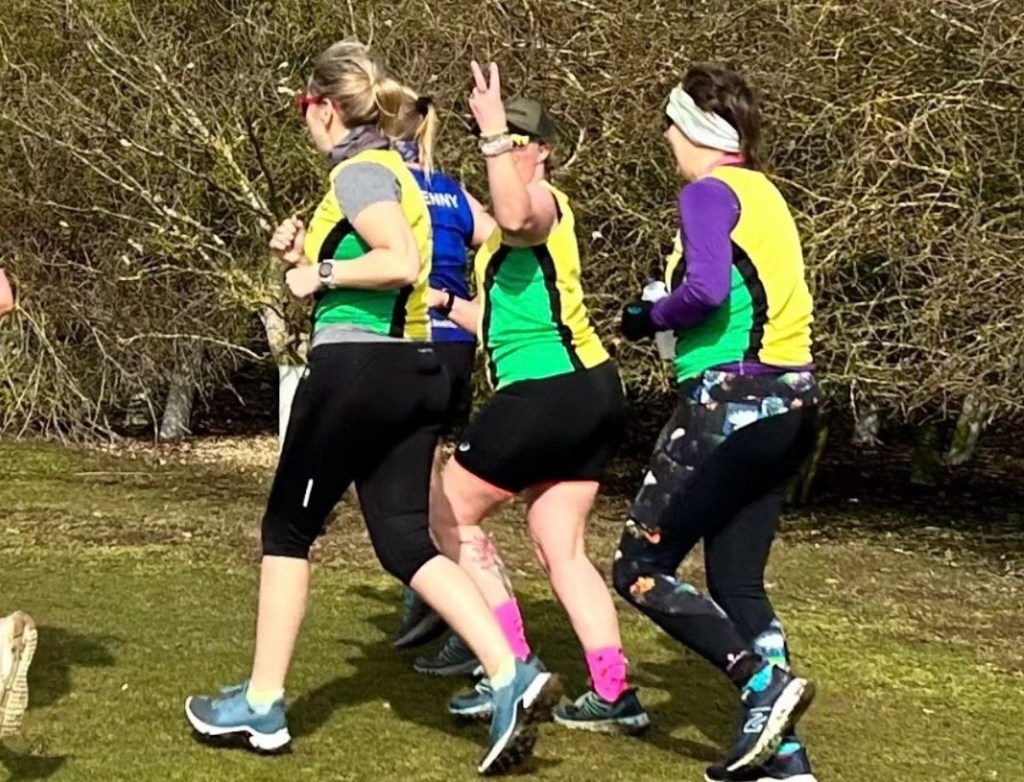
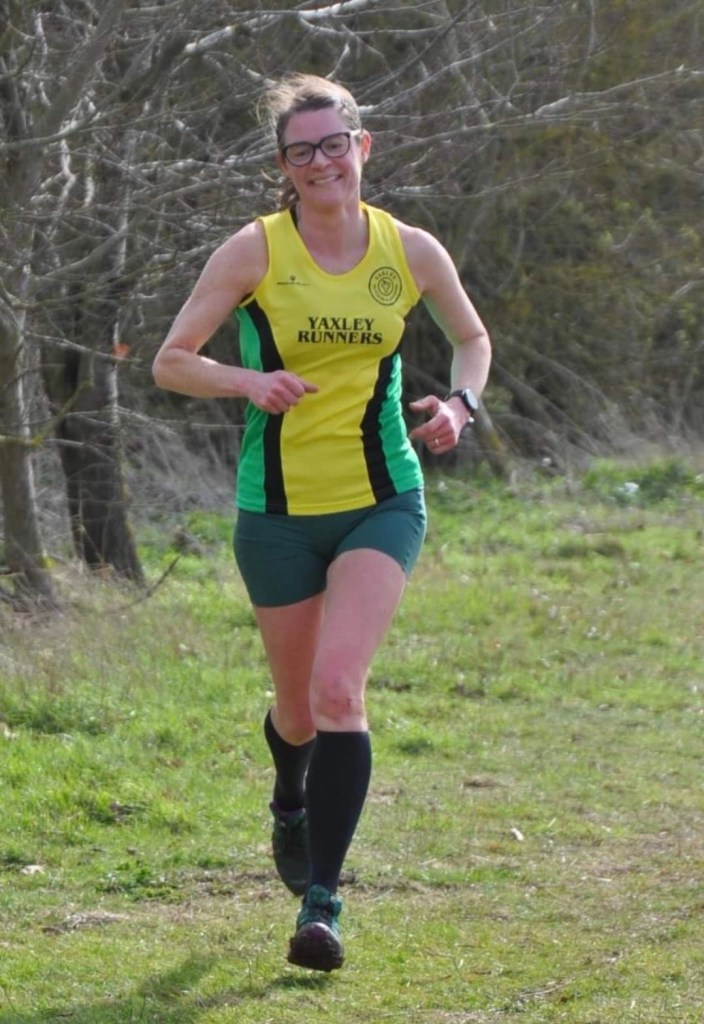
I am ashamed of how sorry I felt for myself at the end of the race. It’s a team event, and our team did well. But instead of congratulating others on their runs, I went off in a huff and jogged around the field until I felt less angry. Yaxley Runners finished second on the day, and third in the league, but I only found this out on Monday, when I’d calmed down enough to check the website.

We all have bad days, and the important thing is to learn from them, right? Okay. The lesson I’m taking from this one is: never run this race again*

The camera does lie

*Only joking, Team Captain, I’ll be there.

Is it a training race, or a race race?

It’s that time of year. You’ve just finished a long marathon training run. Your face is salty, your thighs are throbbing, but you’re buzzing. You did it! It’s in the bank. You upload your run to strava, and while you’re waiting, you scroll through other people’s runs. You look at the distances, the times, the comments. You tap “view analysis” and look at your elapsed time. It doesn’t look as good. The buzz starts wearing off.

“I could have gone faster”, you think.

Yes. You could have gone faster. But *should* you have? The answer is no, and you know it. Long slow runs are called LSRs for a reason. They’re not long tempo runs, or long steady runs, or long fast runs. Being slow is the point.

While we’re out running further, our bodies are getting stronger. The stress of the increased mileage is overloading our muscles, and triggering adaptation. By running slowly, we’re reducing the impact of this overload on our bodies, recovering more quickly, and protecting ourselves from injury. There are no strava crowns for being slow and sensible, so we just have to remember that the benefits are invisible, but real.

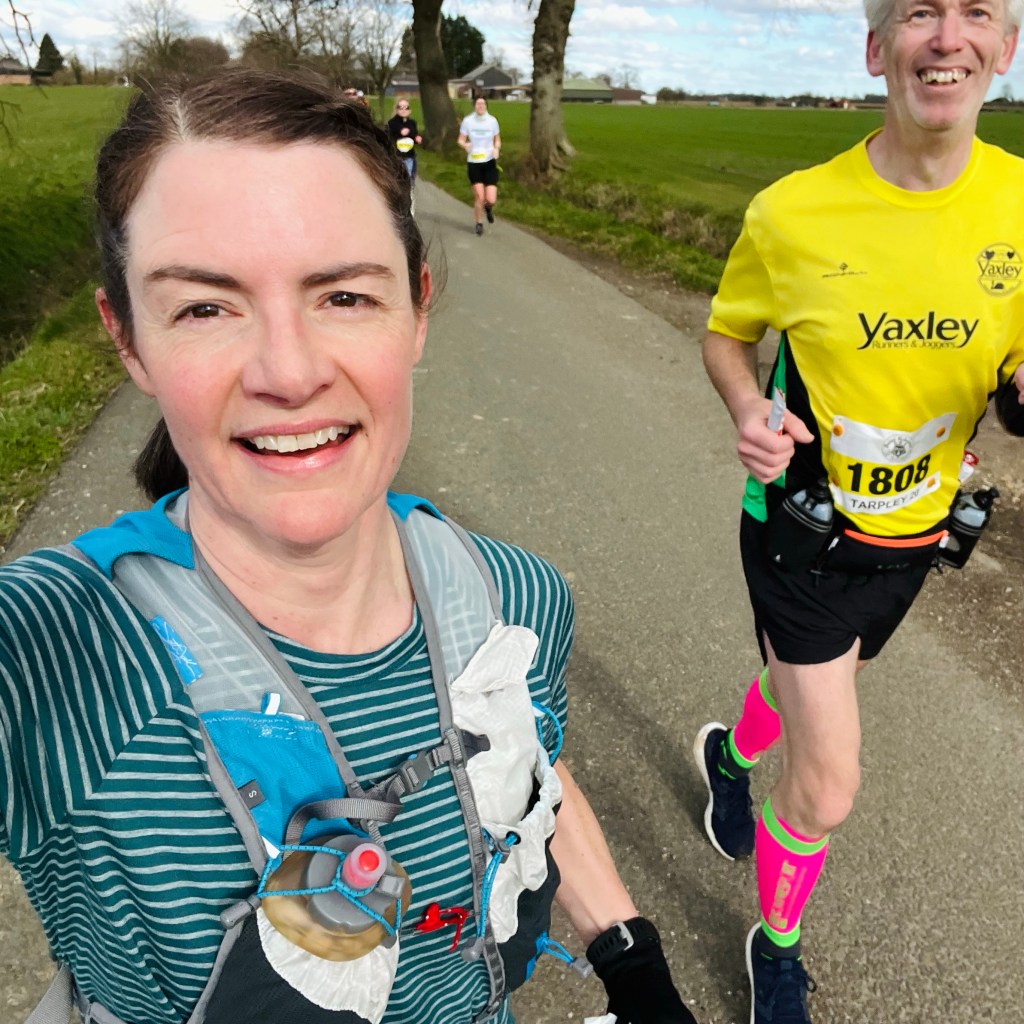
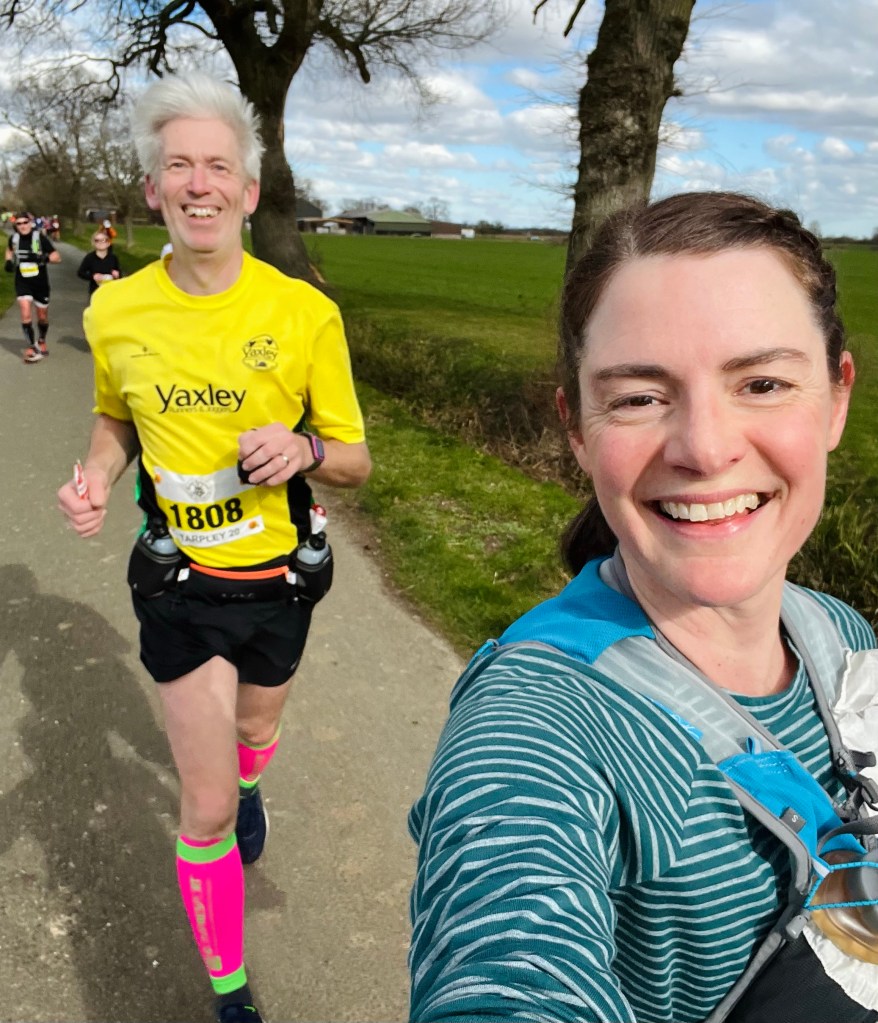
This is easy to say, but harder to stick to. Last weekend I ran a 20 mile race- the Tarpley 20 – as part of my marathon training. Before I joined a running club, I had never heard of anyone doing a race as a training run. Don’t these people realise that running is free? I would have said. But long races make for brilliant marathon training. They are locally run, reasonably priced and well supported. If you’re struggling to motivate yourself to cover 30k or 20 miles by yourself, pinning on a race number alongside 300 people who probably feel the same really helps.

The challenge with a training race, though, for anyone with a shred of competitiveness in their veins, is that it’s still a race. It’s really hard not to race a race. I should know, I’ve done it. At the Stamford 30k in 2022 I went too hard in driving rain and picked up a calf strain that ended my chances of running Brighton marathon. At the Oundle 20 in 2019, I got carried away with it being a club championship race and, looking back, put in a much better performance than I managed at Boston marathon four weeks later.

At the start line last Sunday, I could still feel the temptation. Before the race, to guard against this, I had told anyone who’d listen that I was going to take it slow. Even so, I found myself finishing my first mile in 8 minutes 17 seconds (AKA, this year’s goal marathon pace). Luckily, my brother in law caught up with me in mile two and asked me (in the nicest way) what the hell I was doing. Slowing down, I replied.

I did, and as a result, I really enjoyed the run, especially the last few miles. When I got to the finish, I not only felt I could run another 6.2 miles, I actually wanted to. I can honestly say I have never felt like that at the end of any race, ever.

I am not a coach, and I can only talk from my own experience, but I wouldn’t race – as in, properly race – anything longer than 10km in the run up to a marathon. If we’re tempted to push it harder for longer, we need to ask ourselves: what is the main goal? Is it to perform really well in the marathon, and get to it on top form and uninjured? Is it to perform really well in the club champs? Is it to boss the cross country season? Because we cannot do them all.

When it comes to your marathon, so many things about race day are uncertain. Focus on what you can control. Focus on the goal.

Don’t risk leaving your best race in training.

Whisper it… I might be getting my fitness back

After three months of covid and a post-covid cold from hell, I’m finally getting back to my pre-covid fitness. It makes me nervous to write this, in case I chase it away, but I also want to record it. If I say it out loud, I can start to believe it.

Early morning intervals are back

Three months sounds like nothing, but feels like forever. At first I was just happy to be able to get outside. But when my garmin beeped a “your stress levels are unusually high” warning at the start of a run, and then repeatedly told me my easy jogs were done at a “threshold” level heart rate, I was worried. How could I listen to my body, when I felt fine but so obviously wasn’t?

Mine was a mild Covid case, with most of the OG symptoms but no cough. I only took one day off work and, after two weeks of no running, I was keen to start again. People who’d had covid (which at this point was pretty much everyone) kept warning me to “take it easy”, and “don’t rush back to exercise”. It sounded like they wanted to add “… or you’ll get long covid”. I tried to find some proper medical advice for post-covid running, but failed. Is there any?

This Runner’s World article is the best summary I could find of what information there is for us to go on. It shares data on elite athletes, which I did not find helpful, but also looks at a big study of fitbit data which finds that the average covid sufferer doesn’t return to regular resting heartrate for 79 days following infection. 79 days is… three months.

Three months after Covid infection, my heart rate is now connected to the effort I’m putting in. I can stay in the “easy” heart rate zone without stopping to walk, and in the past two weeks I’ve run:

  • my first interval session since October 2022;
  • a 5 mile cross-country race, within 15 seconds a mile of my old pace; and
  • an 18 mile long run.

My heartrate looked normal during each of these, and they were all a massive effort and a hideous struggle. I loved them!

It’ s official. I’m back. (fingers crossed)

January: the month for taking motivation wherever we can find it

Speculoos & cream cheese: motivation in a biscuit

It’s getting near the end of January (hurrah!), and resolutions are fraying along with tempers. We are all hanging out for payday, for lighter days, and warmer weather. But running can’t wait, at least not for me. If I am going to run London marathon this year – and I think I am – I need to get out there now.

Usually I have a training plan, and use that to hold myself to account. But not this year. At least, not yet. I had so much time off running in late 2022 that I never got to build a good marathon running base. My past three months’ running still look like a rollercoaster with big dips for Covid and The Cold, and I haven’t strung together three weeks’ good mileage yet. Once I can do that, I will call it marathon training.

Running without a plan is tempting in the spring or summer, when just being outside is a delight. Right now, ploughing through the mud in -4, not having a plan is a big risk. With energy bills so high, my house is cold, and just getting changed into my running kit is the hardest part of going for a run.

January is the toughest month for running. It’s mad that this is time most people start training for their first marathon. And honestly, if nearly thirty years of running has taught me anything it’s this: find motivation wherever you can. Looking forward to a bath when you get home? Want to wear that new headband? Have to go to the post office? Want to see the seals in the River Nene? All reasons I have used to go for a run in the past two weeks.

The king of motivators – always – is the one I use least: running with other people. I run alone because it’s convenient, but also because there’s nobody else to worry about. Even when I’m running with friends and family I get anxious: am I talking too much? Too little? Am being boring? Am I going too fast? Too slow? I wish I could turn off these fears, because running with other people is brilliant. Time goes more quickly, I get to hear all the gossip, and – most importantly – I always turn up.

(p.s. I did not see the seals)