Clipston Trail Half Marathon

“How’s your training going?” A coach asked me in the gym. I was confused – what training? Am I supposed to be training for something? Because… I haven’t been. My running is the same every week: two or three short runs and one long run. Sometimes I run up some hills, occasionally (very occasionally) I run a bit faster.

I haven’t been training because I haven’t been racing. I ran the St Neots half marathon in November 2024 and haven’t put on a club vest since. I really don’t miss it but I don’t want to feel like I’ve given up for ever, so I signed up for my annual race. The Clipston Trail Half’s description was perfect: ”run on trails across beautiful countryside”. Stiles, fields, views, hills, fewer than 100 entrants, no plastic waste, no time cut-off. My kind of race.
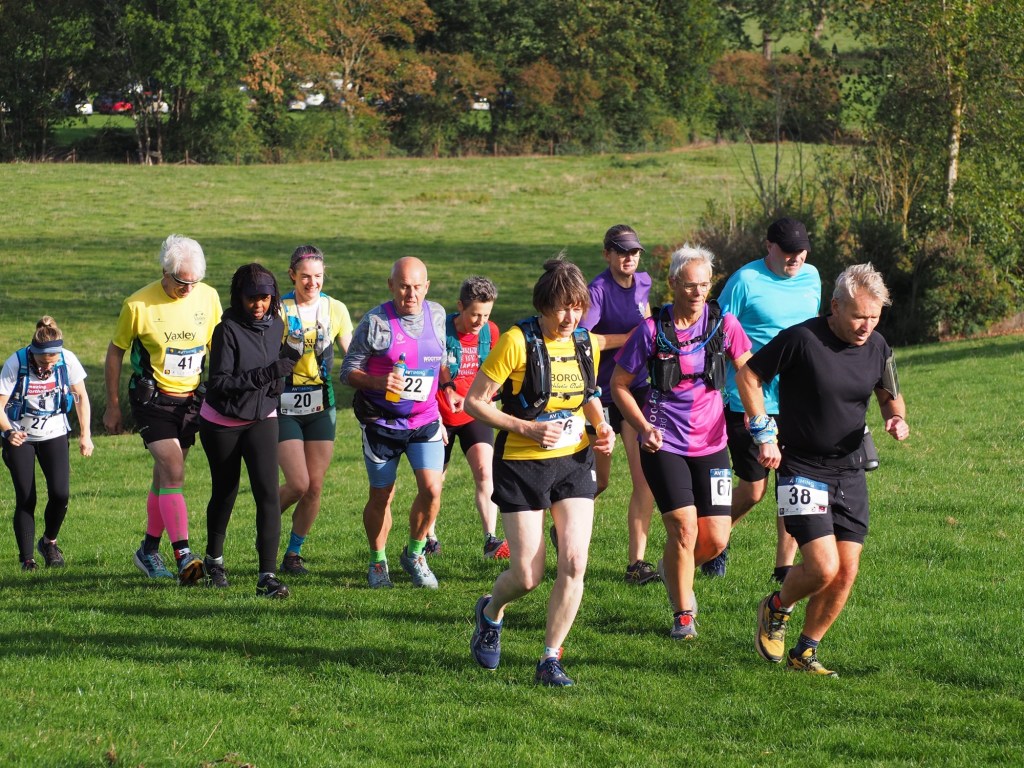
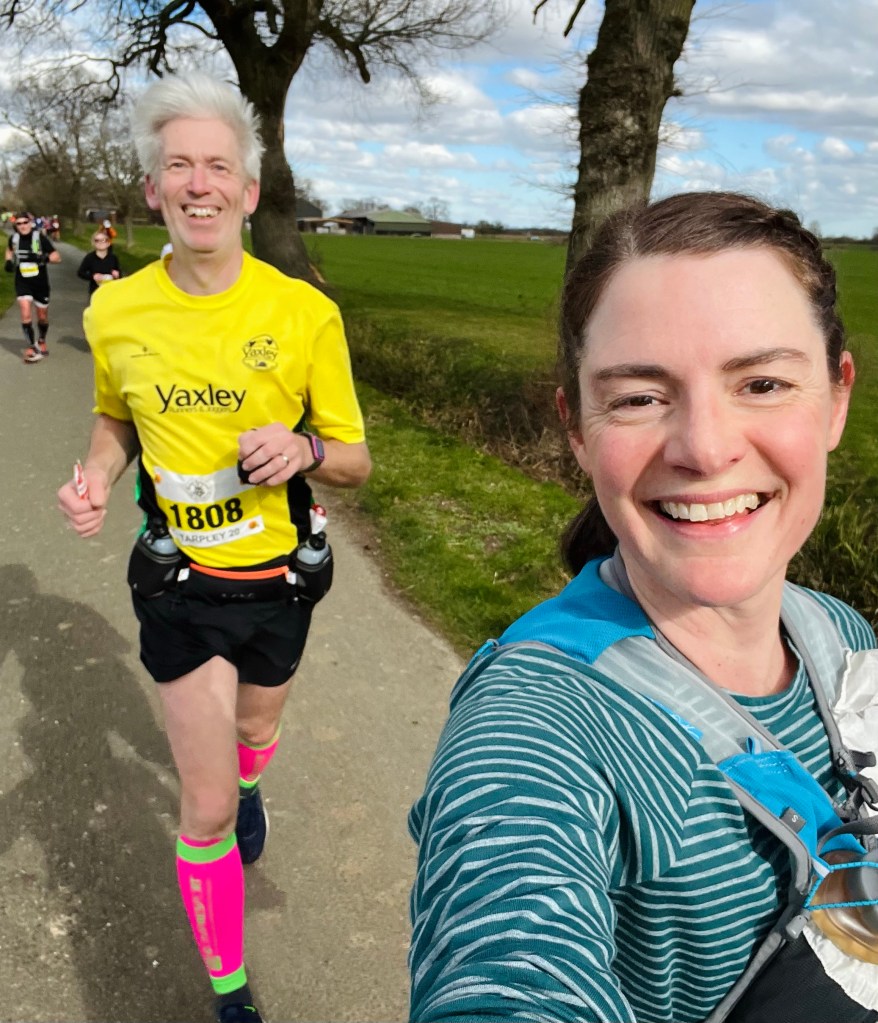
I ran with my brother-in-law, Lee, while my sister Liz did the five mile race. Half way through the run I was stood waiting for Lee to reappear after a trailside wee and a passing runner kindly asked if I was ok. Yes, I said, I’m just waiting for my… friend. I never thought about how weird it is to say “brother-in-law” to a total stranger. Especially when the brother-in-law isn’t present.

These are the kind of thoughts that have time to pass through a person’s head when they’re not worrying about how fast they are running. The week before the race, my friend Lee got injured, and I caught a cold. We should really have dropped out, but we agreed to “take it easy” instead. In my head this would be 9 minute miles, but the hills and my heart rate called for much slower, so we finished in 2 hour 20. The remarkable thing about this is not that it’s my slowest half, but that I didn’t even look at my watch until we were a mile away from the finish.
Running a race for the experience, rather than the time, is not something I have done often. Even if I’ve said I “just want to enjoy it” I’ve always had a secret goal. Not having one turns the race back into a run. It’s even allowed to be fun. We chatted. We walked. When a marshal said “don’t miss the view”, we really looked at it. I took pictures. I spotted birds. I ate two flapjacks and two gels and emptied my water bottle.

After the first hill there is a narrow footpath section where runners are forced to run in single file for half a mile. In any other race I would be frustrated to be stuck in a queue early on, so it felt good to remember all the times I’ve felt like that before and realise that this time I didn’t care. At mile four we settled in behind a trio of runners and, instead of wondering whether we could overtake them, I wondered whether we could keep them in front of us for the rest of the race.  

It was a gorgeous race. The course is out and back with a couple of different loops and constant rolling hills (1,000 ft over the 13.1 miles) to keep it varied. The footpaths were dry and mostly gravel, firm grass or well worn single tracks, with only two ankle-breaking sections. The first was a deceptively beautiful wide path curving steeply down a hill which had been secretly churned up by horses and baked solid beneath a sward of grass. The second one we were warned about in the pre-race briefing: two ploughed fields in the final mile.
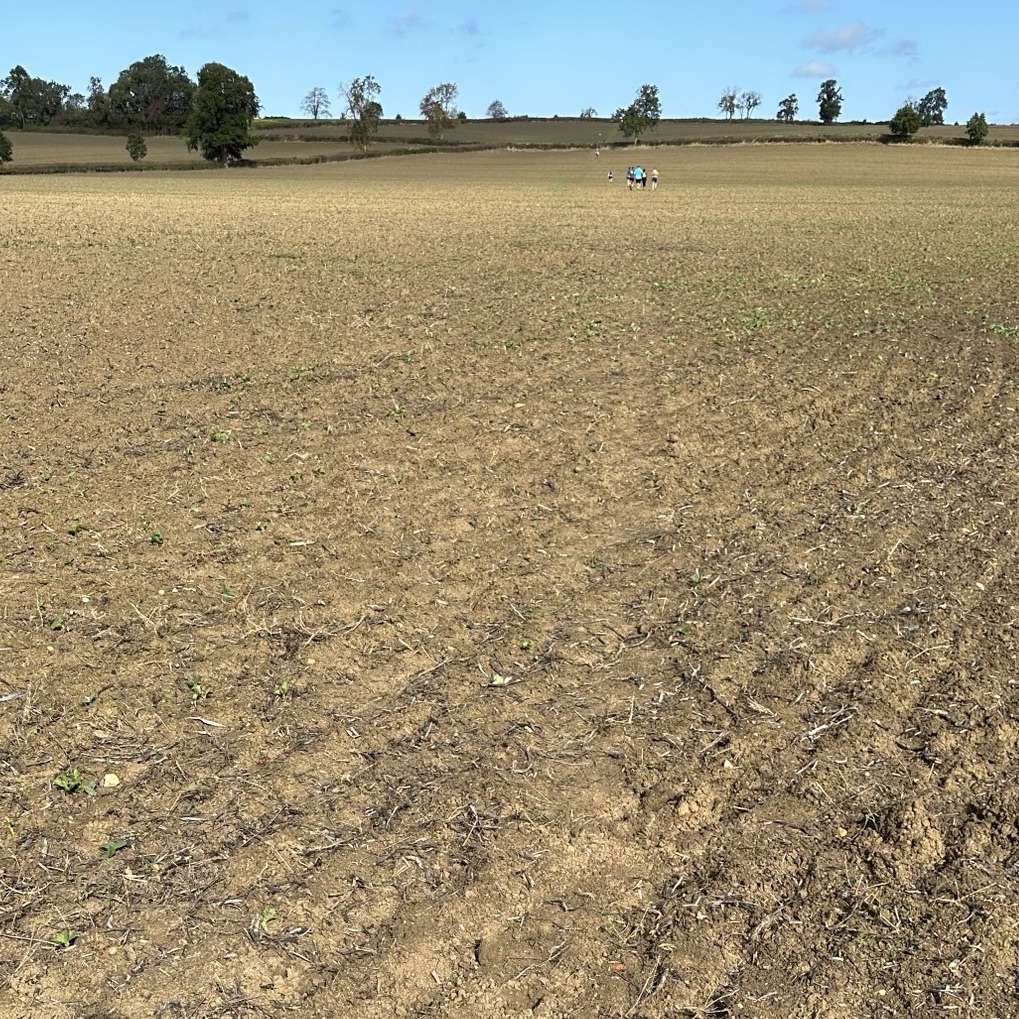
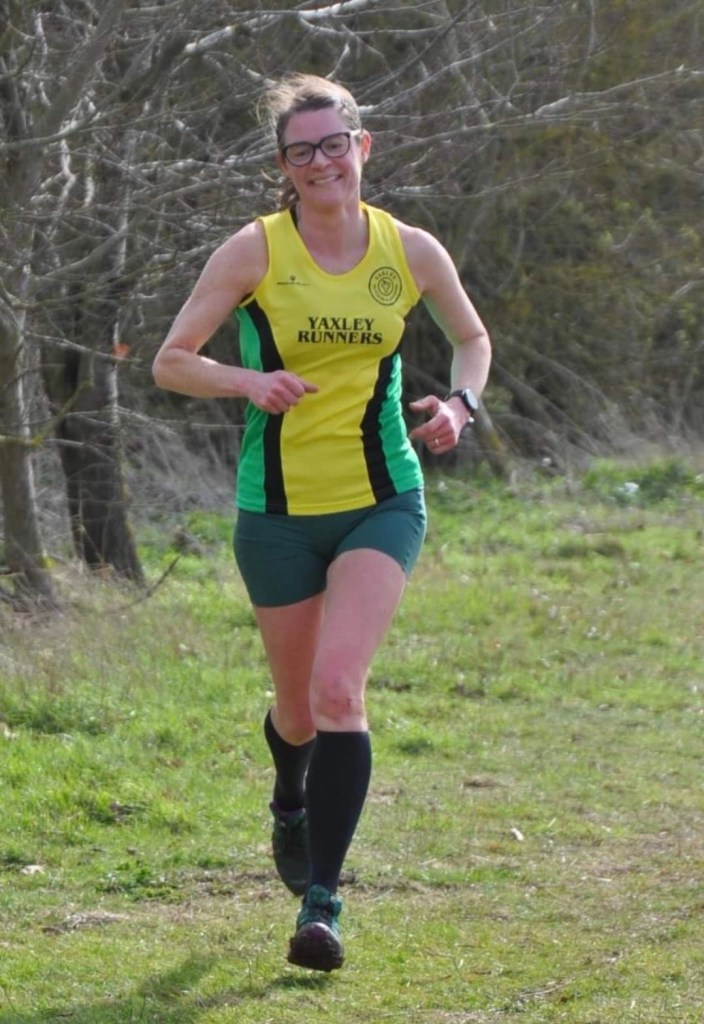
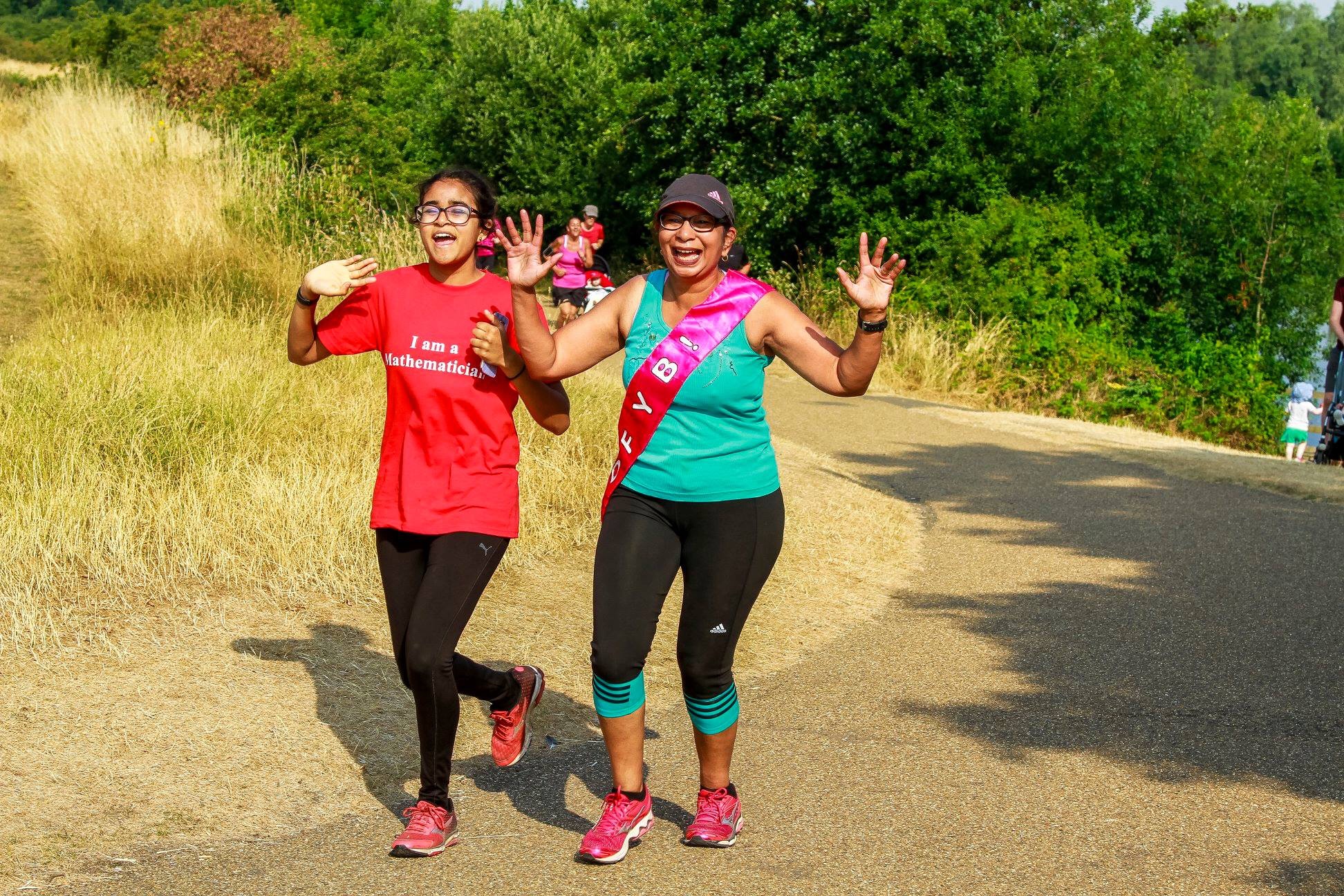
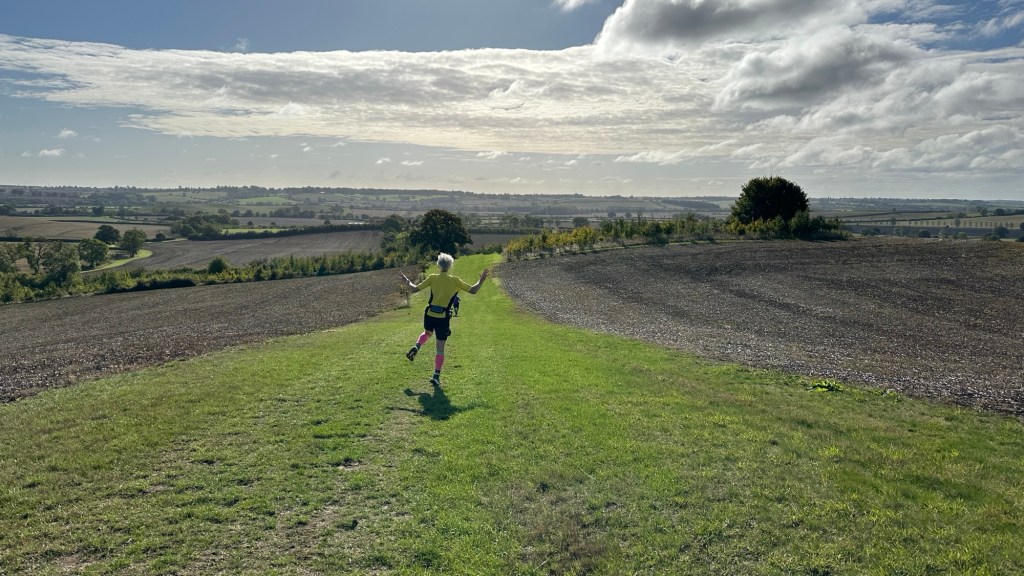
Knowing that you will have to walk in the final mile is enough to put anyone off aiming for a “good” time in a race. Even I would hesitate to call trudging up a hill of loose soil my idea of a “good time”. But after the furrows of doom there was a downhill of joy, and Lee leapt like a salmon for the photographer while I beamed in genuine delight. At the finish, people clapped like they knew us, and the Race Director greeted every finisher with a medal and a personal congratulations.

Walking back to the car with a flushed face and a paper plate of cakes I realised: this is the race I have been training for.

More than a race

Two weeks ago, for the first time in 18 months, I pinned on a race bib. I ran the St Neots half marathon and it reminded me that, despite what we see and share online, running isn’t really about racing. I started running to get fit and it took me six years to enter a race. When I ran, I ran alone. It didn’t occur to me that I might want to run *with* other people, let alone against them.

In the year 2000 I was living in Cambridge, and my friend Caroline talked me into joining weekly runs with the Hash House Harriers. It was fun, and I realised that a) I enjoyed the running much more than the drinking, and b) I was definitely a front-runner keen to sniff out the route, and not a back-of-the-pack conversationalist.

My first race was the Grunty Fen half marathon. I can’t remember if I did any training – doubtful – but thanks to the internet (yes, it existed then) the results are online and I can tell you that I finished in 1:53:45. The race was in September and it was very hot and extremely flat. There was no shade and few spectators. At one point there was a slight slope and everyone started complaining about “the hill”.

One race down, I obviously entered the London marathon (..a tale as old as time..). I applied for a charity place and, as soon as I’d raised the money, got a stress fracture in my foot from wearing new trainers on my first 20 mile run (..tune as old as song..).

Have I learned anything in the past thirty years? I was pondering this on the way to St Neots. I’ve spent the past 18 months dealing with persistent knee /foot issues. With physio exercises and strength training, I’ve kept them at bay and kept running, but I haven’t managed to do “proper” (as in high mileage) training.

What I did manage was 2-3 easy runs, plus a long run at the weekend. I tried a few speed sessions, but struggled to find a pace and stick to it. My splits were all over the place, my lungs feeling like they were going to burst out of my chest, knees creaking scarily for days afterwards. For the last few weeks I dropped the speed and just tried to include some half marathon pace miles in one run a week. But what was half marathon pace? It started at 7:45 minutes a mile, then dropped to 8s, to 8:30s, then to… whatever I could manage that day.

Like the peaks and troughs of my low mileage progress chart on strava, St Neots half is described as “slightly undulating”. That’s one of the reasons I love it. This was my third – and slowest – dash around the country roads around Abbotsley village and a reminder that there are enough slopes to keep it interesting, but not too many to make it hard.

I finished the race in 1:41:56. A whole 13.1 miles at 7:45 pace. I was amazed! On the day it felt controlled, like I was holding back for the first five, pushing for the next four, and only feeling the strain in the final four. My new carbon plate shoes (yes I caved) helped in the race and with recovery. I felt really strong on the uphills, which I’m putting down to squats and deadlifts, and the last four miles of St Neots are (very slightly) downhill which makes it easier for the mind if not actually for the legs.

Even though I was doing the race for fun, and time wasn’t important, I felt nervous on the way to St Neots. Why was I worried when nothing was at stake? I have been thinking about this. My friend Laura was running too, and also feeling a bit nervous despite not aiming for a fast time (for her).

No matter what your goal, there is so much that is stressful about a race: eating at the right time, drinking enough but not too much, going to the toilet, wearing the right clothes. Getting these things right is hard enough, then you have to run the thing.

But once the race is underway, all there’s left to do is run. Running doesn’t have to be about racing, but racing is always just running. And running is the same as it’s always been: one foot in front of the other, cold air, warm breath, blue sky, green fields. Breathe in, breathe out. Same as it ever was.

Is it a cross-country race, or is it a near-death experience?

I’m not just here for the good days, the training revelations and pictures of dreamy footpaths. I’m here for the worst days too. The races that are so bad you don’t want to run another step, and even though you don’t give up, you can’t feel good about it afterwards because you hated it so much you wish you had given up.

I had one of those days at the last race of our local cross-country season on Sunday 12th March. Nearly two weeks have passed, but the pain is still fresh enough to write about it. I never enjoy this race. The final in our “frostbite” season, it’s always unseasonably warm, and lo, the sun was shining. It’s also famously windy, and lo, the wind was blowing.

Beginning in Huntingdon’s Jubilee Park, the five mile race starts with a long lap of a boggy playing field, where everyone goes pounding off too fast around the sides of a football pitch, blocking your view of the ankle-breaking divots in the grass. Once your heartrate is good and high, the field squeezes through a gap in a spiky hedge out onto the course proper: long miles of rough grassy paths on the fringes of exposed open farmland, somehow both flat and uphill, and buffeted by a constant howling gale.

The worst thing about this terrible race is how far ahead you can see. If you manage to lift your eyes up from the ground for a second, there will be a long string of faster runners in the distance, reminding you how much further you have to go. And the absolute very worst thing is the section in mile four where the sketchy path turns into a lumpy bank for half a mile. I won’t even call this part a “path” because literally no-one has set foot on it for a year since the last race. It is lumpy, tussocky, long grass, with huge holes and nowhere safe to put your feet. As soon as it began, I remembered it from the last time, and the urge to walk, stop, or lie down and wait for death, was overwhelming.

Luckily, most other runners were also hating it. Despite slowing down to what felt like a crawl, I didn’t get passed by many people. And several were walking – not something I usually see in a frostbite race. Looking at strava afterwards, I took a tiny shred of comfort from the misery of others.

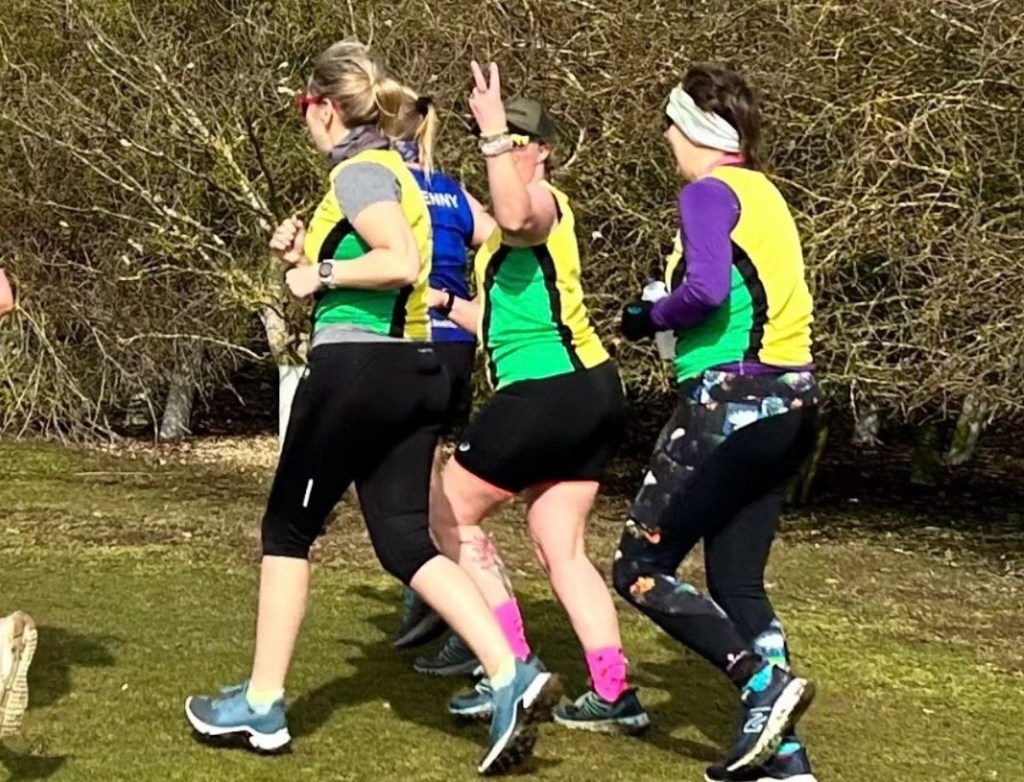
I am ashamed of how sorry I felt for myself at the end of the race. It’s a team event, and our team did well. But instead of congratulating others on their runs, I went off in a huff and jogged around the field until I felt less angry. Yaxley Runners finished second on the day, and third in the league, but I only found this out on Monday, when I’d calmed down enough to check the website.

We all have bad days, and the important thing is to learn from them, right? Okay. The lesson I’m taking from this one is: never run this race again*

The camera does lie

*Only joking, Team Captain, I’ll be there.

Is it a training race, or a race race?

It’s that time of year. You’ve just finished a long marathon training run. Your face is salty, your thighs are throbbing, but you’re buzzing. You did it! It’s in the bank. You upload your run to strava, and while you’re waiting, you scroll through other people’s runs. You look at the distances, the times, the comments. You tap “view analysis” and look at your elapsed time. It doesn’t look as good. The buzz starts wearing off.

“I could have gone faster”, you think.

Yes. You could have gone faster. But *should* you have? The answer is no, and you know it. Long slow runs are called LSRs for a reason. They’re not long tempo runs, or long steady runs, or long fast runs. Being slow is the point.

While we’re out running further, our bodies are getting stronger. The stress of the increased mileage is overloading our muscles, and triggering adaptation. By running slowly, we’re reducing the impact of this overload on our bodies, recovering more quickly, and protecting ourselves from injury. There are no strava crowns for being slow and sensible, so we just have to remember that the benefits are invisible, but real.

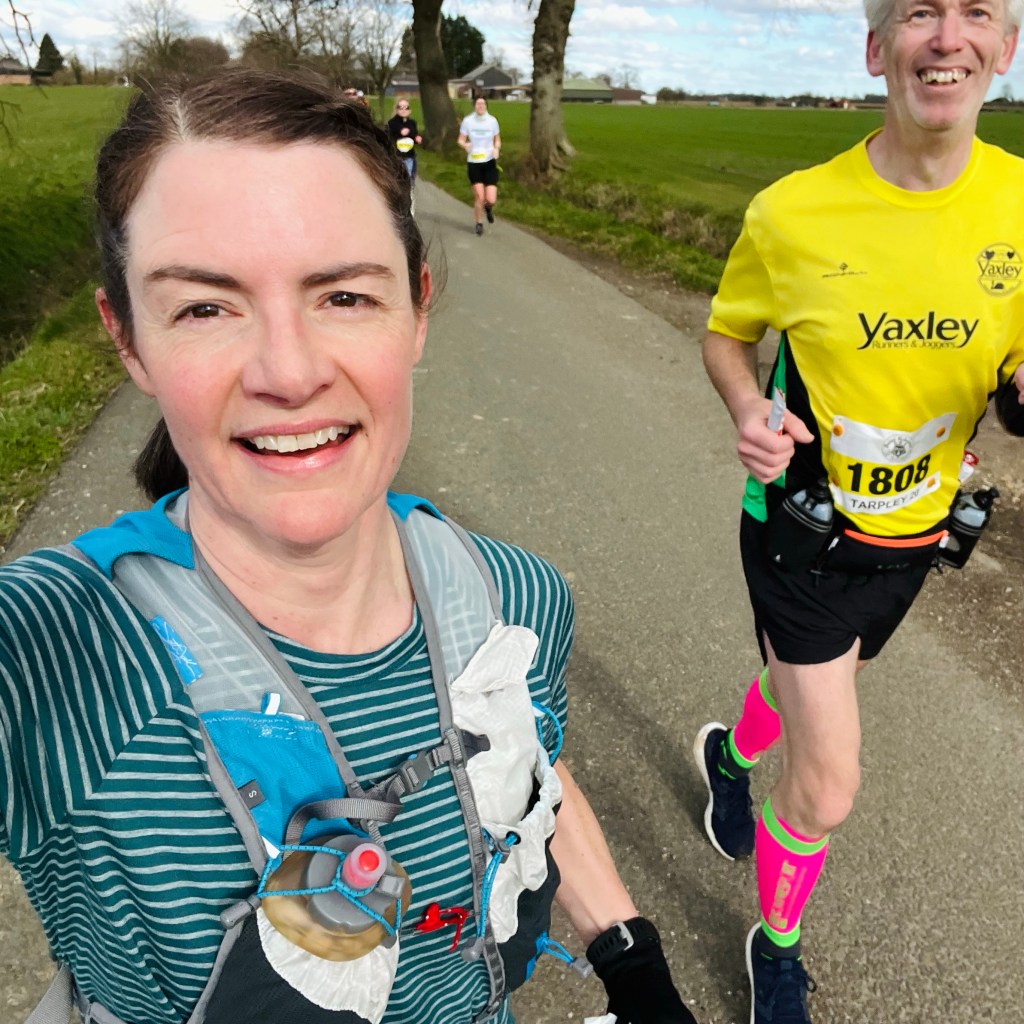
This is easy to say, but harder to stick to. Last weekend I ran a 20 mile race- the Tarpley 20 – as part of my marathon training. Before I joined a running club, I had never heard of anyone doing a race as a training run. Don’t these people realise that running is free? I would have said. But long races make for brilliant marathon training. They are locally run, reasonably priced and well supported. If you’re struggling to motivate yourself to cover 30k or 20 miles by yourself, pinning on a race number alongside 300 people who probably feel the same really helps.

The challenge with a training race, though, for anyone with a shred of competitiveness in their veins, is that it’s still a race. It’s really hard not to race a race. I should know, I’ve done it. At the Stamford 30k in 2022 I went too hard in driving rain and picked up a calf strain that ended my chances of running Brighton marathon. At the Oundle 20 in 2019, I got carried away with it being a club championship race and, looking back, put in a much better performance than I managed at Boston marathon four weeks later.

At the start line last Sunday, I could still feel the temptation. Before the race, to guard against this, I had told anyone who’d listen that I was going to take it slow. Even so, I found myself finishing my first mile in 8 minutes 17 seconds (AKA, this year’s goal marathon pace). Luckily, my brother in law caught up with me in mile two and asked me (in the nicest way) what the hell I was doing. Slowing down, I replied.

I did, and as a result, I really enjoyed the run, especially the last few miles. When I got to the finish, I not only felt I could run another 6.2 miles, I actually wanted to. I can honestly say I have never felt like that at the end of any race, ever.

I am not a coach, and I can only talk from my own experience, but I wouldn’t race – as in, properly race – anything longer than 10km in the run up to a marathon. If we’re tempted to push it harder for longer, we need to ask ourselves: what is the main goal? Is it to perform really well in the marathon, and get to it on top form and uninjured? Is it to perform really well in the club champs? Is it to boss the cross country season? Because we cannot do them all.

When it comes to your marathon, so many things about race day are uncertain. Focus on what you can control. Focus on the goal.

Don’t risk leaving your best race in training.

Thoughts from Rutland Marathon

Such perfect marathon weather’. The smooth path stretches along the edge of the dam. A family claps and cheers from a bench. Ten more runners overtake me.

I’m glad I’m not going out too fast’. The smooth path ends, turns gravelly and weaves through a carpark and up onto a grassy slope.  

‘I just need to keep the lid on for ten miles’. A marshal shouts, “well done young lady”. I’m 46, but I’ll take it. The stony track curves up and down around the inlet of the reservoir.

‘Look at the water, maybe I’ll see the osprey’. The lead runner of the half marathon whizzes past.

‘Keep it steady’. Another sharp uphill, a right turn, a left, a downhill.

The turning point must be soon’. The lead male runner passes, big beard, leopard print vest.

 ‘Do not speed up’. The first woman runs past, pink t-shirt, big smile.

‘I do not need to speed up’. Five more women pass and the turning point is there. The route doubles back around a line of orange cones in the woods.

‘Keep a lid on it’. Runners pass, still on their way to the turning point. The five mile marker goes by.

‘Only five? No, don’t think that. Half way to ten ’. The runners coming the other way are slower and more friendly.

‘This is better, I’m enjoying it’. Say “well done!” to every female runner. A dog lifts its leg to pee on the seven mile marker post.

‘Nearly at the dam, now’. A man sitting on a bench makes full eye contact with me and says nothing. Across the dam. A child jumps up and down, blowing a whistle.

‘I should be feeling better than this’.

The path stumbles between mole hills and rabbit holes. ‘This grass is really green from the rain’.

The route goes back past the start funnel. ‘Try to look good’.

The loudspeaker calls out the names of passing runners. A few cheers. ‘Try to feel good’.

Out of the carpark, the seventeen mile loop back to the finish begins. ‘I won’t count the hills’.

There were six hills between that point and Hambleton Peninsula. ‘This might be a bad patch’.  

The half marathon turning point is behind me at eleven miles. ‘I might feel better soon’.

The path stretches out along the north shore, looking flat but somehow going uphill. ‘It’s good to be outside’.

Mile fourteen. Mile fifteen. Up the hill to mile sixteen, my chest pulls with every breath of air.

“Stop it!” I shout out loud.

But I can’t push away the negative thoughts. Over the final ten miles, I try everything.

‘It’s good that my achilles isn’t hurting’.

‘Every uphill has a downhill’.

‘This gel will make me feel better.’

‘I always love running here’.

‘It’s still a beautiful day’.

‘No-one is going past you’.

‘Everyone feels the same.’

‘Don’t walk unless you have to’.

‘Just walk if you need to’.

‘Just get to the finish’.

‘You’re going to make it’.

When I cross the finish line I feel two things: relief, and certainty that there was nothing I could have done differently. This day wasn’t my day.

It is true that much of a marathon is what’s inside your head, the stories you tell yourself about how you’re feeling, the stories you tell yourself before you start, and how you spin it afterwards. But now that I’m older, I can see that it’s really the body. Yes, you can make yourself keep running or let yourself give up, you can decide to push or decide to walk. But it all comes from the body. The training, or the feelings on the day, dictate it too.

Looking at my insane heart rate recordings, I know I couldn’t have done anything else on this day. I know that the rushing of blood in my ears, the nearly fainting, that was the very edge of what was possible. I went right up against it. There was nothing more I could have done on that day.

When you’re young, or you have tons of training in your legs, you can carry a bad day and your brain is your only barrier. As you get older, on a bad day you can’t push through it.  But on a good day, you can run just as fast as ever.

Racing in a vaccinated world – it’s time to get out there again

Perspective is an odd thing. When parkrun were pushing for a return in England in September 2020 it felt too soon, and that turned out to be correct. I didn’t want to be Run Director responsible for a junior parkrun event when cases in Peterborough were rising and a friend or family member of a volunteer could potentially catch COVID and die as a result. Back then there were 10 new cases in P-town every day (about 36 per 100,000 people). This week, the rate is ten times higher – 360 per 100,000 people, and yet I’ve been happily running and volunteering at parkrun and junior parkrun for a few weeks now.

It’s obvious what’s changed. I am vaccinated, along with most “at risk” older and vulnerable people in the UK (though maybe not in Peteborough?). And vaccination is preventing severe illness and death. But coming back to racing and parkrun is still something I’m getting used to, and I wanted to write down how I’m feeling so that, in a year’s time, I can look back at this as Captain Hindsight and point out all the things I got wrong. Or hopefully not! Anyway:

Running outside with other people now feels safer

Remember in the early days of COVID when we weren’t sure whether we should even be outside at all? People in my local facebook group warned of particles of virus floating about like giant snowflakes in the air, and complained about joggers – our dangerous breath and sweat and snot and spit. I wore a buff for my runs and raised it over my nose and mouth when I passed people, but that didn’t stop them looking scared and moving away.

To be honest, I still hold my breath when I pass someone on a narrow path. Maybe I’ll always do it? But I know that outside transmission is much less likely, and as long as I’m not stuck running one metre behind the same person for 15 minutes, I feel comfortable.

I think COVID has made us more considerate runners. I will happily miss out on high fives if it means never being accidentally spat on or elbowed out of the way in a race, thank you very much. And as for the man I once saw sitting on a cafe chair in his sweaty pants merrily changing his trousers after parkrun, some things are best left behind.

I am ready to run a bit faster

When races started coming back in England, I was unfit, unhappy, and unready to race. Running saved my life hundreds of times over the past 18 months, but walking was also a big part of that and, for me, walking and racing don’t mix. Over the summer, many of my friends and family have been marathon training (and running! Shout out to Chris conquering the terrifyingly hilly Bath marathon) and inevitably I got fomo and signed up for a race.

I wanted to start with a race I would love, so I chose my favourite distance – a half marathon – and my favourite format – rolling country lanes. The Wissey Half Marathon takes place in “the idyllic Norfolk countryside, starting and finishing in the historic village of Oxborough”. It is advertised as fast and flat, but I wasn’t looking for a pb. I just wanted to enjoy it and push myself a tiny bit in the run-up and on the day.

I didn’t do much specific training. I was already running 30-35 miles a week, including a long run at the weekend. I did introduce a tiny bit of speed and hill work and what little I did, I enjoyed. I used David Roche’s 6 week re-introduction to speed and enjoyed the power hill strides, though finding an actual hill for them in Peterborough was the hardest bit!

I remember why I love races

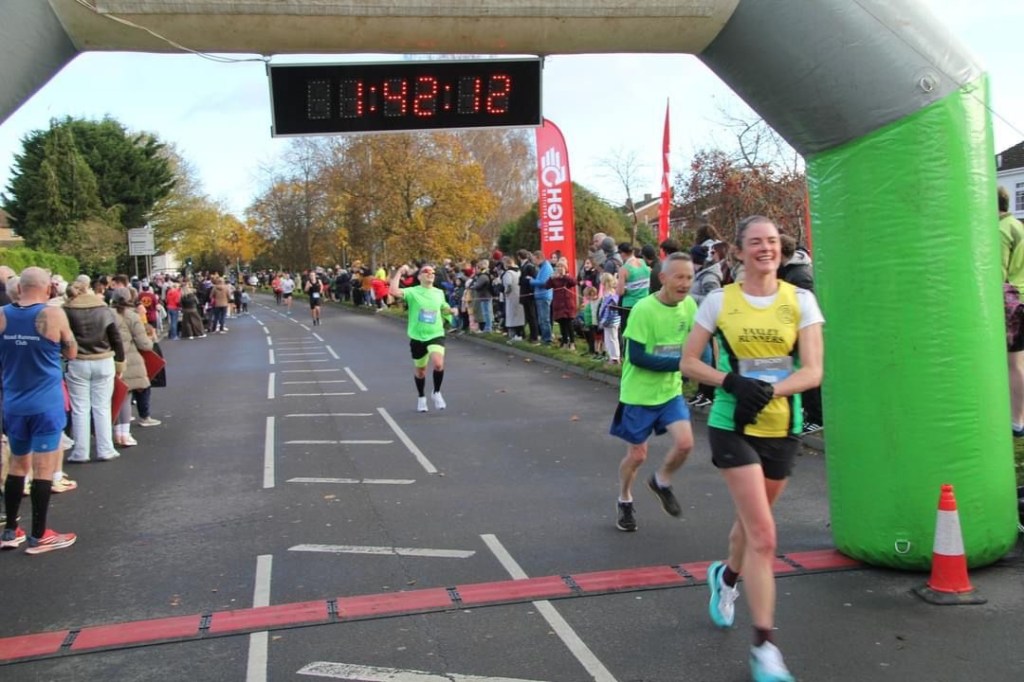
After a month of grey skies and 18 degree damp, 5th September was of course warm and sunny. It was a perfect day for a picnic in the park, less perfect for racing 13.1 miles. On the car journey to Norfolk, I was surprised to find that I didn’t care. I was happy to slow down if I needed to, delighted to look at the views, and excited to get out in the countryside. I ran 11 of the 13 miles with a huge grin on my face, and yes the grin turned to a slight grimace in the last two, but we can gloss over that. My target was 8 minute miles, and I made it: 1 hour and 43 minutes on the clock, 12 minutes slower than my best, but I felt like I’d won.

I loved everything about the race: the parking on the village green; every single runner saying hello as we walked to the start; the terrible instant coffee in the village hall; fields of sunflowers either side of the road; rolling fields and combine harvesters; tractors waiting for the runners to pass; friendly marshals and their kids helping out; chats with fellow runners. My favourite moment was about 5 miles in: I was running with an older man who was run/walking (fast!) and we passed a “public footpath” sign pointing the way to a smooth grassy path along the side of a field, heading over a hill into the distance. “I wonder where that goes?” we both asked, in unison.

It’s great to be out there again.

Confession time: I got some personal bests

Well, this is awkward. It took me a couple of years to write about facing up to a future of no more personal bests. “Personal bests are temporary, running is forever”, I wrote, waxing philosophical.

But… it turns out I could get another personal best. And, um, not just one. In May, three weeks after Boston marathon, I knocked over a minute off my 10k time at Langtoft Road Run. I love this race. Flat country lanes, wisteria clad cottages, and the weather was ideal: cloudy and cool. My legs felt rested and the pace (6:45 minutes a mile) felt just the right side of too hard. Nothing really hurt until the last mile and then there was NO WAY I was slowing down and letting it go. A pb! My first personal best since joining Yaxley Runners in 2016.

New 10k pb: 41:38

img_6126-1
PB Face

10 days after Langtoft, we met at the track on a warm Wednesday evening for the club’s annual Timed Mile. A love/hate affair involving no dinner, pre-race terror and a post-effort cough that lasts all night. It was worth it, as I went sub- 6 minutes for one mile on the track for the first time. Thank god that’s over for another year.

New mile pb: 5:57

Three weeks later in Ferry Meadows, I turned up to the first race of the Peterborough Grand Prix 5km series, interested to see what would happen. It was busy, and I was carried along by faster men and women for a kilometre before actually deciding to go for the sub-20. I’ve been there many, many times before, and failed. This time it felt possible. I had a moment of fear and a flicker of feeling I didn’t want to try. But then, belief! I was going to do it. The struggle in the last kilometre was real, but I forced my legs to keep turning over, kept counting to 60 (my last resort mental trick) and forced myself to sprint for the line.

New 5k pb: 19:54

This old girl, it seems, is on fire. The question is, why?

Is it my Boston marathon training kicking in too late? Is it a bit more hill training? Is it the handful of track sessions I’ve done? Is it consistent mileage? Is it pilates? Is it self-belief? Is it the cooler weather this summer?

I think it’s all of these things combined. My only epiphany during this purple patch is this: you won’t get faster by pushing harder during races if the pace feels hard, you’ll only get faster when that pace feels easier. You’ve got to put in the work to make it feel easy.

Boston, baby!

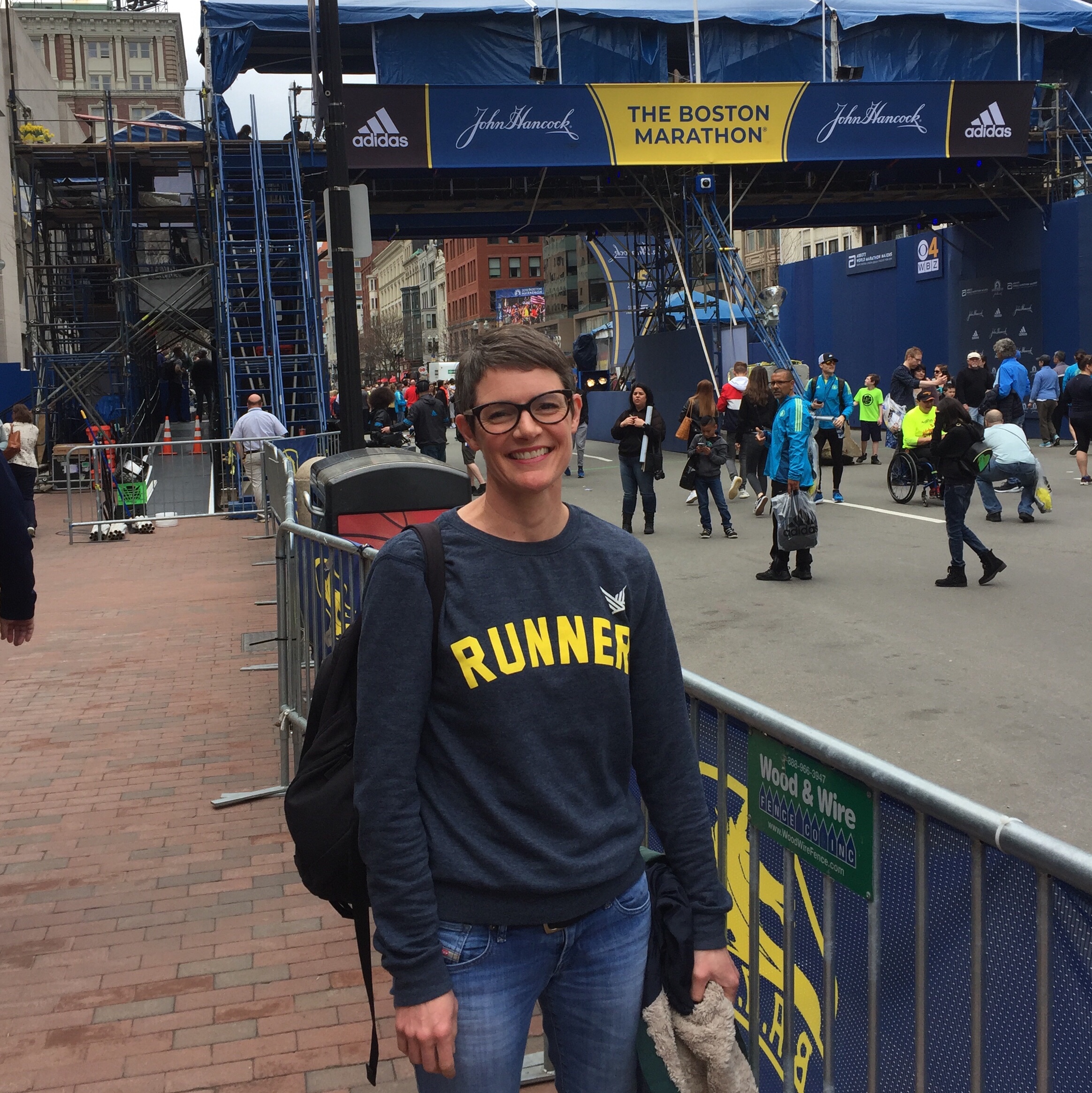
I ran the 2019 Boston marathon! I haven’t written a race report in a while, but I’m making an exception for this one.

Why is Boston so special? Because you have to work hard to make it to the start, work harder to make it to the finish, and when those Bostonians say “Good Job!” as they hang the unicorn medal around your neck, they really make you believe it.

If you don’t believe me, watch this excellent film. Be careful though, it might make you want to sign up.

Getting to the start

As a Brit, Boston was a race I was aware of, but not one I thought I’d ever run. I’m not a huge fan of aeroplanes or big city marathons, so the thought that I would fly somewhere ‘just’ to run a marathon was nuts. But then, in 2017, a couple of my running clubmates ran Boston, and I realised what a big deal it was. Given that most people struggle to run fast enough to qualify, and I could, why wouldn’t I?

After many years of not caring about this race, I suddenly cared a lot. We planned a big trip around it, seeing friends in Connecticut and in New York. We saved for 18 months – booking the hotel room as soon as I nailed my qualifying time at Edinburgh (after a failed attempt in London) in 2018.

No pressure, then

Boston

With all the expectations I had of the race, the holiday and the $$$$$$$ we were spending on hotel rooms, I had one job: get to the start line uninjured. I abandoned the high mileage Hansons plan which did so well for me in 2016 but resulted in injury in 2018. I used one of the free Boston plans (level 3) and something crazy happened – I actually enjoyed the training! It was varied, interesting, and most of the interval training was 10k or half marathon pace, not 5k. Win win win.

I arrived in the US ready for the taper, and… well… let’s just say I enjoyed it.

The most well-organised race I’ve ever run

So, my holiday was great! But what about the race? I trained for a 3:25, and ran a 3:32. It was amazing and awful – sometimes at the same time. But definitely mostly amazing.

Things I loved:

  • So many fast women! I started in the blue wave, with a qualifying time of 3:32, and I was mostly surrounded by female runners for the whole race. This was brilliant and in my experience very unusual! There was not a whole lot of chatting going on (we were working too hard for that), but it was truly awesome and inspiring to run alongside so many speedy women.
  • A race run by runners, for runners. It felt like a local race, scaled up, but not commercialised. Everything you wanted was where you needed it when you needed it. Coffee? Bagel? Toilet? Toilet again just before the start? They even gave you a bottle of water BEFORE your medal at the end. Extra points for this.
  • The volunteers – there were almost half as many volunteers as runners and it showed. They were SO GREAT at every water station and at the finish they made me feel like a rockstar.
  • The City – this is a big deal for Boston. There were signs everywhere from the minute you arrive. The crowds during the race were smaller than London, but three times as enthusiastic. One guy locked eyes with me and shouted ” I BELIEVE IN YOU”. I believed in him.

Things I didn’t:

  • The weather. It is so changeable there you could get anything, and we did. Torrential rain stopped before I started, but the humidity stayed. It was already warm and once the sun came out at 10 miles I knew my pace was toast.
  • My bloody shorts. It was the third day of my period, and I should have known better than to wear blue shorts. My biggest worry was that spectators would think that I’d shat myself. “It’s blood!” I considered shouting, “I just have my period!” Seriously, I am ashamed to say it did knock my confidence and I was really self conscious for most of the race. Plus towards the end the dried blood made for some pretty bad chafing. Sorry if this grosses you out (actually, no I’m not), but for all you bleeders, know that it happened and I got through it. No-one died of shock or made a rude comment and I am a WARRIOR.

The things I will remember

  • The rolling ribbon of runners stretching out in front of me as far as I could see, seemingly stationary in the far distance.
  • The smell of weed as we passed the groups of college kids.
  • The fight not to pass out running up (and down) the Newton Hills.
  • The taste of Gatorade. So much Gatorade.
  • That I did not walk.
  • That the sun went in as soon as I finished.
  • The feeling of joy when Dan and Martha met me afterwards.
  • The taste of the Harpoon IPA afterwards.

“Welcome to Boston!”

The sharp end

This Saturday, at parkrun, shifting from foot to foot about three rows from the front, checking out the Helpston Harriers vests ahead, a fellow runner said to his friend, “Woah, we really are at the sharp end!”

I was standing there too. A quick blast on the horn, a broken chord of garmin beeps, and we were running. Sprinting kids, grizzled guys gurning by the first turn, sharp elbowed men cursing the plodders in search of a pb. And me, failing not to go out too fast, again.

There are not many women at the sharp end. I knew a couple were ahead of me but I couldn’t spot them – too small, too slight, to be noticed in amongst the sea of men.

At that parkrun, 7 out of the first 100 to finish were women or girls, but we made up nearly half (48%) of everyone who walked, jogged or ran around Nene Park that morning.

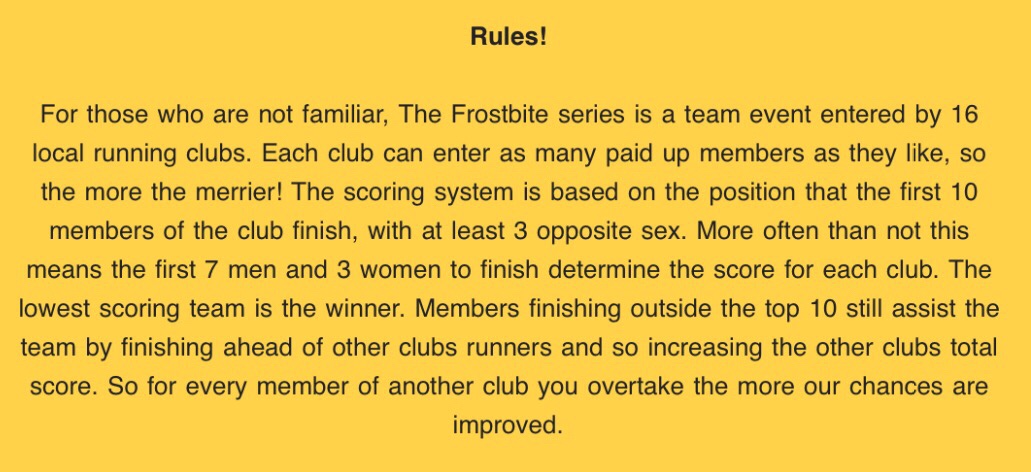
Parkrun is not a race. Our local cross-country league, on the other hand, is. It starts in three weeks’ time (oh god), and I just received this message about it from my club:

More often than not“? This guidance is new, I think. I’ve always understood it to be fastest 7 men, and 3 women. And that’s what it will be. In the first race of 2017/18 season, 5 women finished in the top 100, and only 20 in the first 200.

So why not 5 men and 5 women to score? What is the argument against it? I guess the rules originally reflected the number of runners of each gender a team could field. And they do still mirror them – in that first race last year 38% of runners were women, 62% men. But there were 195 women, more than enough to score. If the teams have the runners, why isn’t the scoring equal?

Could it be elitism, rather than sexism, that drives this choice to hold onto old rules? Elitism is what competitive sport is built on. Rewarding the performance of the very best – who push themselves to their limit – over the mid-pack runners who’d rather hold onto their breakfast and not break their ankles. Prioritising the sharp end, over the fun-runners.

How do we get more women at the sharp end, though? Maybe by not treating them as fun-runners, and giving them an equal chance to score.

Mmm Bop! Running London the Hansons way

Gina marathon

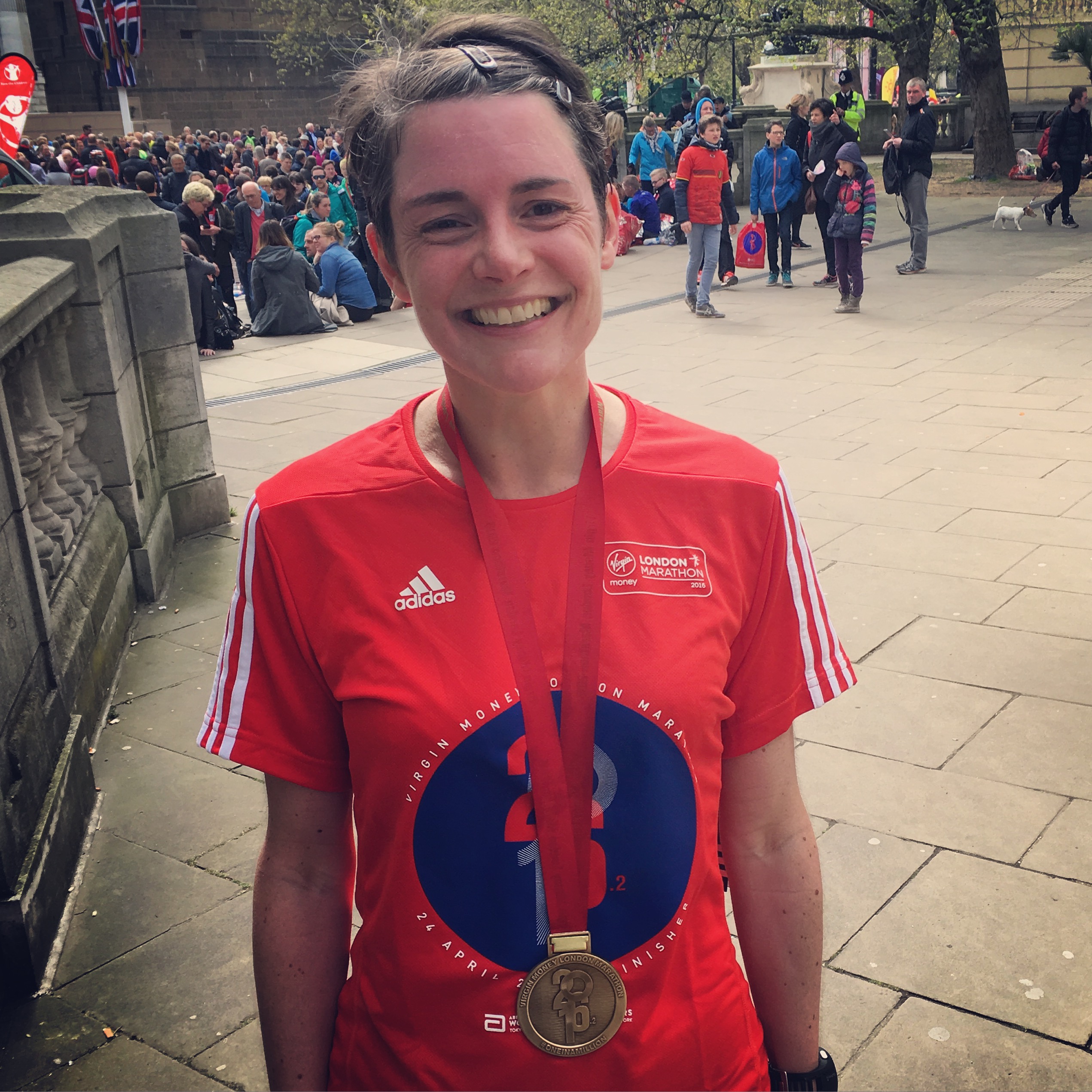
I turned 40 last year and yesterday I ran the 2016 London Marathon in 3 hours, 18 minutes and 3 seconds! This is a 10 minute personal best.  Can you tell that I’m happy?

I never thought I would run London. The huge crowds of runners at the start have always terrified me. But I had the chance to go for a ‘Good for Age’ place (starting at the much smaller Green start), so I took the backhanded compliment and went for it.

Things I loved:

  • Tower Bridge!
  • The energy of the crowds at Greenwich, Canary Wharf and especially Lower Thames Street. It really did make me run faster and feel better.
  • The comedy signs.  “If Trump can run for president you can do this” (at least 2), “If Leicester can win the league you can do this”, “Wave if you’re not wearing underwear”, and my favourite: “Touch here for Power”. Good work.
  • The music. All the drummers! When someone played Prince! The awesome noise at Run Dem Crew! And best of all the rave tunnel just before 24 miles. Next year they need strobes.

Things I didn’t:

  • Kids wearing surgical gloves wanting high fives – parents, chill out
  • The first 4 miles

The thing I forgot about:

Marathons are hard.

The Hansons Marathon Method dictates not running more than 16 miles at a time, which meant that the long runs were some of my easiest training runs. The tempo runs, maxing out at 10 miles, were harder.

26.2 miles, at tempo running pace, was the hardest. All the training (I averaged 50 miles a week) will do a lot, but it won’t run the race for you. All the work on the day still has to be done, and done by you.

The worst bit by far was the first 4 miles. It was impossible to find my pace in the crowd, dodging other runners, traffic islands, speed bumps, kerbs, water bottles, discarded clothes. I knew I needed to slow down but I couldn’t make myself do it. The need to get to the last 10 miles, just to find out if I could cope, was overwhelming.

Once past half way I got my confidence back. My splits were even, I wasn’t going to blow up. By 19 miles the wheels were definitely staying on. It was tough – my feet hurt a LOT – but what can you do? After 21 miles I stopped thinking about finish times and just concentrated on maintaining pace for that mile. At 23 miles I knew I could do it. At 25 miles I started the push. At 800 metres to go I started sprinting for the line. At 600 metres to go I stopped sprinting because that was insane, and enjoyed my coast to the finish.

I’m so glad I did it. I’m even more glad I’ve done it. I don’t think I’ll do it again?

The thing I’m most proud of:

Check out my splits!

Marathon chart