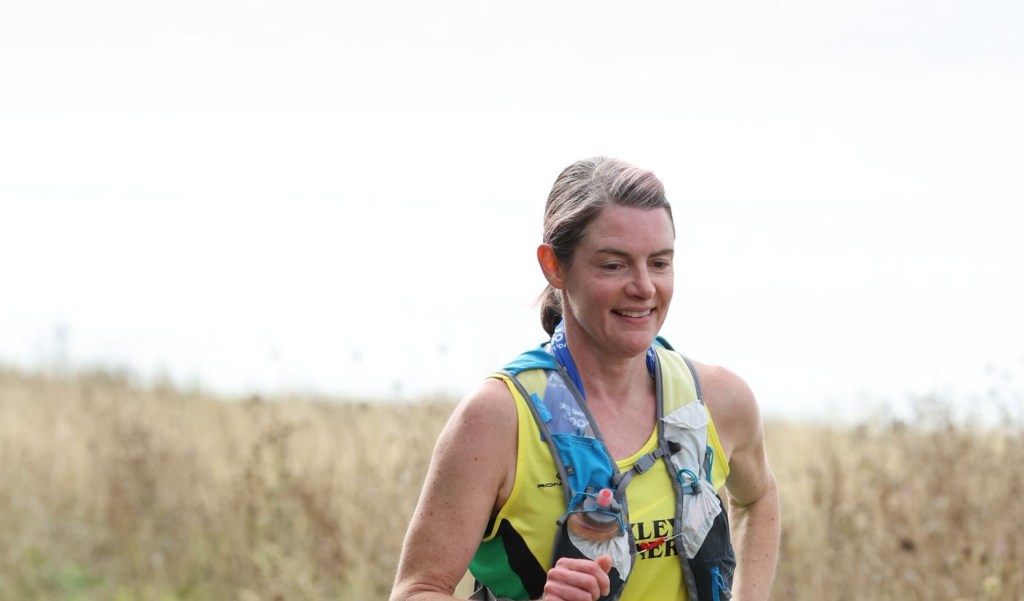
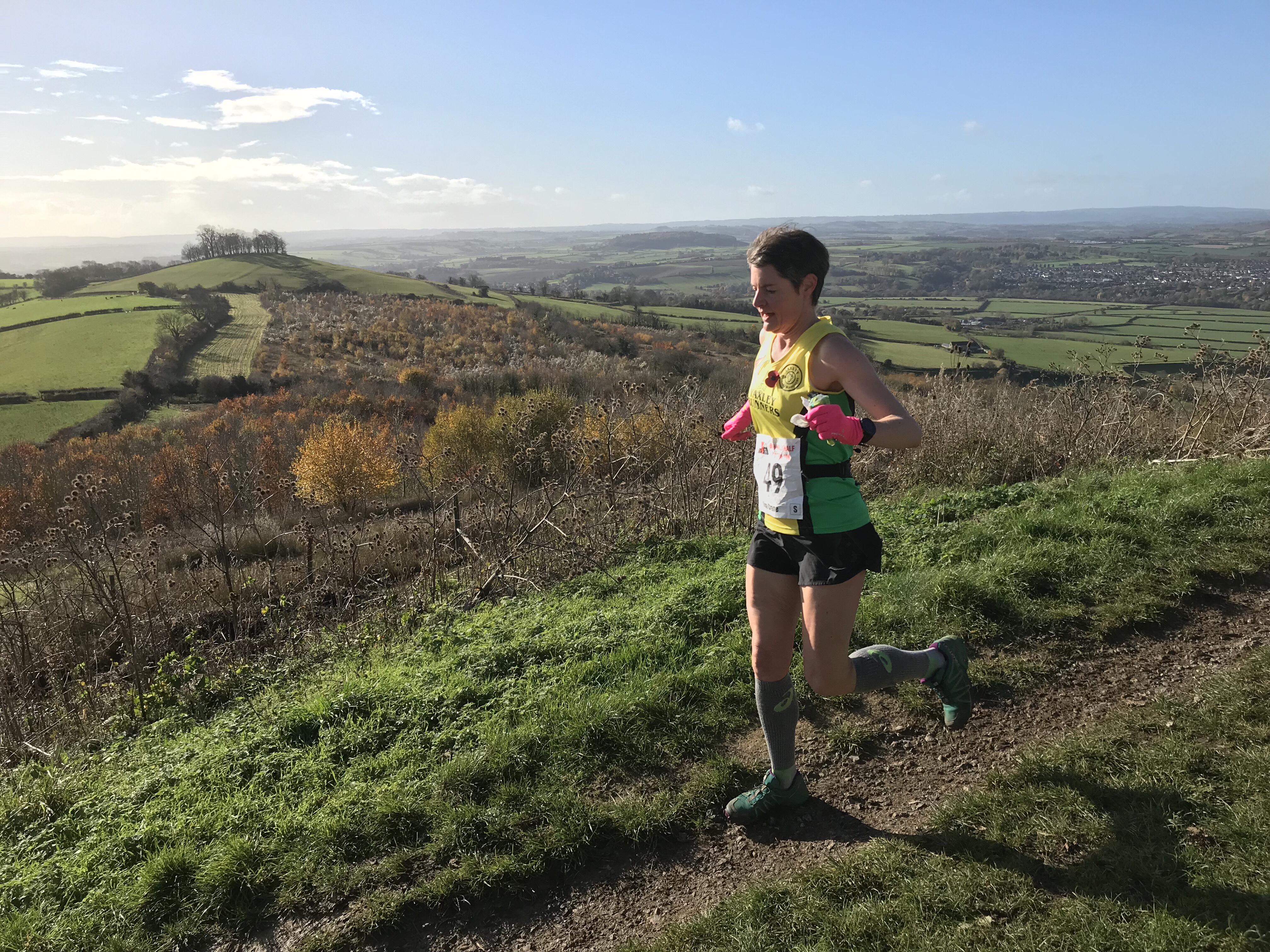
Walk ‘til you feel like running

Places I have cried lately: in the car (many times), on the train, on a run, in the office, at parkrun, at Lidl.

I’m 48 and sandwiched between my 11 year old’s dreams and the reality of coming to terms with my mum’s dementia. I have a full time job that is rewarding, but stressful and serious, and on my mind, always. I used to have hobbies. Now my hobby is seeing my husband and daughter in the two hours between finishing dinner and going to bed each day.

What has this got to do with running? Everything and nothing. I wish I had more time to run, but I don’t. Making time for running means going out with the dawn at 5am, or the bats at 9pm. But it also means cutting back on sleep and I can’t do that now. So running has had to become less important for me, and I’ve become really envious of people taking on new challenges or gym work or big sessions or long runs. But when I look harder at the envy, I can see that it’s really about me, not them, that it’s just guilt – guilt that *I* am not doing more, that *I* am not fit or fast.

Running is my solace in stressful times, my escape. I can’t let running become another stick to beat myself with, another item on a to do list I can never finish.

This Sunday morning I wanted to run 10 miles. The forecast was fine and I planned to get up and out at 5:30am. Instead, at midnight on Saturday I was wrenched out of the first blissful hour of sleep by my daughter plaintively saying she felt sick. I spent the night on the floor in her room while she dozed with all the lights on clutching a bowl. In the morning she was fine, but I was a wreck.

At 7am I made a coffee and had a little cry in the kitchen, as I blearily crushed and squirted 3 different medicines into our ancient cat’s food. It’s just too much first thing in the morning, to be making coffee and toasting bread and drinking water and microwaving milk and wiping surfaces and checking for cat sick. I was grumpy as I stomped up the stairs, and mean to humans and felines alike.

I sat waiting for the coffee to do its work and searching for a reason to go for this run. I wanted to do it, I wanted it to make me feel better, but I was tired in the brain and in the stomach and in the legs. I wasn’t ready to go out until 8:15, too late for early birds and peak walking hour for dogs – my least favourite time to run.

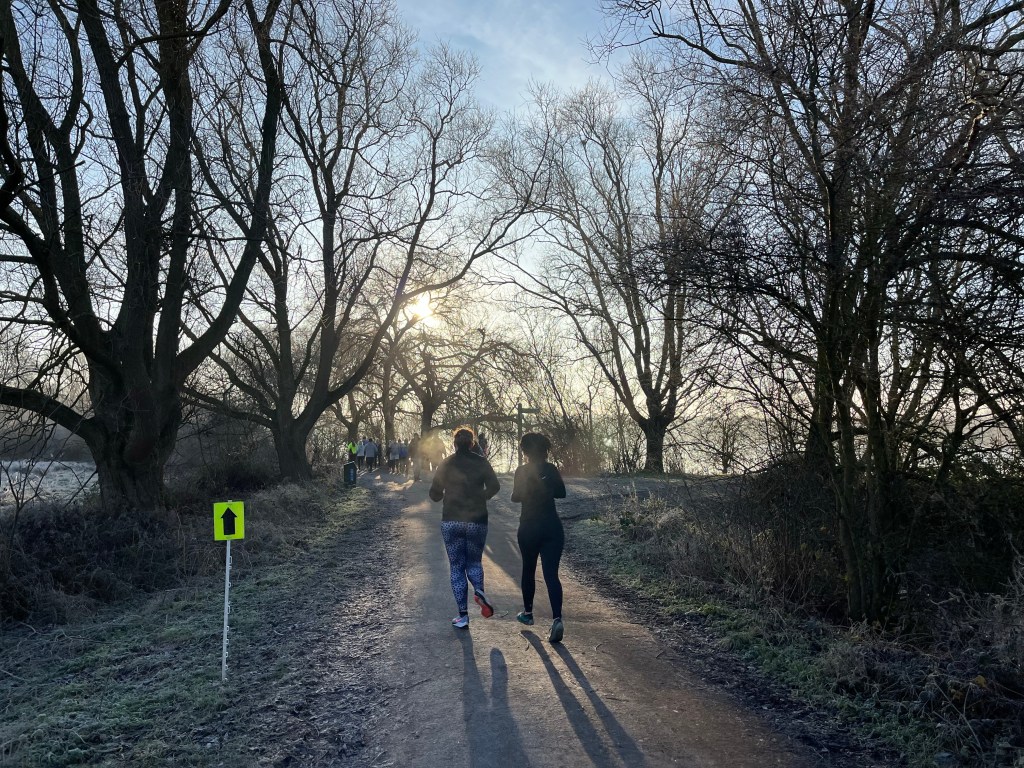
I left the house and started walking, taking my own advice from yesterday’s parkrun with Martha: “just walk until you feel like running, and don’t worry if you don’t”. I walked a mile before I felt like running at all, and then jogged slowly on and off to Ferry Meadows. While I was jogging I listened to part 2 of the Bandsplain podcast about Pearl Jam. Then I listened to Corduroy three times in a row. I love that song. I love how we can get pleasure from other people’s pain, even from our own if there’s beauty in it.

At 5km I stopped my watch. I didn’t want to go home, I didn’t want to sit on a bench and cry, and I didn’t want to run. I decided to walk to the cafe, buy a coffee and walk home. It felt good to decide this. Sometimes you can’t escape your feelings. Can’t outrun them. When I run I can usually get out of my own head but I knew that wasn’t going to happen today. 5km is a good run. 5km was enough.

Being sensible / that injured feeling (FGSJ!)

“You’re so sensible! I need to be more like you”, a friend said, about my approach to being injured. I felt good for a few seconds, imagining all the miles I hadn’t run, the risks I hadn’t taken.

A brave face

Then it was back to that injured feeling again: frustrated, guilty, scared, jealous (FGSJ!). Opening strava without thinking, and immediately closing it, but not before I’ve scrolled through enough friends’ runs for pure rage to well up in my throat. In the office, I hear someone standing in the kitchen complaining about their track session last night, and am rooted to my desk by cold twisting vines of envy.

The worst thing is, I don’t know whether I *am* being sensible. Yes, I acted on the first signs of injury, I went to see a physio, I pulled out of my marathon, I stopped training. But I didn’t stop running completely. 12 weeks on, I can manage 20 miles a week, but my knees aren’t cured. They don’t hurt, but the backs still swell up after a run, and I can’t run two days in a row.

At the back of my mind is the fear; what if this is for ever? And what if I just have to accept it? My first running injury (a cracked metatarsal) sent me to the GP, who was mystified as to why I was bothering the NHS with this minor issue. We are not elite athletes. No-one is going to greet us with concern at a packed walk-in clinic, and say “You need an x-ray and a CT scan, stat”. Doctors, like non-runners, think that if your knees hurt when you run, you should stop running. Just do something else instead!

I have been doing other things. Pilates, hiit workouts, deadlifts and squats, swimming. But cycling is too painful on the crotch (how do women do it??!), swimming breaststroke makes my knees click, and the gym plays terrible loud music.

I want to be outside. I want to be running. I don’t want to be sensible.

FGSJ!

I swam one length

I’m not badly injured. Just the kind of injured where I can run, but I’m not sure I should. The kind of injured caused by “overuse” rather than anything specific.

A running injury caused by running: a classic of the genre.

(I did not swim in here)

The physio said my knees are “irritated”. The right one is particularly pissed off, making weird clicks when I bend it, and both knees feel a bit swollen the day after a run. Clicks are normal, apparently, but mine don’t feel normal.

I tried running less, stretching more. Leaving it a day between runs stopped the swelling, but I felt too nervous to run fast in case the knees got worse. I don’t want to put up with it, I want it to go away. So I’ve been resting for a week to see if that helps.

I am not good at resting.

After days of doing nothing, on Friday I cracked and cycled to the gym for some sweet sweet sweat. I rowed 2km, did 30 minutes on the elliptical, swam 20 lengths, and cycled home. Swam 20 lengths? So why does the title say one?

When the London marathon was beginning without me in it, last Sunday, I was walking in the rain listening to Lauren Fleshman’s excellent book, GOOD FOR A GIRL. Everyone who cares about women or girls, or running, should read this book. It’s so insightful about what it means to push our bodies and minds to the edge, and how risky that can be for women in a system built for men. Anyway, a throwaway line from the book stayed with me – when injured, Lauren just decided to teach herself front crawl.

I never had swimming lessons. One day my dad took my armbands off, held my belly up for a bit and then let go. It was like riding a bike, if riding a bike involves your parent constantly asking why you still swim like a banana. As a consequence, I can swim one stroke: breaststroke. Badly.

At the pool on Friday, I thought about Lauren Fleshman *deciding* to swim, and I thought about my daughter worrying every week about swimming lessons but going anyway, and I thought about the few times I’d tried to do front crawl and couldn’t get the breathing right, and I just decided to do it anyway. I kept swimming, I kept trying to breathe in every third stroke, I kept trying to breathe out less forcefully in between so that I wasn’t desperate for the breaths every third stroke. It didn’t work, I did run out of breath. But I did keep going.

I swam one length of front crawl and hated every second. Yesterday, I went for a run and loved every second. And my knees are still irritated.

I know the feeling.

Is it a cross-country race, or is it a near-death experience?

I’m not just here for the good days, the training revelations and pictures of dreamy footpaths. I’m here for the worst days too. The races that are so bad you don’t want to run another step, and even though you don’t give up, you can’t feel good about it afterwards because you hated it so much you wish you had given up.

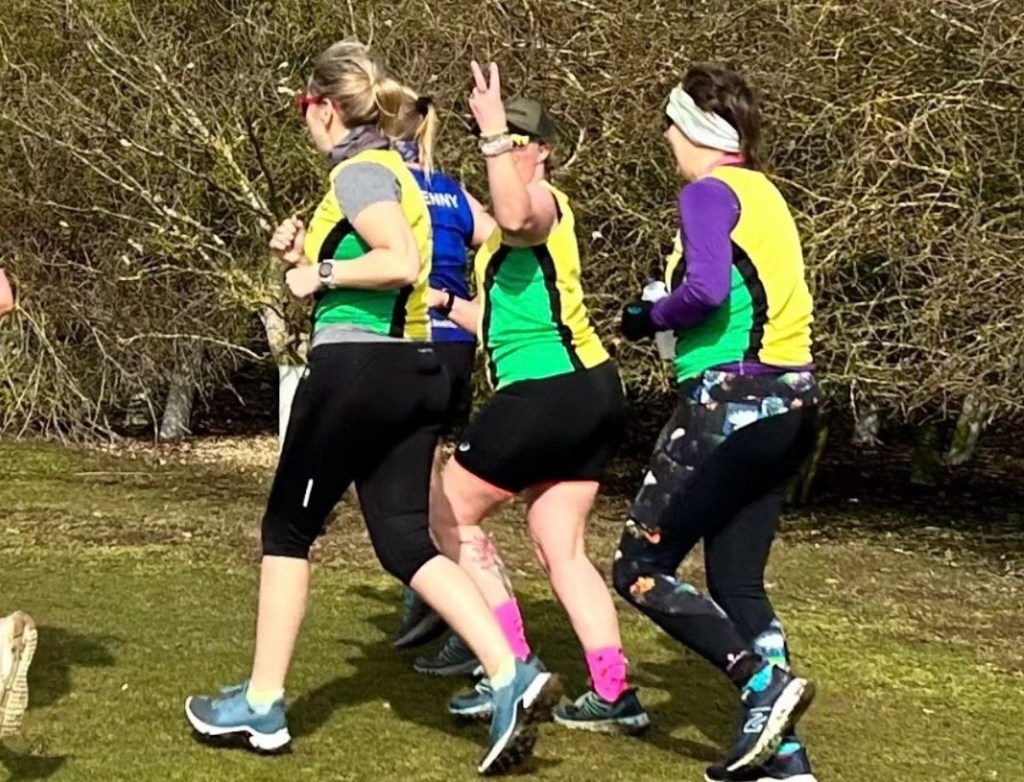
I had one of those days at the last race of our local cross-country season on Sunday 12th March. Nearly two weeks have passed, but the pain is still fresh enough to write about it. I never enjoy this race. The final in our “frostbite” season, it’s always unseasonably warm, and lo, the sun was shining. It’s also famously windy, and lo, the wind was blowing.

Beginning in Huntingdon’s Jubilee Park, the five mile race starts with a long lap of a boggy playing field, where everyone goes pounding off too fast around the sides of a football pitch, blocking your view of the ankle-breaking divots in the grass. Once your heartrate is good and high, the field squeezes through a gap in a spiky hedge out onto the course proper: long miles of rough grassy paths on the fringes of exposed open farmland, somehow both flat and uphill, and buffeted by a constant howling gale.

The worst thing about this terrible race is how far ahead you can see. If you manage to lift your eyes up from the ground for a second, there will be a long string of faster runners in the distance, reminding you how much further you have to go. And the absolute very worst thing is the section in mile four where the sketchy path turns into a lumpy bank for half a mile. I won’t even call this part a “path” because literally no-one has set foot on it for a year since the last race. It is lumpy, tussocky, long grass, with huge holes and nowhere safe to put your feet. As soon as it began, I remembered it from the last time, and the urge to walk, stop, or lie down and wait for death, was overwhelming.

Luckily, most other runners were also hating it. Despite slowing down to what felt like a crawl, I didn’t get passed by many people. And several were walking – not something I usually see in a frostbite race. Looking at strava afterwards, I took a tiny shred of comfort from the misery of others.

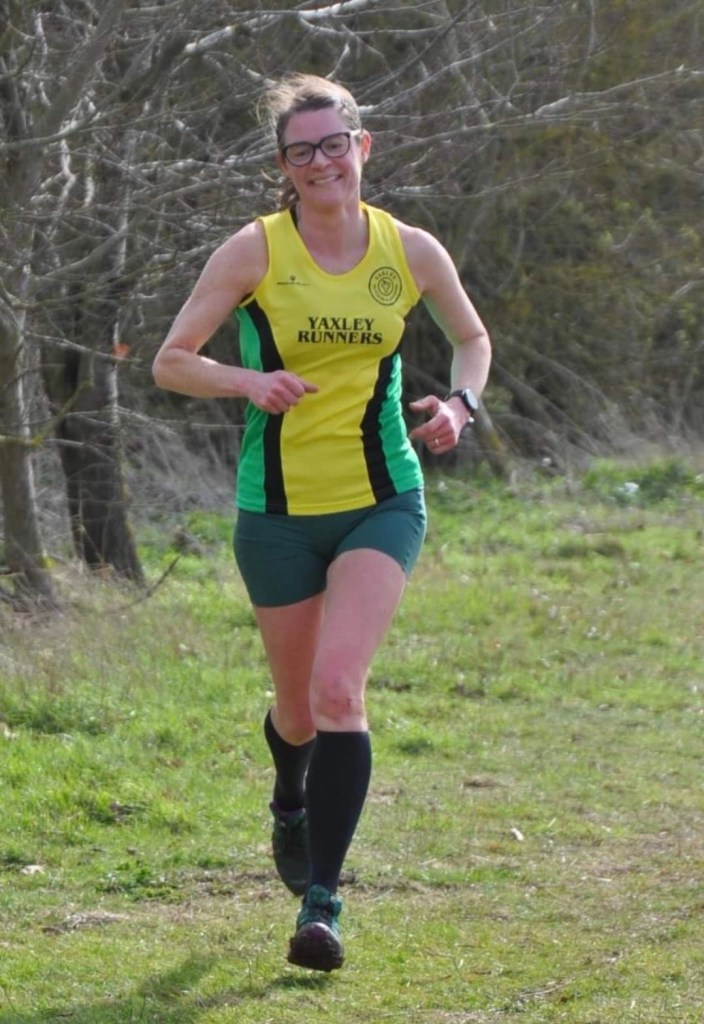
I am ashamed of how sorry I felt for myself at the end of the race. It’s a team event, and our team did well. But instead of congratulating others on their runs, I went off in a huff and jogged around the field until I felt less angry. Yaxley Runners finished second on the day, and third in the league, but I only found this out on Monday, when I’d calmed down enough to check the website.

We all have bad days, and the important thing is to learn from them, right? Okay. The lesson I’m taking from this one is: never run this race again*

The camera does lie

*Only joking, Team Captain, I’ll be there.

January: the month for taking motivation wherever we can find it

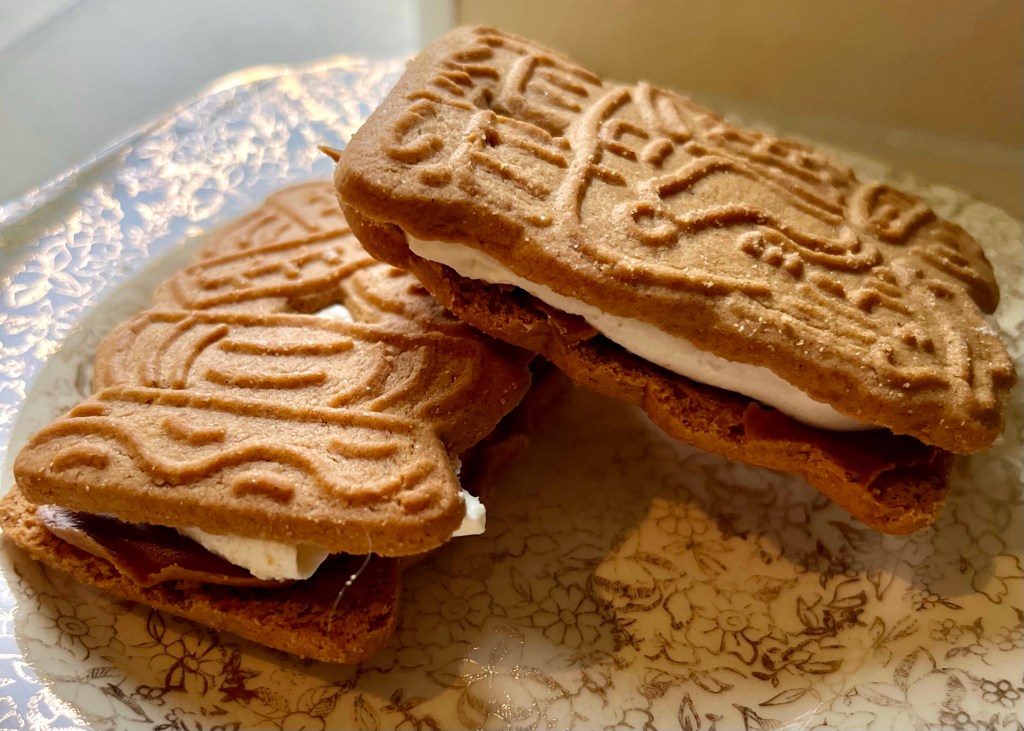
Speculoos & cream cheese: motivation in a biscuit

It’s getting near the end of January (hurrah!), and resolutions are fraying along with tempers. We are all hanging out for payday, for lighter days, and warmer weather. But running can’t wait, at least not for me. If I am going to run London marathon this year – and I think I am – I need to get out there now.

Usually I have a training plan, and use that to hold myself to account. But not this year. At least, not yet. I had so much time off running in late 2022 that I never got to build a good marathon running base. My past three months’ running still look like a rollercoaster with big dips for Covid and The Cold, and I haven’t strung together three weeks’ good mileage yet. Once I can do that, I will call it marathon training.

Running without a plan is tempting in the spring or summer, when just being outside is a delight. Right now, ploughing through the mud in -4, not having a plan is a big risk. With energy bills so high, my house is cold, and just getting changed into my running kit is the hardest part of going for a run.

January is the toughest month for running. It’s mad that this is time most people start training for their first marathon. And honestly, if nearly thirty years of running has taught me anything it’s this: find motivation wherever you can. Looking forward to a bath when you get home? Want to wear that new headband? Have to go to the post office? Want to see the seals in the River Nene? All reasons I have used to go for a run in the past two weeks.

The king of motivators – always – is the one I use least: running with other people. I run alone because it’s convenient, but also because there’s nobody else to worry about. Even when I’m running with friends and family I get anxious: am I talking too much? Too little? Am being boring? Am I going too fast? Too slow? I wish I could turn off these fears, because running with other people is brilliant. Time goes more quickly, I get to hear all the gossip, and – most importantly – I always turn up.

(p.s. I did not see the seals)

Thoughts from Rutland Marathon

Such perfect marathon weather’. The smooth path stretches along the edge of the dam. A family claps and cheers from a bench. Ten more runners overtake me.

I’m glad I’m not going out too fast’. The smooth path ends, turns gravelly and weaves through a carpark and up onto a grassy slope.  

‘I just need to keep the lid on for ten miles’. A marshal shouts, “well done young lady”. I’m 46, but I’ll take it. The stony track curves up and down around the inlet of the reservoir.

‘Look at the water, maybe I’ll see the osprey’. The lead runner of the half marathon whizzes past.

‘Keep it steady’. Another sharp uphill, a right turn, a left, a downhill.

The turning point must be soon’. The lead male runner passes, big beard, leopard print vest.

 ‘Do not speed up’. The first woman runs past, pink t-shirt, big smile.

‘I do not need to speed up’. Five more women pass and the turning point is there. The route doubles back around a line of orange cones in the woods.

‘Keep a lid on it’. Runners pass, still on their way to the turning point. The five mile marker goes by.

‘Only five? No, don’t think that. Half way to ten ’. The runners coming the other way are slower and more friendly.

‘This is better, I’m enjoying it’. Say “well done!” to every female runner. A dog lifts its leg to pee on the seven mile marker post.

‘Nearly at the dam, now’. A man sitting on a bench makes full eye contact with me and says nothing. Across the dam. A child jumps up and down, blowing a whistle.

‘I should be feeling better than this’.

The path stumbles between mole hills and rabbit holes. ‘This grass is really green from the rain’.

The route goes back past the start funnel. ‘Try to look good’.

The loudspeaker calls out the names of passing runners. A few cheers. ‘Try to feel good’.

Out of the carpark, the seventeen mile loop back to the finish begins. ‘I won’t count the hills’.

There were six hills between that point and Hambleton Peninsula. ‘This might be a bad patch’.  

The half marathon turning point is behind me at eleven miles. ‘I might feel better soon’.

The path stretches out along the north shore, looking flat but somehow going uphill. ‘It’s good to be outside’.

Mile fourteen. Mile fifteen. Up the hill to mile sixteen, my chest pulls with every breath of air.

“Stop it!” I shout out loud.

But I can’t push away the negative thoughts. Over the final ten miles, I try everything.

‘It’s good that my achilles isn’t hurting’.

‘Every uphill has a downhill’.

‘This gel will make me feel better.’

‘I always love running here’.

‘It’s still a beautiful day’.

‘No-one is going past you’.

‘Everyone feels the same.’

‘Don’t walk unless you have to’.

‘Just walk if you need to’.

‘Just get to the finish’.

‘You’re going to make it’.

When I cross the finish line I feel two things: relief, and certainty that there was nothing I could have done differently. This day wasn’t my day.

It is true that much of a marathon is what’s inside your head, the stories you tell yourself about how you’re feeling, the stories you tell yourself before you start, and how you spin it afterwards. But now that I’m older, I can see that it’s really the body. Yes, you can make yourself keep running or let yourself give up, you can decide to push or decide to walk. But it all comes from the body. The training, or the feelings on the day, dictate it too.

Looking at my insane heart rate recordings, I know I couldn’t have done anything else on this day. I know that the rushing of blood in my ears, the nearly fainting, that was the very edge of what was possible. I went right up against it. There was nothing more I could have done on that day.

When you’re young, or you have tons of training in your legs, you can carry a bad day and your brain is your only barrier. As you get older, on a bad day you can’t push through it.  But on a good day, you can run just as fast as ever.

No more personal bests?

I heard something clever on a podcast lately about running. No, I don’t remember which one. I listen to a lot of podcasts.

“First you run for health. Then you run for time. Then you run for meaning”

Me, I’m right in the middle of the last section: searching for the meaning in running.

I ran a lot of miles in 2018 – 1,627 – and entered 17 races. I did not got a personal best (pb) time in the marathon. I did not get a pb in the half marathon, 10k, 5k, or Mile. It was the same story in 2017.

Every week my lovely running club members post their new personal best times on our club facebook page. “How lovely!”, I post, “You are amazing!”, and I mean it, I do. I am also hugely jealous. All these runners improving their times, feeling like life is on the up and up, whilst my times are getting slower, or staying the same.

I am 43 years old and wondering: am I on the downward slope towards death now?

Reality Check!

I am still running fast. I ran a parkrun 30 seconds outside my pb earlier this year. I am marathon training at the moment and, on a good day, running can still feel great.

At this point you’re either thinking “Don’t worry, Gina, you’re not past your best, you can still get a pb if you work hard enough!”, or “so what? There’s more to running than being fast.”

If we were having this conversation last year, I would have agreed with the first thought. Now, I’m trying to get on board with the second one. Should I embrace slow running?

Slow down and just enjoy it

Before the 2018 London Marathon, when the blazing sun made me want to walk from mile 3 and vomit from mile 10, I told everyone that if I couldn’t run my goal time (already 15 minutes slower than my pb), I would “slow down and just enjoy it”. I am here to tell you, I did slow down, and I did not enjoy it.

Why does slow running equal enjoyment? It’s not an either/or. I’ve had some good slow runs and I’ve had some horrific ones. Dragging out the pain is not a win for anyone. A 5 hour marathon must be harder (for the mind and body) than a 3.5 hour one.

So what’s it all for?

I’ve been running for 20 years. I love running. I am a running evangelist. I am a running ninja. I am a running bore. I run 4-6 days a week, every week. If I haven’t run for two days I feel wrong. If a week passes and I don’t go for a run, I am either ill or injured. Have I mentioned I like running?

It’s normal that there isn’t much room for improvement now. Yes, I could find new time-based goals: age-group pbs, new races, new distances, embrace ultra running… But I think that would be missing the point. Running for meaning, for me, means remembering why I love running.

Running gives me headspace, gets me outside, shows me the seasons passing and the phases of the moon, introduces me to new places, gets me where I want to go, makes me friends, makes me strong, shows me what I’m capable of, helps me believe in myself.

Personal bests are temporary. Running is forever.

Is it wrong to compare your running to other people’s?

“Comparison is the thief of joy. Run your own race. Don’t compare yourself to others, compare yourself to the person you were yesterday.”

Every fitness programme, every inspirational quote on instagram, every ‘brand ambassador’ for every sport agrees: if you want to be happy, stop judging yourself by others’ progress, and keep your mind on yourself (#runhappy!).

To which I say, I have tried. I really have tried. But it’s impossible. And, maybe, it’s not healthy.

It’s important to have role models

Deena Kastor said of Paula Radcliffe in 2009 that “She makes great decisions. I don’t feel bad comparing myself to her as I believe all marathon athletes do because she’s the ultimate woman in the sport. She’s got the world record by an extraordinary amount and so it’s safe and healthy for all of us to compare ourselves in this sport to look up to her. ”

We know how fast Mo Farah or Paula Radcliffe can run. And if we run ourselves, we know where we rank compared to them, i.e. in a galaxy far, far away. We will never be the fastest in the world. And this is not depressing, because we also know that we will never be the slowest.

Every runner was once a worse runner

Unless you started competing at running aged 5, you probably once struggled to run down the street without coughing up a lung.  No matter how many breaks from running you take through injury or apathy, you will (hopefully) never find running that hard again.

I know we’re all getting older, and looking at my dad panting through a parkrun at 73, running into old age doesn’t look exactly easy. But I still think it will never be as hard as it was at the start, because we will already know we can do it.

Running is a physical struggle that takes place in your head. Every run is a battle of When Can I Stop? versus I Will Keep Going. And every time I Will wins, it makes it a tiny bit easier for I Will to win again.
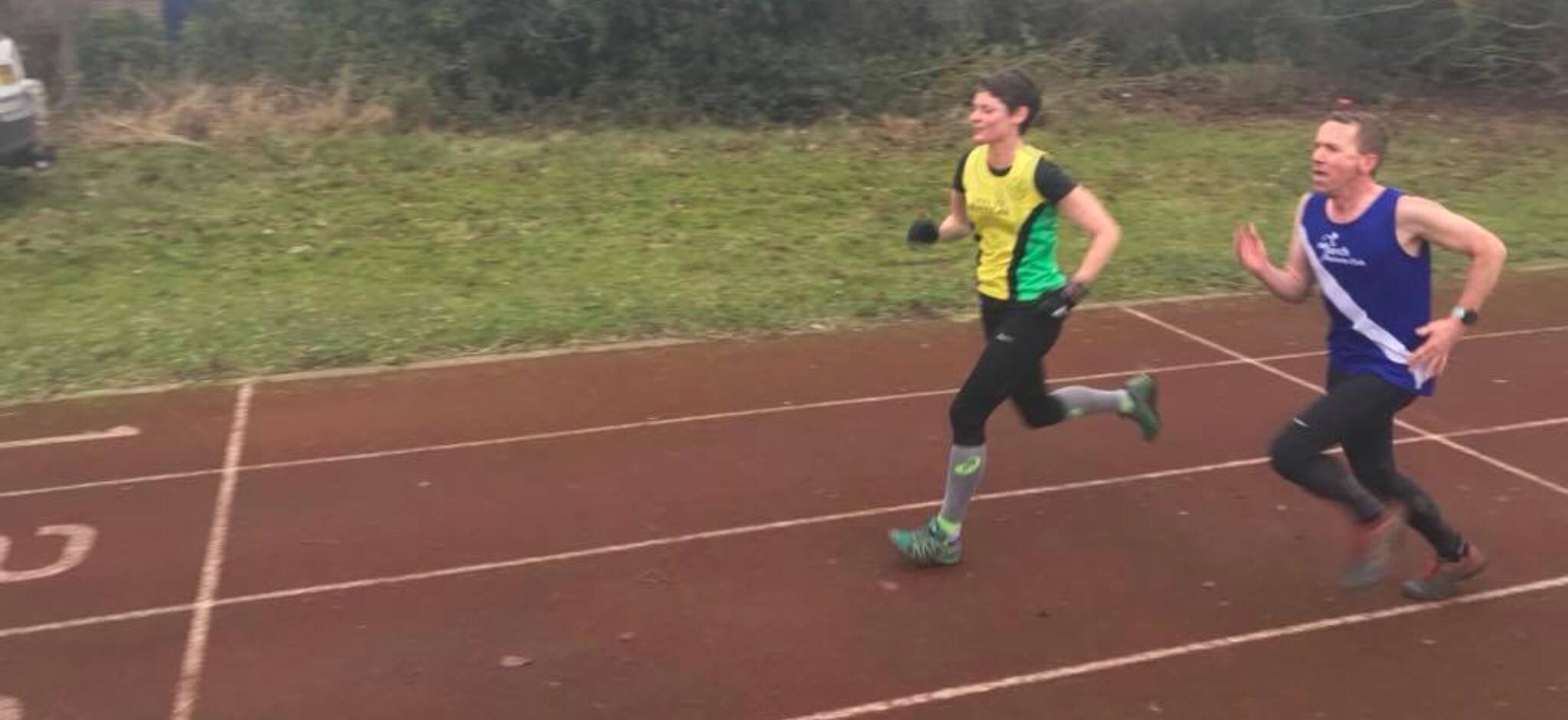


Running with others is more fun

When I started running, I did it by myself. I wanted to huff and puff and huff and walk a bit and run a bit and walk a bit and then die alone.  All alone. Smartphones did not exist in 1994, so there was no thought of sharing my progress with others.

I am a selfish runner. I run to give myself time to think, time not to think, time to be outside and enjoy the seasons, to see birds and flowers and trees and views. To get fit and stay healthy, to stay sane. To have time away from my family (sorry).

I ran alone for 22 years. At the Great Eastern Run in 2016, I watched all the other women in the queue for the loo laughing and chatting to each other while I waited, dealing with my pre-race nerves alone. They were all wearing club vests. I knew I was missing out on something.

Before I joined a running club, I had never entered a race just for fun. I would never have signed up for a 5-mile cross country race, let alone 6 of them in one season. And if I hadn’t, I would never have known how my post-race low could be totally eclipsed by the high of finding out the team triumphed, despite my performance.
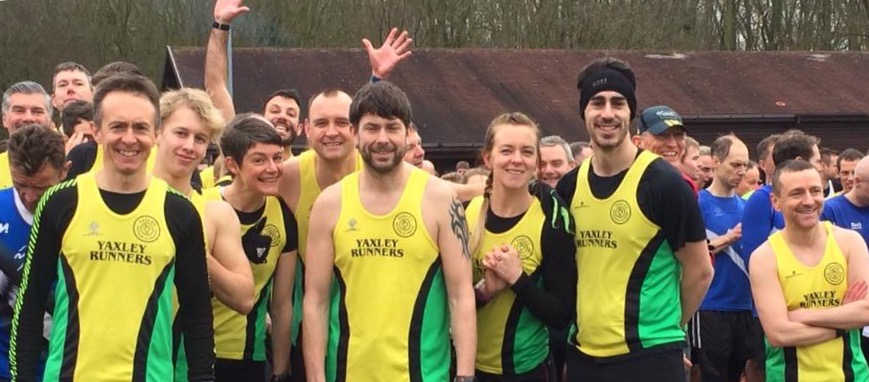


Running your own race is a myth

Running with – and against – other people isn’t just more fun. It makes us better runners. According to research carried out in 1968 at the University of California-Berkeley, running your own race is a myth. We run faster in a pack, and are “fooling ourselves” if we think that we can run as hard alone as we would against others.

Competition does not have to be unhealthy. This profile of Shalane Flanagan, winner of the 2017 New York Marathon, shows that it is possible to be both competitive with and supportive of other runners.

“We usually see competitive women, particularly athletically excellent women, only in one of two ways: either competing to defeat one another, or all about team over self. But that’s a flawed, limiting paradigm. The Shalane Effect dismantles it: She is extraordinarily competitive, but not petty; team-oriented, but not deferential. Elevating other women is actually an act of self-interest: It’s not so lonely at the top if you bring others along.”

The Strava Effect 


So if comparing your running to others’ gives you something to aim for, is more fun than running alone and makes you faster, why am I writing this? And why are there so many internet memes telling us to stop comparing ourselves to others?

Because of the internet!

It has never been so easy to track your performance, and compare it to your friend’s, that guy who always beats you, and your nearest Olympian’s. You don’t have to go to the track and study the split times, or wait for race results to come out in the newspaper. If you choose to, and most of us do, you can record your every move, upload it to Strava and share it on facebook before you’ve even finished stretching.

If it’s easy to share your own running, it’s almost impossible to avoid other people’s. Fitness boasts are everywhere, and I should know, I make them every week on my instagram. They make me feel good, but what if they make any other people feel bad?

One Sunday, I had just got back from one of those brilliant runs – where the sun is shining, you feel good and every step is a delight. It wasn’t a fast one – a proper long slow run that I really enjoyed. I was feeling on top of the world, logged the run on Strava and then up popped an almost identical run by a runner who is a similar speed to me – but she had run it 1 minute per mile faster.

Immediately I felt deflated. I could have run faster. Should I have run faster?

Know your limits

I should not have run faster! And I should not have felt deflated, looking at Strava that day. I should have been proud of my run, acknowledged that it was slower for a good reason, and felt happy for my friend. In a moment of strength, I would have done that. But I was feeling weak, so instead I unfollowed her on Strava and felt doubly bad – both for comparing myself to her and for not being able to ‘cope’ with how it made me feel.

Sometimes, you eat the bar, and sometimes the bar eats you. If you’re feeling good, and want to be inspired by others’ running, find new routes or just see what your friends are up to, pick up your phone and knock yourself out (not literally).

If you’re not, switch it off for a bit.

There are not two ideal approaches when it comes to comparing yourself to others: one zen like state where you only care about your own performance and don’t notice other people; and one where you know exactly where you fit but it only brings you joy. There is only one, human, approach: which one day brings you joy and the next day brings you down.

It is not wrong to compare your running to other people’s. It is just natural. Embrace it.

Is it cold? Is it dark? Yes? Let’s train for a marathon!

CarinSleet

Marathon training in England in January is the worst.

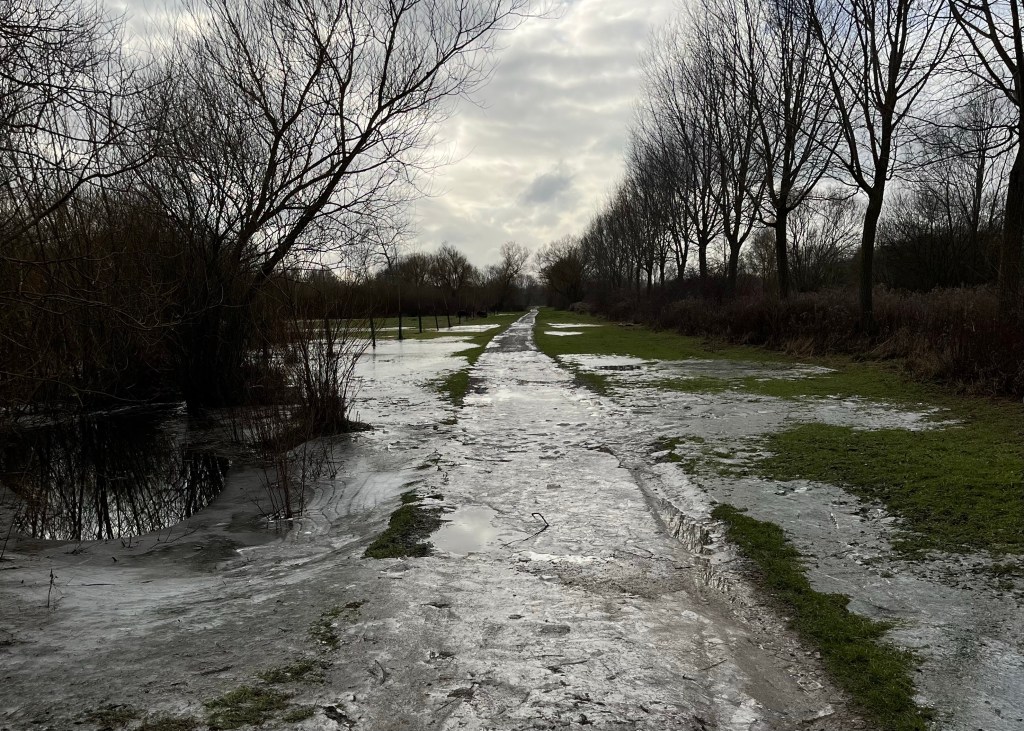
It is dark from 4pm to 8am. It is cold. It is windy. Trails are muddy. Pavements icy. If you are really lucky you will catch some horizontal sleet in the face and feel like your scalp has been frozen and ripped off the back of your head like a bad wig.

Your running routes, which in the light are many and varied and fragrant and fascinating, winding through Nene Park and along cycle ways, over Castor hill and along the River Nene, have reduced to one: up and down the Oundle Road.

When the weather is like this, I recommend training for a marathon to really maximise that time outside. I would also recommend London, so that 16 weeks of training start exactly on 1 January 2018. And, if I were you, I would pick a training plan that aims for maximum mileage – none of this Run less, Run faster nonsense.

6 runs a week is what you need! What do you mean you don’t have time to do that because you have a full-time job in London and a 4 year old? Does your alarm not go off at 5am?

Once you’ve booked your place and written your training plan, erase it and start again because you need to fit it around the 5 cross-country races you said you’d run for Yaxley Runners on Sundays. Also, volunteering at junior parkrun. Also, all of your 4 year old’s friends’ birthday parties. Oh, and apparently your husband might occasionally want to leave the house. Some people are so selfish.

Now that your plan is written, the hard work is over. You really should think about fuel, though. This year, why not have an approach to nutrition which is not just ‘eat more chocolate and crisps’? And while you’re pondering that, maybe have a think about buying new trainers now rather than wearing all your existing ones down to thin rubber husks and buying 4 new pairs that don’t quite fit you 3 weeks before the race?

You are now sorted. Wait, I forgot, what about positive mental attitude? Repeat after me:

“Marathon training in England in January is the best!”

How not to train for a marathon – have a baby and then get no sleep.

Dog

On this day in 2013, I had a baby. 2 hours before she was thrown onto my chest in the operating theatre, I had my first sleep for 3 days: 30 minutes of epidural-induced bliss.

Before Martha arrived, I was not a big sleeper. Never had more than 7 hours a night. Didn’t do lie-ins. Always up early. Fond of a night out.

Now? Sleep – oh, sleep, is the holy grail. The answer to any question. The solution to every problem.

At the beginning sleep is plentiful but sporadic. You all fall asleep at random times, in short bursts like Ellen Macarthur. You feel like Olympians trying to do a decathlon in the dark wearing wellies. Team spirit gets you through – “we can do this!” you croak to your partner as you pass in the hallway at 3am, handing off the baby like a baton. You watch a lot of box sets.

Slowly, progress is made. The baby sleeps for longer in one go. Unfortunately this long sleep starts at odd times, usually in the middle of dinner, and once you realise it’s happening, it’s half-way through. “Bed!” you yelp, abandoning the washing up to the cats and failing to brush your teeth for a week. The moment your head hits the pillow you are asleep.

Then, just as everything is getting better, everything goes wrong. The long sleep starts well, and sometimes lasts a bit longer, but it is fickle, oh so fickle. One night in two weeks she will sleep through the night. You, on the other hand, will still wake up every two hours. All the other nights she will wake up at the drop of a phone, or the clink of a belt buckle. “Why can’t you get changed in the bathroom?”, you will hiss at each other. The TV, like everything else, is now a distraction from feeding. Box-sets remain unwatched, possibly forever.

Slowly, real progress is made. Only now you know better than to talk about it, even to each other. Slightly more rested, you realise how tired you actually are. You go back to work and pretend to be a normal person. You drink a lot of coffee, but never after lunch, because then you lie awake after a 3am wake-up and know you are up for the day.

Running helps, up to a point. When you’re a little bit tired, exercise makes you less tired. It also helps you sleep well.

Not marathon training, though.

If I have learned one thing in the last year it is this: marathon training when you’re getting no sleep is a stupid idea.

I realise, looking back on old photos, that I was a MASSIVE SLEEPER. All I did during my previous marathon training periods, or possibly my life in general, was NAP. I loved naps. I had no idea how much I loved naps until it wasn’t possible to have any. There are so many photos of me asleep – on benches, in the garden, on the sofa – that either my husband is a somnophiliac or I took a whole lot of naps.

Sleep is important for athletes, and non-athletes who happen to be runners of marathons. It’s well known that Kenyan runners just eat, run and sleep. I have found time for the first two during this marathon training (well, mostly the first to be honest), but the third? Not so much.

On Monday I’m running the Milton Keynes marathon and I am worried. I’ve done (most of) the miles, but I really haven’t had the rest. Will I be able to run at anything like my target pace over 26.2 miles (8mins 15 secs per mile)? Will I be able to get to the start on time given that there are no direct trains from London (grr)? But mostly, will I get a full night’s sleep beforehand?

I will let you know.